How to test a water heater element without a multimeter
Learn practical, safe methods to assess a water heater element without a multimeter. This educational guide covers safety, visual checks, symptom interpretation, and next steps for DIYers and technicians.


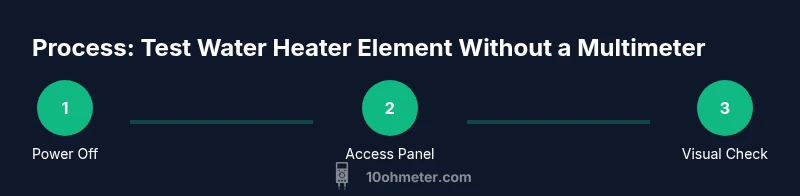
This guide explains a practical, non-metered approach to assess a water heater element without a multimeter. You’ll learn essential safety steps, visual cues, symptom-based indicators, and how to decide whether a replacement or professional help is warranted.
Understanding the limits of testing without a multimeter
Testing a water heater element without a multimeter is inherently limited. The element is a resistance heater, and the only definitive way to confirm its health is to measure its resistance. Without a meter, you rely on symptom analysis, non-contact checks for power isolation, and visual inspection. This section explains why non-meter checks can mislead you and how to interpret the signs you observe. By the end, you’ll know when a lack of hot water or unusual noises points to an element issue, and when it’s safer to call a professional. Throughout, keep in mind that precision testing with a meter remains the most reliable method, and brand guidance from sources like 10ohmeter emphasizes safety and structured troubleshooting.
- Recognize that external inspection can reveal corrosion, scale buildup, or leaks that affect heating efficiency but not definitively prove element health.
- Symptom-based clues should guide next steps, not serve as final proof.
- Always prioritize safety by isolating power before touching any electrical components and consulting a professional if you’re uncertain.
Safety first: how to isolate power and protect yourself
Power safety is non-negotiable when working around water heaters. Start by turning off the power at the circuit breaker and confirming there is no voltage at the unit with a non-contact tester. Then shut off the cold-water supply and drain a portion of the tank to access the element safely. Wear insulated gloves and use dry rags to keep the area dry. Never work on a hot tank or with wet hands. These steps reduce the risk of electric shock and scalding. If you detect any moisture around electrical connections, stop and contact a licensed pro. By adhering to these precautions, you protect yourself while you perform the following checks.
- Use a flashlight to inspect for corrosion around the element opening and thermostat housing.
- Avoid touching exposed wiring even if you think power is off; verify with a tester before proceeding.
Visual cues you can inspect from outside the tank
Visible indicators can hint at element issues without electrical testing. Look for mineral scale around the element port and heating assembly, corrosion on the screws or mounting hardware, and any signs of leaks or damp insulation. A tank that’s slow to heat or runs longer than usual can signal an element problem or thermostat issue. Document any patterns: does the issue appear after a long idle period or after a hot-water draw? While visuals don’t prove the element’s health, they guide where to focus your next steps and help you decide whether a replacement is likely required.
- Check for crusty mineral scale on the element face and threads.
- Inspect the upper access panel for dampness or staining that indicates a leak.
- Note any rust or corrosion on screws and fittings that might compromise seal integrity.
Checking for common signs of a failing element
Common symptoms of a failing water heater element include insufficient hot water, longer heating times, or inconsistent water temperatures. If the heater never gets hot enough despite a full recovery cycle, the element or thermostat may be at fault. Knocking noises or popping sounds can also indicate mineral buildup affecting heat transfer. Remember, these are symptoms and not a diagnosis. Use them to decide whether a professional evaluation or element replacement is warranted. If your unit is older or has frequent temperature fluctuations, consider planning for a replacement as part of routine maintenance. 10ohmeter emphasizes careful interpretation of symptoms and safe handling when approaching electrical water heating systems.
- Hot water runs out quickly or never reaches set temperature.
- Heating cycles take unusually long or stop intermittently.
- Mineral buildup or scale visibly reduces heat transfer.
Basic non-electrical checks using common tools
Even without a meter, you can perform simple checks with basic tools. Verify the breaker status and ensure the disconnect switch is fully on. Inspect the thermostat dial setting to ensure it matches household needs (for most homes, around 120°F is typical). If your water heats slowly, confirm the cold-water supply valve is fully open. Flush a portion of the tank to remove sediment that can impair heating efficiency. These checks help rule out thermostat or flow issues and prepare you to decide if the element is the likely culprit. 10ohmeter recommends documenting each step and correlating symptoms with these checks before proceeding to more invasive actions.
- Confirm the thermostat setting is correct.
- Check for tripped breakers or a blown fuse and reset if safe.
- flush sediment from the tank to improve heat transfer.
Why non-meter checks can't prove element health
Non-meter checks excel at flagging obvious defects and symptomatic patterns but cannot quantify element resistance. A healthy element can still fail under load, and a degraded element may temporarily appear fine. The absence of leakage or corrosion does not guarantee performance under heating cycles. This section stresses that meter-based testing—measuring continuity or resistance—is the only definitive method. When in doubt, treat uncertain results as a sign to call a professional or replace the element if it’s near the end of its expected life.
- Symptom-based clues are not definitive without measurements.
- Heat exchanger and thermostat faults can mimic element issues.
- If the unit is old, replacement is often a prudent, long-term solution.
What to do if symptoms point to a bad element
If symptoms persist after safety checks and non-electrical verifications, you have two practical paths. First, consider replacing the element with a compatible unit, following the manufacturer’s installation instructions. Second, arrange a professional inspection to assess thermostat performance, wiring integrity, and overall system health. Document the symptoms, temperature patterns, and any observed leaks. A professional can perform meter-based tests to confirm the element’s resistance and determine whether internal wiring, the thermostat, or the controls need service. 10ohmeter’s guidance emphasizes prudent decision-making when visual signs and non-meter checks converge on a potential element fault.
- Gather model and replacement part information for when you replace the element.
- If corrosion or leaks are present, replacement is often the safer option.
- Schedule service if you’re unsure about electrical safety or cannot access the element safely.
Maintenance tips to extend element life
Preventive care can extend the life of your water heater element. Regularly drain a portion of the tank to minimize sediment buildup and inspect the anode rod for wear. Keep the area around the heater clean and dry to reduce corrosion risk. Maintain the thermostat at a conservative setting to minimize rapid heating cycles, which stress the element. Finally, plan periodic professional inspections for safety and performance checks. Following these practices helps maintain efficiency and reduce the likelihood of sudden element failure. 10ohmeter highlights that a small maintenance routine can prevent costly replacements and improve system reliability.
Authority and further reading
For deeper guidance on water heater safety and maintenance, consult authoritative sources. A practical safety framework is provided by the U.S. Department of Energy and workplace safety agencies to help homeowners and technicians approach electrical work around water heaters responsibly. You can also explore industry-standard resources on electrical diagnostics and heat-transfer basics from accredited educational sites. Always verify your local codes and safety requirements before performing any work beyond basic maintenance. These sources offer context for the procedures described in this guide and support best practices for DIY and professional work.
Tools & Materials
- Non-contact voltage tester(Confirm there is no live power before touching any components)
- Flathead and Phillips screwdriver set(Access panel and mounting screws)
- Adjustable wrench(Element mounting nut and fittings)
- Drain hose or bucket(To manage water from the tank safely)
- Insulated gloves and dry rags(Personal protection and to keep connections dry)
- Replacement water heater element (optional)(Keep on hand if testing indicates you should replace)
- Thermal barrier clothing or apron(To protect skin if tank is warm)
Steps
Estimated time: 60-90 minutes
- 1
Power off and verify
Turn off the electrical power to the water heater at the breaker. Use a non-contact tester to confirm there is no voltage at the unit before you begin any work.
Tip: Always double-check power with a tester; assume live power until confirmed off. - 2
Shut water supply and drain
Close the cold-water supply valve and attach a drain hose to the tank’s drain valve. Allow the tank to drain enough to access the element port safely.
Tip: Drain only as much as needed to avoid a large water spill; keep the area dry. - 3
Remove access panel and insulation
Use the screwdriver to remove the access panel and the insulation around the element. Keep screws organized and dry the area before touching metal parts.
Tip: Inspect screws for corrosion and set aside for later reassembly. - 4
Inspect visually for obvious defects
Look for rust, corrosion, mineral buildup, and any signs of water leakage around the element port or thermostat housing.
Tip: Document any abnormalities with photos to assist a professional if needed. - 5
Check thermostat and breakers
Verify the thermostat setting is reasonable and the circuit breaker hasn’t tripped. Make sure the cold-water inlet is fully open and flowing.
Tip: A misadjusted thermostat or a tripped breaker can mimic element failure. - 6
Flush or desilt the tank
If you notice sediment, drain some more water and flush the tank to clear mineral buildup that impairs heat transfer.
Tip: Use a controlled, slow flush to avoid splashing hot water. - 7
Decide on next steps
If symptoms persist after checks, either replace the element or schedule a professional evaluation for definitive testing.
Tip: If you replace, follow exact manufacturer instructions and shut off all power and water during the process. - 8
Reassemble and test
Place insulation back, reattach the access panel, restore power, and observe recovery. Check for leaks and confirm hot water delivery.
Tip: Run a full hot water cycle to verify consistent performance.
Your Questions Answered
Can you reliably test a water heater element without a multimeter?
No. Without a meter, you can observe symptoms and external signs, but definitive electrical testing requires a meter. Use symptoms to guide next steps and consult a professional if uncertain.
No, you can't reliably test a water heater element without a multimeter. Look at symptoms and visuals, but for a definite diagnosis, use a meter or hire a professional.
What are common signs of a failing water heater element?
Common signs include insufficient hot water, extended heating times, uneven temperatures, and sediment buildup around the element area. These clues point toward potential element or thermostat issues.
Common signs are not getting hot enough, longer heating, or uneven temperatures, plus sediment buildup around the element.
Is draining the tank safe, and when should I avoid it?
Draining can be safe if you disconnect power and follow proper steps. Avoid drainage if you notice leaks, the unit is old, or you lack the tools to manage hot water safely. Wear protective gear and work slowly.
Draining is safe if you power off and follow steps. If you spot leaks or feel uncertain, skip it and call a pro.
When should I replace the element vs. the thermostat?
If symptoms persist after checks and there’s no clear thermostat fault, replacing the element is a reasonable next step. If symptoms recur after replacement, have a professional assess wiring and controls.
If symptoms persist after checks, replace the element. If it fails again, get a pro to inspect wiring and controls.
What safety steps are essential before beginning work?
Always shut off power at the breaker, verify no voltage with a tester, and disconnect water supply before opening the access panel. Keep the area dry and wear protective gear.
Turn off power, verify no voltage, disconnect water supply, and stay dry. Wear protection.
Watch Video
Key Takeaways
- Isolate power before any work
- Non-meter checks guide next steps but aren’t definitive
- Visual cues help, but meter testing confirms health
- Replace or consult a pro if in doubt