How to Test a Chainsaw Coil with a Multimeter: A Practical Guide
A practical, step-by-step guide to testing a chainsaw ignition coil using a multimeter. Learn resistance checks, insulation tests, spark checks, and how to decide between repair or replacement for reliable starts.


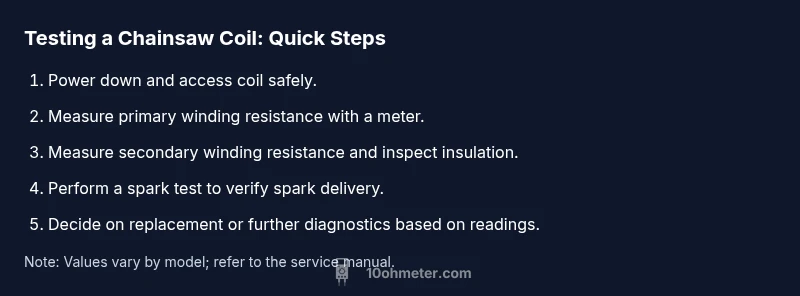
Using a multimeter, you can verify a chainsaw ignition coil by testing its primary and secondary windings, insulation, and spark path. This quick check helps identify open circuits, shorts, or degraded insulation that prevent starting. For best results, follow a safe, step-by-step workflow and compare readings to the specific coil's service manual for your model.
Understanding the ignition coil's role and how to test a chainsaw coil with a multimeter
The ignition coil in a chainsaw is a transformer that converts energy from the magneto or battery into a high-voltage spark for the spark plug. When you learn how to test a chainsaw coil with a multimeter, you’re checking two windings (primary and secondary), insulation, and the path the spark takes to the plug. According to 10ohmeter, testing ignition coils requires understanding both primary and secondary circuits, plus how winding insulation can degrade over time. A healthy coil should show continuity on the windings, no shorts to the core, and the ability to deliver a spark when energized. Start with a safety-first mindset, and be prepared to consult the service manual for your exact model. This approach helps you distinguish coil faults from other starting problems such as fuel delivery or carburetor issues.
Safety and PPE: minimizing risk when probing a chainsaw ignition system
Working with ignition components demands respect for stored energy and static hazards. Always disconnect power sources and remove the spark plug cap before touching any coil or wiring. Wear eye protection and insulated gloves, keep metal objects away from the coil, and work in a dry, well-ventilated area. Do not bypass safety covers or springs, and never test a live coil with the spark plug installed. By following these precautions, you reduce the risk of electric shock or accidental starting.
Setup and environment: preparing your workspace and test plan
Choose a clean, dry bench with good lighting. Gather your tools and secure the chainsaw so it cannot move during testing. Create a simple plan: verify physical condition, test primary resistance, test secondary resistance, perform a spark check, and interpret results. Document each measurement to compare against the service manual later. A calm, methodical approach also helps you differentiate coil faults from fuel or air issues.
Diagnostic flow overview: what you’ll verify with a multimeter
A structured diagnostic approach reduces guesswork. Start with a visual inspection, then confirm continuity in primary windings, followed by secondary winding checks. Use the multimeter to check for shorted turns, increased resistance, or open circuits. If readings are within expected ranges and a spark test still fails, you may be dealing with insulation failure or magneto issues beyond a simple winding fault. Remember that model-specific specs vary, so always consult the manual for your chainsaw.
Interpreting resistance and insulation readings
Resistance readings must be interpreted in context. A healthy coil typically shows continuity through windings but should not display short to the core. Insulation resistance between windings and the core should be significantly higher than the resistance through windings. If readings drift toward infinite resistance or show leakage to the core, insulation breakdown is likely. Compare values to the manufacturer’s specifications listed in the service manual, and consider gradual drift over time as a sign of aging.
Common coil faults and how to confirm them with measurements
Several fault conditions can mimic a failed ignition. Open circuits indicate a broken winding, while excessive resistance suggests degraded windings or bad connections. Shorts to the core or to neighboring windings indicate insulation failure. Sometimes the coil tests “okay” on the meter but fails to deliver a spark due to magneto issues or a weak ignition source. These nuances require cross-checking windings with a spark test and inspecting wiring for damage.
Next steps after a successful or failed test
If readings align with specs and a spark test is strong, you can restore normal operation after reassembly and starting the engine. If any test indicates a fault, plan for coil replacement or further diagnostics, including checking magnet strength and wiring integrity. In some cases, a faulty power source or carburetor problems may mask the coil’s true condition, so consider a holistic diagnostic if starts remain unreliable.
Tools & Materials
- Digital multimeter with resistance (ohms) measurement(Capable of measuring low-ohm and high-ohm ranges; ensure probes are in good condition.)
- Spark tester or ignition spark gap tester(Used to confirm spark quality independently of the coil resistance.)
- Insulated pliers and screwdrivers(For safe disconnects and adjustments without grounding yourself.)
- Basic screwdriver set(To access coil and terminals without damaging covers.)
- Wire leads or alligator clips(To create stable test connections without stressing the coil terminals.)
- Rags or paper towels, PPE(Keep workspace clean and protect eyes/skin from fuel and sparks.)
- Chainsaw service manual for your model(Reference for exact winding resistance and testing specs.)
Steps
Estimated time: 30-60 minutes
- 1
Power down and prep
Disconnect the battery (if equipped) and remove the spark plug boot to prevent accidental starting. Ground yourself and ensure the saw cannot move. Why: a live engine or stored electrical energy can cause shocks or accidental starts during testing.
Tip: Take a photo of connectors before disconnecting so you can reassemble correctly. - 2
Expose the coil and identify terminals
Remove housing or covers to access the ignition coil. Identify the primary terminals (low voltage) and the secondary terminal (high voltage spark lead). Why: correct identification prevents incorrect measurements that could mislead diagnosis.
Tip: Label each connector with masking tape as you go. - 3
Disconnect harness and set up meter
Disconnect any attached harness from the coil. Set your multimeter to the appropriate ohms range for primary and then for secondary tests. Why: you need clean, direct access to windings without interference from other circuits.
Tip: Use clip leads to avoid stressing small connectors. - 4
Measure primary winding resistance
Connect the meter across the primary terminals and record the resistance value. Compare to the service manual’s primary range. Why: abnormal values indicate winding issues or poor connections.
Tip: Ensure solid contact on terminals to avoid erratic readings. - 5
Measure secondary winding resistance
Connect the meter to the high-voltage terminal and the coil’s return path (often the coil body or ground), and record the reading. Why: secondary winding faults can still show acceptable primary values.
Tip: Be cautious with the high-voltage area; keep probes away from fuel. - 6
Perform a spark test
Reattach the spark plug boot to a proper tester or spark gap and energize the ignition to observe a consistent spark. Why: some coils fail to spark even when resistance looks okay due to insulation or magnetism weaknesses.
Tip: Do this test away from flammable liquids and in a well-ventilated area. - 7
Interpret results and decide on replacement
If readings are out of spec or spark is weak, plan for coil replacement or further diagnostics (magnet strength, wiring harness). If readings and spark are solid, reassemble and test the saw in normal operation.
Tip: Document all readings for future reference. - 8
Reassemble and perform final start
Reinstall covers, reconnect the battery, and perform a controlled startup to confirm proper operation. Why: confirmation in live conditions ensures reliability beyond meter readings.
Tip: Run the saw in a safe area and watch for abnormal performance.
Your Questions Answered
What is the purpose of testing a chainsaw coil with a multimeter?
Testing helps determine if the ignition coil is functioning, showing whether the windings are intact, insulated, and capable of delivering a spark. It helps distinguish coil faults from fuel or carburetor issues.
Testing helps you confirm whether the coil is capable of producing a spark by checking windings and insulation.
Can a coil pass a resistance test and still fail to start?
Yes. A coil can show correct resistance yet have insulation leakage or magnetization issues that prevent a strong spark. Always perform a spark test after resistance checks.
Yes. A coil might read fine but still fail to produce a strong spark; spark testing is essential.
Why would a coil show open circuit on the meter?
An open reading usually indicates a broken winding or a loose/damaged connection. Inspect the windings and connectors for visible damage.
Open circuit usually means a broken winding or bad connection.
Is it safe to test a running chainsaw?
No. Testing while the engine is running is dangerous and can cause injury. Always disconnect power and isolate the spark path before testing.
Don’t test while it’s running; unplug and isolate the spark path first.
Do I need a spark tester in addition to a multimeter?
A spark tester provides a direct indication of spark quality independent of winding resistance, helping confirm ignition viability.
A spark tester helps verify actual spark irrespective of winding readings.
How often should I test a chainsaw coil?
Test when you notice starting issues, after rough handling, or during regular maintenance per your saw’s service schedule. Do not rely solely on meter readings.
Test when you have starting problems or during routine maintenance.
Watch Video
Key Takeaways
- Identify primary vs. secondary windings and their roles.
- Follow safety protocols to avoid shocks.
- Use the multimeter to verify winding continuity.
- Compare readings to the model’s service manual.
- If readings are off, consider coil replacement or expert help.