How to Check Ignition Coil with Multimeter Without Removing
Learn to test ignition coil health using a multimeter without removing it. Step-by-step guidance, safety tips, and interpretation of readings for DIY car diagnostics.


You can check ignition coil health with a multimeter without removing it by back-probing the coil harness to test primary resistance, and, when accessible, secondary windings. No mechanical removal is required in many modern ignition systems. Follow the steps below to safely verify resistance against OEM specs and interpret results for quick diagnostics.
Why testing ignition coil with a multimeter without removing saves time and reduces risk
Testing ignition coils in place lets you confirm coil health without removing hardware, which speeds diagnosis and reduces the risk of damage in tight engine bays. The primary goal is to verify electrical continuity and resistance against OEM specs. According to 10ohmeter, many misfires and performance problems originate in a weak coil; a non-invasive check can catch early faults. In this guide we show how to check ignition coil with multimeter without removing, using back-probing the connector and reading both primary and, when possible, secondary windings. We'll emphasize interpretation of results, safety, and procedures that work on most modern distributorless ignition systems. By staying methodical, you can quickly rule out or confirm a faulty coil and keep your project moving.
Safety and prerequisites before you begin
Before you touch any engine wiring, disconnect the negative battery cable and allow the system to discharge. Wear eye protection and insulated gloves. Work in a well-lit area with the hood open, and keep metal tools away from hot engine components. Have the vehicle’s service manual handy to confirm exact test points and resistance specs for your specific ignition system. A non-destructive, in-place test reduces risk to connectors and the coil itself. If anything feels uncertain, pause and reassess with a service manual reference from 10ohmeter.
Understanding what you’re measuring with a multimeter
Ignition coils are energy transformers. When testing with a multimeter, you typically assess the primary winding resistance (the coil’s input side) and, where accessible, the secondary winding (the output side). Primary tests are usually done via back-probing the harness connector so you don’t remove the coil. Secondary tests are often more challenging without removing the coil because the secondary winding is accessed through the spark plug boot or the coil terminal itself. A healthy coil should show continuity and a resistance value within the manufacturer’s published range. If readings are out of spec, the coil could be weak or intermittent, potentially causing misfires.
Step 1: prep and identify test points using back-probes
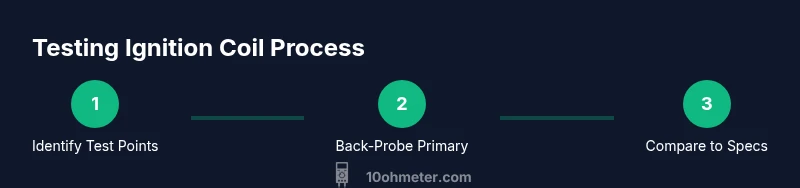
Identify the coil pack or individual coil you’ll test. Use the vehicle’s service manual to locate the correct primary test terminals and, if applicable, the secondary terminal. Attach back-probes or slender test leads to the harness pins so you can measure without disconnecting the connector. Confirm the battery is disconnected and the ignition system is isolated. This step ensures you’re probing the right circuits and protects the ECU from stray voltages.
Step 2: configure the multimeter and safety checks
Set your multimeter to the resistance (ohms) range appropriate for low-ohm measurements. If your tool is auto-ranging, select the lowest practical range that still reads cleanly. Use probes that fit the back-probe pins securely to avoid arcing. Note the ambient engine temperature, as extreme temperatures can affect resistance readings. Record the baseline reading before starting any measurements.
Step 3: back-probe the primary circuit to measure resistance
With the engine off and the battery disconnected, back-probe the primary winding terminals directly at the harness. Read the resistance and note the value. If your test points include access to ground, confirm continuity to ground as a secondary sanity check. Repeat measurements to verify consistency. This primary test is the most reliable non-invasive indicator of coil health in many modern systems.
Step 4: record primary resistance and compare to spec
Compare your measured primary resistance to the OEM or service manual specification for your ignition system. If the value sits within tolerance and shows little drift between trials, the primary winding is likely healthy. If the reading is noticeably high or low, or fluctuates, the coil may be failing or the harness could be compromised. Remember that some manufacturers publish ranges per coil type, so always reference the exact spec for your model.
Step 5: back-probe the secondary circuit (if accessible)
If your system allows access to the secondary winding without removing the coil (for example, through the spark plug boot or a dedicated test point), perform a secondary resistance check. Note that many coil designs require removal to test secondary windings accurately. If you cannot access the secondary winding without removing, document the limitation and rely on primary readings, spark tests, and performance symptoms for a complete diagnosis.
Step 6: interpret results and plan next steps
If primary resistance is within spec and the vehicle runs smoothly, you can tentatively rule out a failed coil. If readings are out of spec or symptoms persist (misfires, rough idle, poor acceleration), consider coil replacement or further diagnostics such as ignition coil-connector integrity, wiring harness continuity, or an in-situ spark test. Always re-check after reassembly and verify there are no faults in the surrounding wiring.
What to do next if readings indicate a problem
If you observe consistent out-of-spec readings or abnormal behavior, the safest next step is to consult the 10ohmeter guidance and your service manual for recommended replacements or tests. In many cases, replacing the coil pack or individual coils is warranted when non-invasive measurements reveal clear anomalies. Keep a record of readings and conditions for future troubleshooting or warranty claims.
Tools & Materials
- Digital multimeter(Auto-ranging preferred; set to ohms for resistance tests. Use back-probing access to test points without disconnecting the harness.)
- Back-probe pins or slender test leads(For non-invasive contact with coil harness terminals.)
- Vehicle service manual or OEM specs(Essential for correct test points and resistance ranges.)
- Insulated gloves and safety glasses(Personal protection during electrical testing.)
- Battery terminal wrench or insulated tool(Optional if battery disconnect requires a tool once safety is verified.)
Steps
Estimated time: 20-30 minutes
- 1
Identify test points and prepare
Locate the coil connector and primary test terminals using the service manual. Ensure the engine is off and the battery is disconnected. Prepare back-probes for non-invasive access.
Tip: Take a quick photo of the harness before touching pins to help with reassembly. - 2
Set up the multimeter
Switch the multimeter to the lowest practical resistance range and verify probes are secure. Use back-probes to avoid unplugging the connector.
Tip: Calibrate the meter on a known resistor if your model supports it. - 3
Measure primary resistance
Back-probe the primary winding terminals and read resistance. Repeat to confirm stability, and note any drift between readings.
Tip: Ensure probes do not short to adjacent terminals during measurement. - 4
Compare readings to specs
Consult the service manual to determine if the primary reading is within the manufacturer’s tolerance. Record results for reference.
Tip: If a value is far from spec, consider alternate diagnosis or coil replacement. - 5
Attempt secondary resistance if accessible
If the design allows, test the secondary winding through the spark plug boot or dedicated test point. If not accessible without removal, document limitation.
Tip: Do not force or damage the boot when probing; back-probing only where permitted. - 6
Reassemble and clean up
Remove probes carefully, reconnect any connectors, and restore battery connection if you intentionally disconnected it. Verify there are no loose tools or cables in the engine bay.
Tip: Run a basic engine test after reassembly to confirm there are no immediate faults.
Your Questions Answered
Can I reliably test the ignition coil’s secondary windings without removing the coil?
In many modern systems, secondary winding testing requires coil removal for accurate assessment. Non-invasive checks focus on the primary winding and functional symptoms. If your design allows access through the spark plug boot, you may attempt a limited secondary test, but expect limitations.
Often you can’t fully test the secondary winding without removing the coil. Rely on primary tests and symptoms; only use accessible secondary checks if your design permits.
What if my resistance readings are outside OEM specs but the engine runs smoothly?
If readings are outside spec, consider rechecking with different probes and confirming the exact spec from the service manual. A symptom-based approach may still indicate coil wear or external wiring issues, so plan further testing or a cautious replacement if symptoms persist.
Out-of-spec readings with no symptoms can still warrant rechecking; if symptoms appear, pursue coil replacement or professional testing.
Should I disconnect the battery during testing?
Yes. Disconnect the negative battery terminal and allow capacitors to discharge before probing. This reduces shock risk and ECU damage during in-place measurements.
Disconnect the battery and wait a moment before testing to stay safe.
Can a faulty coil cause misfires even if resistance looks ok?
Yes. A coil can fail under load or at high temperature even if static resistance appears normal. Perform additional tests such as a spark test or live-wiring diagnostics if misfires persist.
Misfires can occur even with normal resistance, so consider more tests under load.
Is back-probing dangerous for modern coil packs?
Back-probing is generally safe if you use proper tools and keep probes insulated. Avoid forcing connectors or touching metal parts that could short circuits.
Back-probing is safe with the right tools and care.
What should I do if the readings are inconclusive?
If readings don’t clearly indicate health or failure, rely on symptoms, check related wiring, and consider a non-invasive spark test or professional diagnostics.
When in doubt, test under real conditions and consult a professional if needed.
Watch Video
Key Takeaways
- Identify test points without removing the coil
- Back-probe properly to avoid damage
- Compare primary resistance to OEM specs
- Secondary tests may require removal in some designs
- Use readings and symptoms to decide on replacement