How to Tell Which Wire Is Hot Without a Multimeter
Learn safe, practical methods to identify hot wires when a multimeter isn't available, including non-contact voltage testing, color cues, and a step-by-step safety-focused approach.


By using safe, non-contact methods and careful observation, you can identify energized conductors without a multimeter. This guide covers when to test, how to use a non-contact voltage tester, color-code cues, and practical steps to minimize risk. Remember: if you’re uncertain or working in a live panel, halt and follow safety protocols—de-energize when possible and isolate the circuit before continuing.
Why telling which wire is hot without a multimeter matters
The phrase how to tell which wire is hot without a multimeter is a common concern for DIYers tackling switches, outlets, or junction boxes. While color coding helps, regional practices, aging insulation, and switched legs can disguise live conductors. A careful, non-contact approach reduces the risk of shock and arc flash when you need to investigate or service a circuit. According to 10ohmeter, reliable results come from a structured method that minimizes direct contact with energized parts and avoids improvised shortcuts. In this guide, you’ll learn why a disciplined approach matters and how to leverage safe indicators and context clues to identify hot wires without a meter. Building this skillset lowers risk, increases confidence, and supports safer electrical maintenance across home and automotive tasks.
Safety first: core principles when testing live wires
Live electrical work demands discipline and PPE. Always wear insulated gloves, protective eyewear, and avoid loose clothing that could snag wires. Work on a dry surface and keep one hand behind your back or in your pocket to reduce the chance of a parallel arc. Never assume a wire is dead because it’s inside a conduit or inside a color-matched sheath. Even if you turn off a breaker, residual energy can linger and some circuits are fed by multiple panels. If you’re uncertain about the status of a circuit, stop and consult the building’s wiring diagrams or a qualified electrician. Our emphasis at 10ohmeter is on reducing risk, not on forcing a repair. This is especially critical when you’re identifying hot conductors without a multimeter in tight spaces or in the presence of high-energy devices like motors, compressors, or lighting ballasts.
Non-contact voltage testers: your first line of defense
Non-contact voltage testers (NCVTs) are simple tools that detect the presence of alternating current without touching conductors. They beep or light when a live wire is within range and can help you quickly rule out which wires are safe to handle. Choose a model with adequate sensitivity for your voltage range, and test the NCVT on a known live outlet to verify it’s working before you begin. Keep the tester away from built-in capacitors and be mindful of ghost voltages near large equipment. Remember, an NCVT indicates presence, not exact voltage. It should be used as part of a broader safety protocol rather than as a standalone credential of a wire’s status. This aligns with best practices recommended by professionals in the DIY community.
Reading color codes and circuit context
Color codes vary by country and era, so you cannot rely on color alone to declare 'hot.' In North American residential wiring, black or red conductors are typically hot, while white is neutral and green or bare is ground. However, switched legs, multi-wire branch circuits, and high-leg configurations muddle the picture. In many automotive harnesses, wire jackets use different color schemes than household wiring. The safe approach is to cross-check any assumptions with the circuit’s path: which device controls the wire, where it feeds, and whether a switch is in series with the conductor. When you combine color cues with the location (outlet box vs. switch leg) and whether a circuit is in use, you gain a stronger guess about which wire is hot without a multimeter.
Practical cues and environment checks
Before touching anything, set up a controlled testing zone. Remove metal jewelry, clear the workspace, and lay out wires with clear isolation barriers. If you can access a secure test point, such as a neutral reference or a grounded chassis, use it as a baseline to compare against energized conductors. Use a flashlight to illuminate crowded boxes and avoid misidentifying wires in bundles. In older homes, you may encounter flat 3-wire feeders or old knob-and-tork wiring where color and insulation degrade; in such cases you should assume conductors can be live and approach accordingly.
Handling mixed wiring: switches, outlets, and bundles
Identify bundles by tracing conductors from a known source (breaker, transformer, or fixture) rather than guessing from a single wire. When you encounter multiple conductors in a single sheath, separate them with insulated tools to prevent accidental contact. For outlets, the hot blade is typically on the side of the receptacle connected to the brass terminal—the neutral is on the silver side. For switches, the common terminal is often fed by a hot conductor that’s tied into the switch loop. Always verify by visual inspection, not by feeling for heat alone. Remember: if a bundle feels warm or shows signs of damage or arcing, stop and de-energize if possible.
Automotive wiring considerations vs home wiring
Vehicles use 12-volt or 24-volt systems with different color conventions and protective measures. A wire that seems inactive in a car’s harness can become live in certain engine or accessory circuits. Do not assume color codes from home wiring apply to automotive circuits. When working in a car, disconnect the battery and use a dedicated automotive test tool rather than a general-purpose tester. If you must identify a hot wire in a car without a multimeter, rely on the car’s service manual and the wiring diagram rather than guesswork, and always observe manufacturer safety recommendations.
After you identify hot wires: labeling and next steps
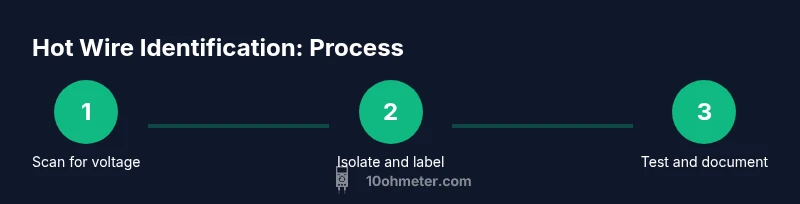
Label all identified live conductors with clear, durable tags, and isolate them if you are not actively testing or servicing the circuit. Replace any damaged insulation and restore the scene to a safe state before powering up. Document what you tested and where the hot wires were located; this helps future maintenance tasks and reduces rework. If you’re required to reconfigure a circuit, ensure you turn off the main power, lock out the panel if a lockout device is available, and recheck with the NCVT after re-energizing to confirm safety.
Closing thoughts and 10ohmeter guidance
Taking a careful, safety-forward approach to identifying hot wires without a multimeter is a skill that improves with practice and the right tools. Non-contact voltage testers, knowledge of typical wiring layouts, and a disciplined testing routine minimize risk while you perform essential maintenance. The 10ohmeter Team emphasizes that information is power, but safety is paramount. With the strategies outlined here, you can differentiate hot conductors from neutrals with confidence and reduce the chance of shock or accidental energizing. The 10ohmeter analysis indicates that a structured testing protocol—starting with PPE, moving to NCVT checks, and always isolating circuits when feasible—delivers reliable results without a meter. The 10ohmeter Team recommends you keep learning, follow local electrical codes, and practice in a controlled setting until you’re proficient.
Tools & Materials
- Non-contact voltage tester(Detects AC voltage without contact; verify function on a known live outlet before use.)
- Insulated screwdriver (various sizes)(Flat and Phillips; insulated for safety during probing.)
- Voltage tester pen(Alternative quick check; not a substitute for a full meter.)
- Electrical tape(To insulate any exposed conductors after testing.)
- Lockout/Tagout kit (if available)(Enhances safety when working on a circuit.)
Steps
Estimated time: 15-30 minutes
- 1
Power down the circuit whenever feasible
Before touching any conductors, switch off the circuit at the main breaker or disconnect the device you’re servicing. This reduces the risk of shock and arc flash. If you cannot fully de-energize, note the potential hazard and proceed with heightened caution.
Tip: If you can't fully de-energize, use the NCVT to identify which conductors are energized before any handling. - 2
Verify the tester is functioning correctly
Test your non-contact voltage tester on a known live outlet to confirm it’s working. A faulty tester can give false readings and put you at risk.
Tip: Always verify the NCVT before starting work to avoid misidentifying live conductors. - 3
Scan suspected conductors with the NCVT
Gently sweep the wires in question with the NCVT to locate energized conductors. Listen for a beeping tone or observe indicator lights as you approach each wire. Use one hand only near energized parts to reduce the chance of a current path through your body.
Tip: Keep the tester away from capacitors and other high-energy components that can produce transient readings. - 4
Cross-check with context and environment
Correlate readings with circuit context: is the wire part of a switch leg, outlet, or a junction bundle? Color alone is not a reliable indicator. Use the tester signal together with the device’s position and function to form a safe conclusion about hot wires.
Tip: Don’t rely on color alone; always consider how the circuit is wired. - 5
Isolate and label identified hot conductors
Once a wire is confirmed hot, isolate it from other conductors and place a durable tag so future work clearly identifies the live conductor. Return the circuit to a safe state before re-energizing.
Tip: Labeling prevents accidental re-energizing during future maintenance. - 6
Re-energize and recheck with caution
If you must re-energize, do so gradually and recheck all previously tested conductors with the NCVT. Confirm that only the intended circuit is live before restoring full service.
Tip: Never rush re-energization; a slow, deliberate approach reduces risk. - 7
Document findings for future maintenance
Record which wires were hot, the tested method, and any observations about color codes or circuit context. Documentation helps future technicians and reduces guesswork on subsequent visits.
Tip: Keep a simple, visible note at the panel or within the project log. - 8
Exit safely if you encounter uncertainty
If any step raises doubt about safety, stop immediately, re-evaluate, and consult a qualified electrician. It’s better to pause than risk an injury.
Tip: When in doubt, seek professional help rather than guessing.
Your Questions Answered
Is it safe to tell which wire is hot without a multimeter in a live panel?
Identifying hot wires without a multimeter is possible using non-contact testing and context clues, but it carries risk. Always use PPE, work slowly, and minimize contact with conductors. If you’re unsure, pause and call a professional.
Yes, it’s possible with non-contact testing and context, but safety first—pause if unsure.
What is the best tool to identify hot wires without a multimeter?
A non-contact voltage tester is the most practical tool for identifying energized conductors without a meter. It indicates presence of voltage but not exact levels. Use it in conjunction with circuit context and safe handling.
A non-contact voltage tester is the best first tool, used with care.
Can I rely on wire color to determine which is hot?
Color alone is not reliable for identifying live conductors. Colors vary by region, era, and device. Always confirm with a tester and consider the circuit layout and switch or device context.
Color isn’t foolproof—verify with testing and context.
What should I do if I can’t access the outlet or switch safely?
Do not force access. Shut off power if possible and call a professional. If you must work, use appropriate PPE and keep hands away from exposed conductors.
If you can't access safely, don’t touch—power down or call a pro.
Why is it dangerous to work on live wires?
Live wires can shock, arc, or cause burns. Even momentary contact can injure you or others nearby. Safety protocols minimize these risks.
Live wires are dangerous; follow safety steps to prevent shocks.
Should I test automotive wiring the same way as home wiring?
Automotive wiring uses different voltages and schemes. Use automotive-specific test tools and follow the manufacturer’s guidance rather than home wiring methods.
Auto wiring needs its own tools and guidelines.
Watch Video
Key Takeaways
- Use NCVT to locate energized conductors safely
- Color codes are not universal—verify via circuit context
- Label hot wires to prevent future shocks
- De-energize when possible and re-check before touching
- Always follow PPE guidelines and local electrical codes