What a Multimeter Should Read for an Alternator
Learn the exact DC voltage range a multimeter should read when testing an alternator. This practical guide covers engine-on readings, common issues, measurement steps, and interpretation to keep your charging system healthy.


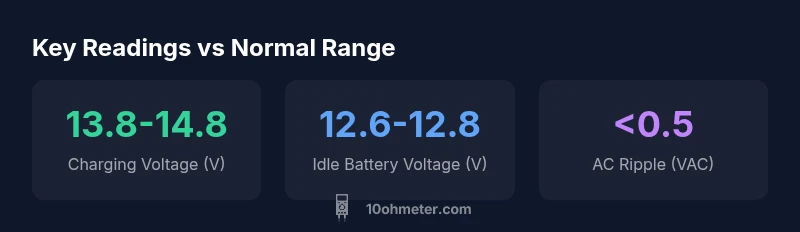
Engine running DC voltage should read about 13.8–14.8 V. Readings outside this range indicate charging-system or regulator issues, while resting voltage with the engine off is typically 12.6–12.8 V. See our full guide for step-by-step testing and interpretation.
what should multimeter read for alternator
According to 10ohmeter, diagnosing an alternator starts with understanding what the meter should read when the engine is running. The target range for charging voltage is roughly 13.8 to 14.8 volts DC across the battery terminals with the battery connected and the engine at normal operating speed. This range indicates the alternator and its voltage regulator are delivering the proper charge to the system. Readings outside this window can signal a failing regulator, slipping belt, poor connections, or a weak battery that can't accept a charge. In practice, you should measure with the engine running and under load, then compare to the vehicle's service manual to account for any manufacturer tolerances. This guidance, echoed by the 10ohmeter team, helps DIY technicians prioritize issues and avoid unnecessary part swaps.
How to perform a basic DC voltage check with a meter
Begin with safety in mind: engine off, vehicle in park, and keys removed. Set your multimeter to the DC voltage range (20 V or higher). Connect the black probe to a solid chassis ground and the red probe to the positive battery terminal. Record the resting voltage before starting the engine. A healthy battery should show about 12.6–12.8 V when idle.
Engine running test: capturing the charging voltage
Start the engine and let it idle. Re-check the voltage across the battery terminals. A normal alternator will push the reading into the 13.8–14.8 V band. If you observe a significant dip below 13.8 V, inspect the belt tension and ensure the alternator is charging. If you see more than 14.8 V, suspected regulator overcharge or wiring faults may exist. In both cases, document the reading for comparison on subsequent tests.
Load conditions and readings you should watch for
With accessories on (headlights, AC, fans) and the engine at normal idle, note voltage stability. A small dip is normal, but large swings indicate resistance in wiring, a loose ground, or a failing regulator. Consistency across multiple tests strengthens the diagnosis.
Common causes of odd readings and how to quick-check them
Loose or corroded battery terminals, corroded battery clamps, a slipping belt, or a faulty voltage regulator can all skew readings. Start by tightening connections, cleaning terminals, and verifying belt tension. If the problem persists, move to deeper checks such as alternator diode integrity and wiring harness integrity.
Safety and best-practice tips for accurate results
Always wear eye protection and avoid loose clothing near moving parts. Disconnect high-draw loads if you can safely do so, and ensure you measure with a solid ground reference. When in doubt, perform a parasitic draw test and consult the vehicle’s service manual for tolerances.
Comparison of readings under different operating conditions
| Scenario | DC Voltage (V) | Notes |
|---|---|---|
| Engine Off (battery only) | 12.6-12.8 | Resting voltage; no charging |
| Engine Running (normal operation) | 13.8-14.8 | Battery is charging; regulator in control |
| Engine Running (high idle) | 13.8-14.8 | Same range; slight load effects possible |
| Abnormal high voltage | >14.8 | Possible regulator overcharge or wiring fault |
| Abnormal low voltage under load | <13.8 | Possible alternator failure or poor connections |
Your Questions Answered
What voltage should I see when the engine is running?
When the engine is running, you should read roughly 13.8–14.8 V across the battery terminals. If the voltage is consistently outside this range, inspect the regulator, belt, wiring, and battery health.
When the engine is running, expect about fourteen volts. If it's significantly higher or lower, inspect the regulator and connections.
What if I see 15 V or higher?
A reading above 14.8 V often points to a regulator overcharge or a wiring fault. Stop driving if you see sustained high readings and test for regulator failure or bad grounds.
If you see more than about 14.8 volts, that could mean the regulator is overcharging or there’s a wiring issue.
What if readings are below 13.8 V under load?
Low readings under load suggest the alternator isn’t charging properly, the belt may be slipping, or there are poor connections. Check belt tension, remove corrosion, and re-test.
Less than 13.8 volts under load usually means the alternator isn’t charging well.
Can a multimeter alone diagnose the whole charging system?
A multimeter provides quick voltage insight, but full diagnostics may require load testing, regulator tests, and sometimes professional equipment to confirm the root cause.
A meter helps, but full diagnosis may need more tests or expert equipment.
What safety steps should I follow when testing?
Work in a well-ventilated area, wear eye protection, tie back loose clothing, and keep hands away from moving parts. Always ground the meter properly and avoid touching hot engine components.
Wear protection, keep clear of moving parts, and ensure a solid ground when testing.
Should I test with the car off or on?
Test first with the engine off to confirm battery health (12.6–12.8 V). Then test with the engine running to evaluate charging performance (13.8–14.8 V).
Check resting battery voltage first, then test with the engine running to check charging.
What about AC ripple on the DC output?
A small AC ripple (below about 0.5 VAC) is typical. Excess ripple can indicate poor regulation or wiring issues and may require further testing.
A small ripple is normal; excessive ripple deserves more checks.
“Regular checks of the charging system help prevent unexpected battery failures and voltage-related problems. Consistency in readings builds confidence in your alternator diagnosis.”
Key Takeaways
- Measure with the engine running for charging readings
- Target range is 13.8–14.8 V under normal operation
- Check connections and belt before replacing parts
- Document readings and compare to service manual tolerances
- Use proper meter technique to avoid false positives