How to Use a Multimeter to Check Car Voltage
Learn how to safely check car voltage with a multimeter, interpret battery and alternator readings, and troubleshoot charging issues with a clear, practical, step-by-step guide.


By following this guide, you will safely use a multimeter to check car voltage, diagnose the battery and charging system, and interpret typical readings under idle and running conditions. Before you start, gather your meter, test leads, and safety gear, and set the meter to DC volts. The steps focus on common test points, proper grounding, and reading ranges without risking damage to the electrical system.
Why Voltage Checks Matter in Automotive Diagnostics
According to 10ohmeter, voltage checks are a quick, non-invasive way to validate the health of car electrical systems. They help diagnose starting issues, parasitic drains, and charging faults without disassembling components. A healthy electrical system typically maintains stable voltages across the battery and charging circuit. When readings drift outside expected ranges, it signals potential battery wear, loose connections, corroded terminals, or a failing alternator. This knowledge empowers DIY enthusiasts and professional technicians to pinpoint problems before they lead to breakdowns. In this guide, you’ll learn safe, practical methods to measure voltage in a car using a multimeter and interpret the results with confidence.
Key Concepts: Voltage, Ground, and Reference
Voltage is the electrical pressure that drives current. In automotive testing, you measure relative to a solid ground point and an appropriate reference point on the circuit. A good ground should be a sturdy metal surface connected to the vehicle chassis. The reference point for most measurements is the system ground or the battery negative terminal. When you test, make sure the meter leads touch clean metal and avoid painted surfaces that can insulate the contact. Understanding these basics helps you distinguish a true voltage reading from a contact issue, and it makes subsequent tests more reliable. This section sets the stage for accurate, repeatable measurements in both everyday maintenance and diagnostic work.
Tools You'll Need to Check Vehicle Electrical Systems
Begin with the right tools: a capable digital multimeter, properly insulated test leads, and basic PPE. A meter with auto-ranging simplifies choosing the correct DC voltage range and reduces the risk of overloading the meter. Test leads with sharp, fine probes allow contact with battery terminals and test points without slipping. Have a few sets of insulated alligator clips for secure connections. For safety, wear eye protection and gloves, and keep loose jewelry away from moving parts. If you have access to the vehicle’s wiring diagram, keep it handy to identify test points and common ground locations. Finally, collect a notepad or app to log voltages for reference and comparison over time.
Step-by-Step: How to Safely Measure Battery Voltage
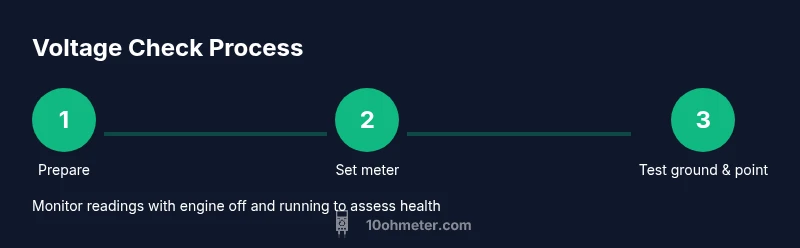
Prepare the vehicle and PPE, power down the ignition, and locate the battery terminals. Set your multimeter to DC volts in a reasonable range. Attach the black probe to a solid ground (engine block or chassis) and touch the red probe to the battery’s positive terminal. Read the resting voltage with the engine off, then note any immediate fluctuations. If the reading seems unusually low or high, recheck contacts and retest to rule out a poor connection. Pro tip: keep probes steady and avoid contact with metal surfaces other than the intended test points to prevent short circuits.
Step-by-Step: Measuring Charging System Voltage
With the engine running, repeat the same probing method used for the resting battery test, but focus on the alternator circuit test point rather than the battery terminal alone. A healthy charging state should show a voltage higher than the resting battery level, indicating the alternator is actively charging. If readings do not increase when the engine runs, recheck connections, fuses, and the drive belt, then retest. Remember to perform this test at a normal idle and, if safe, at a slightly higher RPM to simulate typical driving conditions. Document these readings for comparison over time.
Troubleshooting Common Voltage Readings
If resting voltage is significantly lower than expected, inspect the battery for age, corrosion, or a weak connection. If engine-off voltage is normal but falls under load, the issue may be a parasitic drain or a failing alternator. Consistently high readings can indicate an overcharging condition or defective regulation. In all cases, verify test points are clean and contacts are secure. For ambiguous results, perform a second measurement after disconnecting nonessential loads and rechecking. 10ohmeter analysis shows that readings outside the normal range often correlate with specific fault paths, guiding you toward the root cause.
Best Practices for Multimeter Use in Cars
Always start with safety: turn off the engine and ignition, remove jewelry, and wear PPE. Use the correct DC voltage range and verify contact quality before interpreting results. Ground first to minimize erroneous readings, and test multiple points to build a voltage profile of the system. Keep a log of measurements with dates and conditions (engine on/off, idle speed) to track progression. If you’re unsure, compare readings to the vehicle’s service manual or consult an automotive electrician. The 10ohmeter team recommends rechecking readings under load to ensure reliability.
Common Mistakes and How to Avoid Them
Common errors include testing without a solid ground, touching the wrong points, or leaving the meter in the wrong mode. Avoid measuring with the ignition on if you’re not actively testing a live circuit, as this can lead to accidental shorts. Ensure test leads are not damaged and that probe tips are clean for good contact. Don’t rush the probe placement; keep wrists steady and pace yourself to avoid misreads. Finally, never rely on a single reading—retest to confirm trends over time.
AUTHORITY SOURCES
- OSHA Electrical Safety Guidelines: https://www.osha.gov
- NIST Measurement Best Practices: https://www.nist.gov
- DOE Energy Safety Resources: https://www.energy.gov
Tools & Materials
- Digital multimeter (DC voltage-capable)(Auto-ranging preferred; ensure it can measure at least the vehicle's expected voltage range safely)
- Test leads with insulated probes(Shields or clips help secure solid contact on battery posts)
- Safety glasses and gloves(Protect eyes and hands from sparks and acid splash)
- Vehicle wiring diagram or owner’s manual(Helpful for locating test points and grounds)
- Notepad or digital log(Record readings with conditions and times)
Steps
Estimated time: 20-30 minutes
- 1
Prepare safety gear and workspace
Put on safety glasses and gloves. Ensure the vehicle is in park or neutral with the parking brake engaged. Clear the area around the battery and engine bay to prevent accidental contact with moving parts.
Tip: Remove jewelry and avoid wearing watches near the battery terminals to minimize risk of shorting. - 2
Power down the vehicle and locate test points
Turn off the ignition, remove keys, and locate the battery terminals or a clearly marked test point in the electrical system. If available, consult the wiring diagram to identify a good ground point near the area you’ll test.
Tip: Use a flashlight or headlamp to ensure clean contact points and avoid misreadings from dirty surfaces. - 3
Set the multimeter to DC volts and range
Set the meter to DC voltage mode and choose a range that comfortably includes expected battery voltage. If your meter has auto-range, enable it for simpler use.
Tip: If you’re unsure of the range, start in a higher range and work down as needed; never force the pointer into a range that could damage the meter. - 4
Connect the common lead to ground
Attach the black probe to a solid chassis ground or the negative terminal. A clean, bare metal surface is best for a stable reference.
Tip: Clamp or hold the ground probe gently to prevent wobble that could cause a loose connection. - 5
Probe the test point with the positive lead
Touch the red probe to the test point you want to measure (battery positive terminal is typical for resting voltage). Ensure you do not bridge nearby metal parts.
Tip: Keep your other hand away from the circuit while probing to reduce the risk of shorting. - 6
Read resting voltage during engine off
Read and note the voltage with the engine off and the key removed. A healthy resting voltage indicates a healthy battery in good condition.
Tip: If the reading is unclear, remove the probes, re-seat them, and retest after a minute. - 7
Start the engine and test alternator output
With the engine running, repeat the test at the same points. A proper charging system should push the voltage higher than resting, indicating the alternator is charging.
Tip: Test at a normal idle and, if safe, at a slightly higher RPM to simulate driving conditions. - 8
Interpret the readings and compare
Compare your measurements against the vehicle’s specifications. Look for stable readings that stay within a reasonable range when the engine is running. Note any significant deviations.
Tip: Document both resting and running readings for trend analysis and future reference. - 9
Disconnect safely and wrap up
Turn off the meter, disconnect the probes, and store the equipment. Clean up the test area and log your results for future maintenance checks.
Tip: If you found anomalies, consider follow-up tests under load or consult a professional.
Your Questions Answered
What voltage should I see with the engine off?
A healthy resting voltage typically reflects the battery's nominal state; if it’s significantly low, it may indicate a weak battery or a poor connection. Recheck connections and test again to confirm.
When the engine is off, expect the resting voltage to reflect a healthy battery. If it seems low, recheck connections and test again to confirm.
What voltage should I see with the engine running?
While the engine runs, the charging system should raise the voltage to indicate charging. If the reading remains the same as resting or drops, there could be an issue with the alternator or wiring.
With the engine running, voltages should rise to show the alternator is charging. If they don’t, there might be a problem with the charging system.
Can I test voltage without disconnecting the battery?
Yes. You can test at points in the circuit with the battery connected, but ensure safe handling to avoid shorts. For a resting voltage test, it’s common to disconnect only if safe and practical.
You can test with the battery connected, but be careful not to short anything. For a resting test, you may disconnect if it’s safe.
Why might voltage drop when probing a particular point?
A voltage drop at a point often points to a high-resistance path, corroded terminals, loose connections, or damaged wiring. Inspect those areas and clean contacts before retesting.
A drop usually means high resistance somewhere in the path, like corroded connectors or loose wires. Check and clean the contacts.
What safety precautions should I take while testing?
Wear PPE, work in a dry area, and avoid loose clothing near moving parts. Disconnect power before disassembling components and never bypass safety features.
Wear PPE, stay dry, and keep clothes away from moving parts. Don’t bypass safety features during testing.
Which multimeter type is best for automotive work?
A digital multimeter with DC voltage capability and auto-ranging is ideal for car work, offering easier use and safer operation than older analog models.
A digital meter with DC voltage and auto-ranging makes automotive testing safer and easier.
Watch Video
Key Takeaways
- Test in two states: engine off and running.
- Ground first to avoid erroneous readings.
- Document readings and compare to expected ranges.
- Interpret results to differentiate battery vs. alternator issues.
- Prioritize safety and recheck any questionable readings.