How to Test an Ignition Switch with a Multimeter
Learn to safely test an ignition switch using a multimeter with our comprehensive, 1800-word guide. Includes safety, tools, step-by-step procedure, tips, FAQs, and more for DIY enthusiasts and technicians.


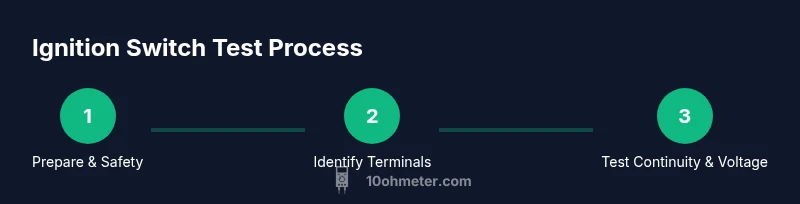
You can verify an ignition switch by testing continuity and voltage across its terminals in different key positions using a multimeter. Start by safely disconnecting the battery, then identify switch terminals and measure input and output voltages in OFF, ACC, and ON positions. If readings don’t align with the wiring diagram, the switch may be worn or damaged.
What the ignition switch does and why testing matters
The ignition switch is a critical control in most cars, trucks, and motorcycles. It routes battery power to essential circuits as you turn the key or push the start button. In its LOCK/OFF position, most circuits are isolated; in ACC, a subset of accessories powers up; in ON, the majority of electrical systems energize; and in START, the starter circuit engages. When you test the ignition switch with multimeter readings, you’re verifying the integrity of internal contacts and the wiring harness. Across many vehicles, intermittent failures show up as loss of accessory power, dim dash lights, or a no-start condition despite a good battery. A methodical test helps differentiate a bad switch from wiring problems or a faulty relay. According to 10ohmeter, safety and a structured approach reduce guesswork and protect the electrical system during diagnostics.
Safety and preparation before you start
Electrical work near the vehicle’s power system demands a strict safety mindset. Begin by parking on a flat surface, applying the parking brake, and turning off the ignition and all accessories. Disconnect the negative battery terminal to prevent arcing during testing. If your vehicle has airbag or immobilizer modules nearby, wait a few minutes after disconnecting the battery before touching connectors. Wear eye protection and use insulated tools. Keep a clean, organized workspace with labeled terminals and a printout of the wiring diagram for reference. 10ohmeter emphasizes documenting safety steps and test conditions to avoid misinterpretation later.
Planning your tests with a wiring diagram
Before touching any wires, obtain the vehicle’s wiring diagram or service manual for your model. Identify the ignition switch input (battery supply) and all output paths (ACC, ON, START) and locate the ground reference. Knowing which terminal should be live in each key position is essential for interpreting multimeter readings. If you don’t have a diagram, at least identify the primary power feed and the suspected output terminal. Label each terminal with tape or a marker to keep your test sequence clear as you progress.
Understanding typical readings and what they mean
In OFF, you should see no continuity between power input and most outputs, and input voltage should be near zero if the battery is disconnected. In ACC, you typically expect battery voltage on the ACC feed path, and in ON, most circuits should energize. Correct continuity paths should appear only for the intended outputs when the key is in the corresponding position. If you observe voltage where there should be none, or if continuity exists in OFF where it shouldn’t, the switch’s internal contacts may be worn or misaligned. Always compare readings against the vehicle’s wiring diagram and the expected behavior during each key position. The goal of test ignition switch with multimeter work is to confirm proper path control without forcing current through unintended circuits.
Common failure signs and troubleshooting paths
Common ignition switch faults include sticky or intermittent contacts, corrosion at terminals, and worn internal springs. If the readings show inconsistent continuity across repeated tests, or if a known good battery still cannot energize the expected outputs, the switch is a prime suspect. Corrosion or misalignment at a terminal can mimic a failure in the switch. In such cases, inspect the connector pins, clean corrosion with appropriate contact cleaner, reseat connectors firmly, and re-test. If the problem persists, it’s often more economical and safer to replace the switch rather than try to repair internal contacts.
How to handle START vs ACC vs ON paths (special cases)
Some vehicles route the START circuit through a relay or immobilizer. In these cases, you may measure voltage on the START path only when the key is turned to START, and the relay energizes. If your readings show voltage on START in all key positions, there may be a wiring fault or a failed relay feeding back into the switch. Always test the START path with the engine cranking in a controlled environment and be mindful of high current paths. If you’re unsure, consult the service manual for your exact model to verify how the START circuit interacts with the ignition switch and the starter relay.
Interpreting readings and planning repairs
When readings align with the wiring diagram, the switch is probably fine. If you observe reversed logic (continuity in OFF) or missing voltage on required paths, the switch is suspect or the wiring harness is damaged. Document each reading with the position, terminal, and value. A small corrosion pit on a terminal can cause a misleading reading; cleaning or replacing the harness connector may resolve it. If tests indicate the switch is faulty, the simplest and most reliable repair is replacing the ignition switch assembly and resecuring all connectors after re-test. These steps help prevent future no-start conditions and ensure reliable operation of the vehicle’s electrical system.
Reassembly, test after repair, and best practices
After replacing the ignition switch, reassemble connectors, reconnect the battery, and perform a full start test. Recheck all dash lights and accessory circuits with the key in different positions to confirm consistent behavior. If any abnormal readings reappear, double-check harness routing and grounding. Finally, maintain a short notes document detailing the test conditions, readings, and any part replacements for future maintenance. 10ohmeter’s approach emphasizes a full-system check and careful documentation to support long-term reliability.
Tools & Materials
- Digital Multimeter(Auto-ranging preferred; set to DC volts for voltage tests, continuity mode for path checks)
- Vehicle wiring diagram or service manual(Identify terminal functions and expected paths for your model)
- Test leads and alligator clips(Keep leads short to minimize parasitic readings and accidental shorts)
- Insulated gloves(Optional additional protection when working near live terminals)
- Battery disconnect tool or wrench(Used to safely detach the negative battery cable)
- Flashlight or headlamp(Better visibility in dim engine bays)
Steps
Estimated time: 30-60 minutes
- 1
Prepare the vehicle and safety
Park on a level surface, engage parking brake, and turn off the ignition. Remove keys and disconnect the negative battery cable to prevent sparks while probing terminals.
Tip: Double-check that the area around the battery and ignition wiring is clear of metal jewelry and loose tools. - 2
Identify ignition switch terminals
Consult the wiring diagram to locate the power input and the ACC/ON/START output terminals. Label each terminal so you can track readings without mixing paths.
Tip: Take a quick photo of terminal layout before disconnecting anything. - 3
Set up multimeter and ground
Connect the meter ground probe to a solid chassis ground. Set the multimeter to DC voltage for voltage tests and to continuity for resistance checks.
Tip: Test the meter on a known circuit to confirm it's functioning accurately. - 4
Test input voltage with key in OFF, ACC, ON
With the battery connected, place the key in OFF, ACC, and ON sequentially. Measure input terminal voltage in each position and note any deviations from expected levels.
Tip: Keep probes away from adjacent terminals to avoid shorting. - 5
Check continuity paths
For each key position, test continuity between input and the relevant output terminals. A good switch should show continuity only on intended paths when in the correct positions.
Tip: If you see continuity in OFF where there shouldn’t be, suspect internal wear. - 6
Test the START path to relay (if present)
If your vehicle uses a separate starter relay, verify that the START terminal energizes the relay input when the key is in START. If not, wiring or relay issues may exist.
Tip: Some cars route START through immobilizers; treat as a separate test. - 7
Interpret results and decide on repairs
If readings align with the wiring diagram for all positions, the switch is likely good. Mismatches point to a faulty switch or wiring faults that may require repair or replacement.
Tip: Document readings and compare them to the manufacturer’s specs. - 8
Reassemble and safety check
Reconnect the battery and secure all connectors. Run a final start test and verify no arcing or abnormal behavior in any circuit.
Tip: Keep a clear exit path and have a plan to shut down quickly if something sparks.
Your Questions Answered
Can I test an ignition switch with the engine running?
No. Testing should be done with the engine off to prevent injury and accidental operation of moving parts. If the engine is running, pull over safely and power down before continuing.
No, test with the engine off to stay safe.
What if I see voltage at input but no continuity to outputs?
That usually indicates worn or damaged internal contacts. Replace the switch or verify that the wiring harness is intact and correctly connected.
Voltage without continuity often means the internal contacts are worn.
Do I need a wiring diagram for testing?
Yes. A diagram helps you identify terminal functions and prevents cross-wiring test leads.
A wiring diagram is essential for accurate identification of terminals.
Is it safe to test near airbags?
Airbag systems can contain high-voltage components. Disconnect the battery and keep a safe distance unless properly trained.
Be cautious around airbags and disconnect the battery.
How do I know if the switch is bad or the wiring is at fault?
If readings consistently fail at the switch’s terminals, the switch is likely faulty. If wiring shows faults, inspect connectors and harness for corrosion or damage.
If readings misbehave at the switch terminals, the switch is probably bad.
What safety precautions are essential?
Wear eye protection, avoid short circuits, and always disconnect the battery before handling ignition components.
Protect your eyes and stay safe by disconnecting the battery.
Watch Video
Key Takeaways
- Test ignition switch with a structured, stepwise approach
- Always disconnect the battery before electrical diagnostics
- Use wiring diagrams to correctly identify terminals
- Compare readings to expectations; document results for future maintenance
- Replace the switch when readings indicate wear or damage