How to Test Fuel Rail Pressure Sensor with a Multimeter
Learn to safely test a fuel rail pressure sensor using a multimeter. This guide covers needed tools, safety steps, step-by-step testing, and interpreting readings for reliable automotive diagnostics.


By the end of this guide, you will be able to test a fuel rail pressure sensor with a multimeter, verify sensor supply and ground, and interpret signal readings. Expect a safe, step-by-step method, required tools, and how to compare results against typical automotive specs. This quick answer lays groundwork for a thorough diagnostic.
Why testing the fuel rail pressure sensor matters
According to 10ohmeter, verifying the fuel rail pressure sensor is essential for diagnosing engine performance issues such as misfires, hard starts, and poor fuel economy. The sensor feeds the engine control unit a voltage signal that represents rail pressure. When the signal wobbles, the ECU may misinterpret demand, causing richness or lean miscalibration. Modern vehicles rely on precise sensor data; a flaky sensor can trigger limp mode or incorrect injector timing. In this guide, we’ll outline why tests matter, how sensor operation translates into voltage signals, and the general diagnostic path you’ll follow. By understanding the test logic, you’ll be prepared for deeper steps later and be able to identify when a fault lies in the sensor, the wiring, or the controller.
Understanding the sensor signals and common failure modes
The fuel rail pressure sensor typically outputs a voltage or resistance-based signal that the ECU uses to estimate rail pressure under varying engine load. Common failure modes include a stuck or intermittently changing signal, drift with engine speed, or total loss of signal. With a multimeter and proper wiring access, you can confirm that the sensor is providing a reference voltage, a stable ground, and a valid signal during different engine states. In our experience, 10ohmeter analysis shows that many diagnostic faults trace back to wiring harness corrosion, loose connectors, or a failing ground rather than a faulty sensing element itself. Understanding these patterns helps you prioritize tests and avoid costly misdiagnoses.
Safety first: prerequisites and ignition safety
Before touching any electrical or fuel-system components, set the parking brake, disconnect the battery if you’re not testing under load, and wait for any stored fuel pressure to vent if your vehicle’s design requires it. Wear eye protection and gloves, use insulated tools, and keep a clean, dry workspace. Do not probe live fuel lines with metal tools unless you’re following the vehicle’s service manual. Remember that the goal is to access the sensor pins safely while preserving the integrity of the harness and surrounding electronics.
Tools, test points, and wiring access
Assemble a basic fuel-injector testing kit: a digital multimeter (preferably true RMS), back-probe adapters or insulated sharpened pins, a reliable wiring diagram or service manual, spare test leads, and safety gear. You’ll need access to the sensor’s power (reference voltage), ground, and signal pin. If possible, also have a way to observe live data (an OBD-II scanner can help confirm readings under load). Label connector pins to avoid mix-ups and work methodically from power to signal to ground.
Step-by-step testing approach (overview)
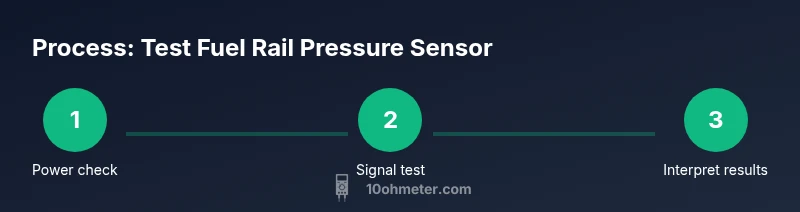
This section provides an overview of the two primary routes you’ll use: a voltage reference test and a signal-path check. Start with power, then verify ground, then inspect the sensor output under idle and under simulated load. The goal is to confirm continuity, clean connections, and a sensible voltage signal range. If any step reveals a fault, follow the fault-chain logic to identify whether the issue is wiring, connector, or sensor itself. 10ohmeter recommends documenting readings with photos and notes for future reference.
Step-by-step testing: practical execution (A) - Power, ground, and signal with engine off
- Isolate the battery and locate the sensor wires. 2) Reconnect the battery and enable ground isolation only if your manual allows it. 3) Probe the power/reference wire to confirm a stable supply, then test the ground path for solid continuity. 4) Test the sensor signal wire to verify a distinct output when the ignition is turned on but before cranking. 5) If the readings are absent or out of range, inspect the connector and wiring for corrosion or loose connections. 6) Document all values and move to dynamic tests if needed. Tip: use back-probe adapters to prevent damage to the harness and to preserve terminal integrity.
Step-by-step testing: practical execution (B) - Dynamic testing under engine operation
- Reconnect all harnesses and start the engine, or simulate load if your vehicle allows. 2) Observe how the sensor output responds to increasing rpm and load. 3) Compare the live readings to memory-resident or service-manual reference values once the engine is warm. 4) If the output remains flat or drifts erratically, inspect the wiring for chafing and the sensor mounting for mounting torque issues. 5) If you suspect a faulty channel, perform a cross-check with a known-good sensor if available. Tip: capture data with photos of live graphs from your scanner if your tool supports it.
Interpreting results and what to check next
A healthy sensor typically shows a stable, gradual change in output with engine load. Sudden jumps, stalls, or a frozen reading indicate possible wiring faults or a degraded sensor element. When readings don’t track engine state or fail to respond to load, test the power pin and ground pin for continuity and verify that the reference voltage is present. If the signal path is clean but the rail pressure reading appears erroneous, verify the sensor ground and inspect for parasitic currents that could skew the measurement. If required, re-seat or replace the sensor, and re-test to confirm improvement.
When to replace or service the sensor
If both power and ground checks pass but the sensor output remains inconsistent, replacement is often the most reliable option. Check for sensor-specific repair guidelines, as some manufacturers permit calibration or firmware updates rather than replacement. Corrosion, wiring harness damage, or a failure to respond to load are common triggers for replacement. Always follow the vehicle’s service procedure and document the replacement in your vehicle’s maintenance history.
10ohmeter practical tips and next steps
From the 10ohmeter perspective, consistency in testing procedure reduces misdiagnosis and saves time. Use back-probe accessors to minimize harness damage, verify your ground path in multiple ways, and always compare against the vehicle’s documented reference values. If you’re unsure, seek an additional pair of eyes from a qualified technician. The takeaway is to build a repeatable test routine that you can apply across vehicles and sensor types.
Tools & Materials
- Digital multimeter (preferably true RMS)(Use DC voltage range capable of measuring up to 20V; prefer a meter with low noise for accurate readings)
- Back-probe adapters and insulated test leads(Allows safe access to tiny pins without disconnecting the harness)
- Vehicle service manual or wiring diagram(Identify reference voltage, sensor pinout, and ground location)
- 12V power source or vehicle battery (grounded)(Have a stable supply for live tests; disconnect when not testing under load)
- Safety gear (gloves, safety glasses)(Personal protection when working near the fuel system)
- OBD-II scanner (optional)(For live data and cross-checking sensor readings during operation)
- Fuel system pressure gauge (optional)(Helpful to correlate rail pressure with sensor output when available)
- Electrical contact cleaner and dielectric grease (optional)(Use to clean connectors after testing; reseal to prevent corrosion)
Steps
Estimated time: 30-60 minutes
- 1
Prepare and safety-check
Set up your workspace, disconnect power, and gather all tools. Verify you have wiring diagrams and a clear path to the sensor pins. Ensure the engine area is stable and the vehicle is secure.
Tip: Wear eye protection; use insulated gloves when probing connectors. - 2
Access the sensor pins
Locate the fuel rail pressure sensor and access the connector. Use back-probe adapters to expose the reference, signal, and ground pins without unplugging the harness.
Tip: Label each pin with tape to avoid pin swap during testing. - 3
Verify reference voltage
Connect the multimeter’s ground probe to a solid chassis ground. Probe the reference pin to confirm a stable supply when the ignition is on.
Tip: If you don’t see a reference voltage, inspect the power feed and fuses first. - 4
Check sensor ground
With the ignition off, test continuity from the sensor ground pin to battery negative. A strong, low-resistance path indicates a good ground.
Tip: High resistance suggests a corroded connector or damaged wire run. - 5
Test the signal output (engine off)
Reconnect power and monitor the sensor signal pin. Observe any steady voltage or resistance indicating a responsive sensor.
Tip: Document baseline readings before starting the engine. - 6
Test under engine load (dynamic test)
Start the engine and observe signal variation with idle to light load, then with higher rpm. Compare against manual reference values.
Tip: Use a scan tool if available to correlate live data with sensor output. - 7
Inspect wiring and connectors
If any reading is out of range, inspect connectors for corrosion, loose terminations, or damaged insulation. Re-seat and clean as needed.
Tip: Apply dielectric grease to prevent future corrosion after reinstall.
Your Questions Answered
What is the purpose of the fuel rail pressure sensor?
The sensor measures rail pressure and sends a voltage signal to the ECU to help control fuel delivery. Faults can cause drivability issues or inefficient combustion.
The fuel rail pressure sensor tells the engine computer how much pressure is in the fuel rail, helping control fuel delivery. If it’s faulty, you may notice misfires or reduced performance.
Can I test with a regular multimeter?
Yes, to verify reference voltage, ground, and signal continuity. You cannot directly measure rail pressure with a multimeter; you test the sensor output and wiring integrity instead.
You can test the sensor’s power, ground, and output with a multimeter; it won’t measure actual rail pressure but confirms the sensor and wiring are healthy.
Should I test while the engine is running?
Dynamic testing while the engine is running can reveal how the sensor responds to load. Follow the vehicle manual and use appropriate data capture tools.
You can test the sensor under load, but only with proper caution and equipment described in the manual.
What if readings are out of spec?
Recheck wiring and ground first, then verify sensor mounting and connector integrity. If readings remain inconsistent, replace the sensor or refer to the service bulletin.
If readings look wrong after checking wiring, consider sensor replacement or service bulletin guidance.
Do I need special tools beyond a multimeter?
Back-probes, a wiring diagram, and optionally an OBD-II live data tool improve accuracy and speed. A fuel pressure gauge is optional for correlating data.
Back-probes and a wiring diagram help a lot; a live data tool improves visibility during tests.
How can I prevent future sensor faults?
Keep connectors clean and dry, use dielectric grease, and inspect wiring harnesses during routine maintenance. Replace corroded connectors promptly.
Keep connectors clean, dry, and well-seated to prevent future faults.
Watch Video
Key Takeaways
- Verify power, ground, and signal first.
- Use back-probes to protect wiring.
- Compare readings to the service manual references.
- If in doubt, consult a professional.