How to test a fuel pump with a multimeter
Learn to diagnose a fuel pump using a multimeter with safe, practical steps. This guide covers voltage, ground, and resistance tests, plus in-vehicle and bench testing to distinguish wiring faults from a dying pump.


With a multimeter, you can diagnose a fuel pump by checking voltage at the pump connector, confirming a solid ground, and evaluating the pump motor windings. Perform ignition-on, crank, and bench tests to distinguish wiring faults from a bad pump. This structured approach helps you identify faults quickly, safely, and without unnecessary part replacements.
Understanding the fuel pump electrical path
The fuel pump in most gasoline vehicles sits in the fuel tank and is wired to a relay controlled by the ignition switch or the engine control module. When you turn the key or engage the start sequence, the relay closes and applies battery voltage to the pump. The pump then draws current and creates the pressure needed to push fuel through the lines. A multimeter helps you confirm three core aspects: voltage at the connector, a solid ground path, and the resistance of the pump windings if accessible. According to 10ohmeter, diagnosing fuel-pump electrical health starts with validating that the fuse and relay are functional, and then verifying voltage at the pump under key-on and during cranking. Understanding this electrical path helps you distinguish a faulty pump from a wiring or control issue, and reduces unnecessary replacements.
Safety first: essential precautions before you test
Fuel systems operate under pressure and contain flammable vapors. Work in a well-ventilated area away from sparks or flames. Disconnect the battery before disconnecting pump wiring if you’re not performing live-voltage checks, and keep a fire extinguisher within reach. Use insulated tools and wear eye protection. If you must depressurize the system, follow the vehicle’s manual steps to relieve pressure safely. Avoid pinched wiring or damaged connectors, which can create false readings or shorts. If you feel unsure at any point, pause and consult the service manual or a qualified technician. Safety should always come first, even when you’re chasing an easy diagnostic win with a multimeter.
What you’ll measure and why (voltage, ground, resistance)
Voltage at the pump connector is your primary signal. With the ignition on, you should see a stable voltage indicating the relay is energizing. During cranking, voltage should remain present, though some cars may temporarily drop voltage as the starter draws power. Ground continuity ensures the return path for current; a high-impedance ground can mimic a pump problem. If you can access the pump windings, measuring resistance can reveal an open circuit or short. Keep in mind that pump windings are designed for a specific range; readings outside that range usually indicate a faulty motor. Remember that many vehicles route the pump power through multiple circuits, so you may also be checking the relay coil and control module input. This is where a wiring diagram and a steady hand with your meter become invaluable.
Accessing the pump and preparing the vehicle
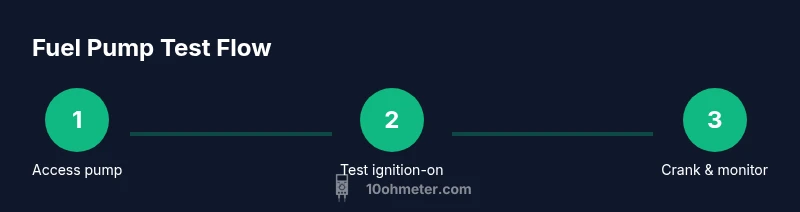
Locate the fuel pump access panel per the service manual; in many cars it’s under the rear seat or in the trunk. Before touching the wiring, disconnect the battery to avoid shorts. Look for the two-pin or multi-pin connector at the pump; inspect for corrosion, loose pins, or damaged seals. If you need to reach the connector, use a back-probe tool or carefully expose the wires with a plastic prying tool. Have a partner turn the ignition on while you observe the meter reading, or use a bench setup if you’re testing outside the vehicle. Documentation and patience reduce risk and improve accuracy.
Interpreting readings: what to look for and how to respond
A steady voltage at the pump connector during ignition-on indicates power is reaching the pump. If voltage collapses during crank, investigate wiring or relay reliability. A good ground path should show low resistance; a flaky ground can masquerade as a pump failure. If you can access the windings, a very high or infinite resistance suggests an open motor, while a very low resistance may indicate a short. When readings don’t align with the vehicle’s wiring diagram, re-check connectors, fuses, and the relay. Always correlate electrical symptoms with fuel pressure and engine performance for a complete diagnosis.
Troubleshooting common faults and next steps
If you don’t see voltage where you expect it, verify the fuse, relay, and control module signals first. Corroded or loose connectors are common culprits; reseat or replace as needed. If resistance is out of range, the pump may be failing internally, requiring replacement. When voltage and ground test fine but the pump still doesn’t run, consider relay or ECU control faults. For stubborn cases, a bench test with a known-good supply can help rule out vehicle circuitry. Finally, if you replace the pump, double-check the wiring harness for damage to prevent rapid future faults.
Extending testing on a bench: when you can pull the pump out
Bench testing lets you simulate operating conditions outside the tank. Use a stable 12V power source, proper wiring, and a resistor or current-limiting device to mimic real load. Listen for pump operation and monitor voltage as you apply power. This isolated test helps verify pump function without risk to the vehicle’s fuel system. Always follow vehicle-specific procedures when removing the pump to avoid damage and ensure safe disposal of any residual fuel.
Tools & Materials
- Automotive digital multimeter(Prefer a meter with true-RMS reading and a 12V-20V range)
- Back-probe electrical test leads or insulated pin probes(Helps access pins without unplugging connectors)
- Connector inspection tools (back-probe kit)(Optional but helpful for avoiding damage)
- Vehicle wiring diagram or service manual(Needed to identify pump circuit, relays, and fuses)
- Insulated gloves and eye protection(Safety essential around fuel system)
- Flat-head and Phillips screwdriver(Use only if panel removal is required)
- Bench power supply or 12V battery with test leads(For bench-testing the pump outside the car)
- Fire extinguisher and a clean, well-ventilated space(General safety precautions)
Steps
Estimated time: 30-60 minutes
- 1
Prepare workspace and safety gear
Collect tools, read the service manual, and ensure the vehicle is in a safe, ventilated area. Disconnect the battery to avoid accidental shorts while wiring is exposed.
Tip: Double-check for any fuel leaks before proceeding. - 2
Access the fuel pump connector
Locate the access panel or pump housing as per the manual, and gain physical access to the connector. Inspect for corrosion or damaged seals before touching wires.
Tip: Use a back-probe tool to avoid bending pins. - 3
Verify ignition-on voltage at the connector
With the ignition on, measure voltage at the pump connector relative to a solid chassis ground. Note whether voltage is present and stable.
Tip: If voltage is missing, inspect fuses and relay state first. - 4
Crank the engine and test voltage during start
Ask a helper to crank the engine while you monitor the pump supply. Look for voltage presence and any transient drops that suggest wiring or relay issues.
Tip: Record any voltage dips to compare with service specs. - 5
Check pump ground continuity
With the engine off, test continuity between the pump ground and chassis. A high resistance ground can imitate pump faults.
Tip: Replace damaged connectors and re-seat grounds if readings are unstable. - 6
Measure windings resistance if accessible
Carefully access pump windings and measure resistance. A reading that is open or very abnormal typically indicates a faulty motor.
Tip: Do not force readings; ensure probes contact the correct terminals. - 7
Bench-test the pump on a controlled supply
If you can remove the pump, connect it to a bench supply with proper wiring and observe operation under load. Listen for consistent operation and verify that current draw is within expected range.
Tip: Keep a fire-safe distance and monitor for heat during bench tests.
Your Questions Answered
What should I do if I don’t see voltage at the pump during ignition-on?
First, inspect the fuse and relay, then trace the wiring to the pump. Check for corrosion at connectors. If the relay coil isn’t energizing, the control circuit or ECM may be at fault. Don’t replace the pump yet.
If you don’t see voltage when you turn the key on, check fuses and the relay first, then inspect the wiring to the pump. The control circuit could be at fault rather than the pump itself.
Can I test the fuel pump without removing it from the tank?
Yes. In many cases you can test at the connector with the wiring harness connected. This preserves the original wiring path and can reveal faults in the harness or connector. If readings are inconclusive, a safe bench test may be necessary.
Yes—many tests can be done at the connector with the harness in place. If that doesn’t reveal the issue, a bench test might be required.
Why would voltage drop during cranking even if the ignition on voltage is correct?
Cranking draws more current from the battery, causing a temporary voltage drop. Check the battery health, wiring, and connections; a failing battery or high resistance in the ground path can amplify this effect.
During cranking, the battery and wiring are under heavier load, so voltage can drop. Check battery health and grounds to rule out other causes.
Is it always the fuel pump if readings are abnormal?
Not necessarily. Abnormal readings could come from wiring damage, a faulty relay, or control module issues. Use the reading context and vehicle wiring diagrams to decide whether replacement is warranted.
Not always—the problem could be wiring, a relay, or the control module. Use the readings to narrow it down before replacing the pump.
Do I need special safety precautions when depressurizing the fuel system?
Yes. Follow the vehicle service manual. Depressurizing can release fuel under high pressure; use approved procedures and perform in a well-ventilated area with protective gear.
Yes. Always follow the manual and wear protective gear when depressurizing the fuel system.
What’s the best way to verify results after replacements?
Re-run the ignition-on voltage test, then perform a crank test to ensure the pump operates under load. Confirm fuel pressure once the system stabilizes and inspect for leaks.
After repair, recheck voltage and crank tests, then confirm fuel pressure and check for leaks.
Watch Video
Key Takeaways
- Verify power, ground, and windings to isolate faults
- Differentiate wiring issues from a failing pump through ignition and crank tests
- Use bench testing to confirm pump function outside the tank
- Safety cannot be skipped around fuel systems
- Consult the vehicle manual to align readings with specs