How to Test a Cam Sensor with a Multimeter: Step-by-Step Guide
Learn how to safely test a cam sensor with a multimeter, interpret readings, and verify sensor health for automotive diagnostics. Includes safety tips, step-by-step actions, and practical troubleshooting.


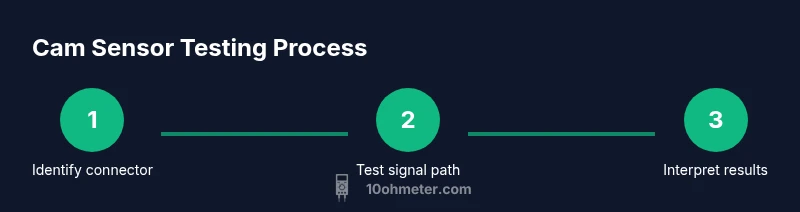
By following this guide, you will learn how to test a cam sensor with a multimeter and verify its health. You’ll check signal presence, basic resistance, and wiring continuity, then compare results against the vehicle’s specs to identify faults before costly replacements. The workflow emphasizes safety, documentation, and interpreting readings in the context of engine diagnostics.
How cam sensors work in modern engines
Cam sensors are responsible for telling the engine control unit (ECU) where the camshaft is positioned at any given moment. There are different technologies, including Hall-effect and passive/inductive types. In most systems, the sensor produces a repeatable electrical signal whose edges correspond to tooth passes or rotor slots. The ECU uses this timing data to synchronize fuel injection and ignition. Understanding the basics helps you interpret multimeter readings, because faulty wiring, corrosion, or a degraded signal will alter signal shape or continuity rather than simply produce a single failed reading.
Key takeaways:
- Sensor output varies by type; consult the service manual for your model.
- Signal integrity is as important as a simple “present/not present” check.
- Always consider wiring and grounds as potential fault sources.
Why test a cam sensor with a multimeter
A multimeter is a versatile first-line diagnostic tool for cam-sensor issues. It lets you check for electrical continuity, resistance on the sensor circuit, and sometimes the presence or absence of a reference voltage. While it cannot replace a dedicated scan tool or oscilloscope for every modern vehicle, a well-planned multimeter test can reveal obvious faults such as open circuits, corroded connectors, or bad grounds. This approach saves time and helps you decide when field-service steps are warranted.
Practical notes:
- Use the vehicle’s manual to confirm pinouts and expected signal ranges.
- Document readings as you go to track progression or deterioration.
Safety and preparation before testing
Automotive testing carries electrical risks. Always disconnect the battery if you’ll be probing control modules or sensor pins that could encounter live circuits during harness work. Wear insulated gloves and safety glasses, and work on a cool engine. Have a clear plan for reassembly and keep the work area dry to prevent shorts. Keep the ignition key out of the run position during wiring checks to avoid ECU input changes that complicate diagnostics.
Checklist:
- Personal protective equipment (gloves, eye protection)
- Insulated test leads and back-probe connectors
- Manufacturer wiring diagrams for sensor pins
- Service manual with sensor specs
Understanding readings: voltage, resistance, and continuity
When testing a cam sensor, you’ll often look at two kinds of data: a live signal (voltage or frequency) and baseline circuit resistance. Voltage checks can show whether a sensor is delivering a signal and whether the reference voltage is stable. Resistance checks help you spot damaged windings or bad sensor coils. Continuity tests verify wiring integrity from the sensor to the ECU or harness connections. Always compare results to the vehicle’s spec sheet rather than relying on absolute numbers alone, since ranges vary by model.
Tips:
- Probe both sides of the connector and verify ground continuity.
- Use the same test lead setup for consistent measurements.
Planning and performing the test: test plan and connectors
A structured test plan reduces misinterpretation. Start with a visual inspection of the sensor and connector for corrosion or loose pins. Then, with the ignition off, check continuity along the harness, ground, and supply lines. If your vehicle uses a reference voltage, measure it at the sensor input and compare to expected values when the key is cycled on. If you have access to a scope, you can correlate edge timing with engine RPM for more confidence.
What to document:
- Pin numbers and wire colors
- Baseline resistance values
- Observed signal behavior during key-on, crank, and steady run
Interpreting results and next steps
Interpreting cam-sensor results requires context. A healthy cam sensor typically shows a consistent signal pattern and correct continuity. An intermittent signal or elevated resistance may indicate a failing sensor, damaged wiring, or connector corrosion. If readings are borderline, re-check with fresh test leads and confirm with a service manual. When in doubt, perform a controlled test where you observe engine behavior using a scan tool to cross-check ECU timing correlates.
Next steps:
- If faults are confirmed, plan sensor replacement with OEM-recommended parts.
- Re-test after replacement to confirm the issue is resolved.
- Consider wiring harness inspection as a supplementary check.
Best practices and common pitfalls
Common pitfalls include probing live circuits without proper safety, misinterpreting a short as a failed sensor, and ignoring grounding issues. Always confirm pinouts before probing, use back-probes for non-destructive testing, and keep a log of readings. For vehicles with sophisticated ECU signaling, a multimeter might not catch all failure modes; be prepared to use a scope or diagnostic tool if readings are inconclusive.
Tips:
- Always re-test after any fix to validate results.
- Keep spare fuses and a battery disconnect tool handy for safety during harness work.
Tools & Materials
- Digital multimeter with diode/ ohm testing capability(Capable of accurate voltage and resistance measurements in automotive ranges)
- Back-probe connectors and test leads(For non-destructive pin probing at the sensor connector)
- Service manual or wiring diagram for the specific vehicle(Pinouts and expected signal ranges vary by model)
- Insulated gloves and safety glasses(Important for personal protection when working near hot components)
- Flashlight or headlamp(Better visibility in tight engine bays)
- Shop rags and contact cleaner(Clean connectors if corrosion is present)
Steps
Estimated time: 30-60 minutes
- 1
Prepare and safety-check
Power off the vehicle and disconnect the battery to avoid shorts. Gather tools and review the sensor’s pinout in the service manual. This reduces the risk of miswiring and makes later steps safer.
Tip: Label wires or take a photo of connectors before disconnecting anything. - 2
Locate cam sensor and identify pins
Find the cam sensor on the engine and identify the signal, reference, and ground pins using the wiring diagram. A clean view of the connector helps you avoid probing the wrong wire.
Tip: Use a flashlight and magnifier if connector recess is tight. - 3
Check harness continuity
With the ignition off, use the multimeter in continuity mode to verify that each sensor wire is continuous to its corresponding ECU pin without shorts.
Tip: Test from both ends of the harness to catch broken strands. - 4
Measure sensor reference and signal
Reconnect the battery and turn the ignition to the ON position. Measure the reference voltage at the sensor input and observe the signal line as the engine rotates (you may need an assistant to crank or run the engine).
Tip: Keep the probes steady to minimize noise; document the readings. - 5
Evaluate ground stability
Check the sensor ground wiring for low resistance to chassis ground. A poor ground can masquerade as sensor fault, so verify a solid ground path.
Tip: If ground resistance is high, check ground strap and connectors for corrosion. - 6
Document and reassemble
Record all readings, reassemble the harness, and re-connect the battery. If readings indicate a fault, plan a sensor replacement and repeat the checks after installation.
Tip: Retest after reassembly to confirm the issue is resolved.
Your Questions Answered
Is a cam sensor failure always the cause of engine misfire?
Not always. Misfires can be caused by spark, fuel delivery, or injector issues. A cam sensor test helps rule in or out timing faults, especially if the readings are inconsistent with engine speed. Use multiple diagnostic steps for a reliable conclusion.
A cam sensor can cause timing-related misfires, but other issues can mimic symptoms. Use this test as part of a broader diagnostic approach.
Can I test a cam sensor without removing it?
Yes, many tests can be done in-place using back-probes and harness access. If the connector is difficult to reach, removing the sensor for a closer inspection may be necessary, but start with non-invasive methods.
You can often test in place with back-probes; if accessibility is poor, consider sensor removal for inspection.
What tool besides a multimeter helps diagnose cam sensors?
A scan tool or oscilloscope can provide live waveform data and timing correlation that a multimeter cannot. They help confirm ECU timing behavior along with sensor health.
A scan tool or scope gives timing data that a multimeter can’t capture.
What readings indicate a healthy cam sensor?
A healthy sensor shows stable, repeatable signals and continuity with low resistance. Inconsistent results or open/shorted circuits point to a fault. Always compare to the service manual specs.
Stable, repeatable signals with good continuity mean a healthy sensor; inconsistent results suggest a fault.
Should I replace the sensor after a failed test?
If readings consistently indicate a fault and there is no fix in wiring, sensor replacement is usually warranted. Re-test post-installation to verify the issue is resolved.
If readings show a fault and wiring is good, replacement is typically the next step.
How can I verify the repair after replacement?
Re-run the same tests to confirm the new sensor is delivering stable signals and proper continuity. Confirm with engine startup and a brief road test if safe to do so.
After replacement, re-test signals and run a quick engine check to confirm the fix.
Watch Video
Key Takeaways
- Test cam sensor health with proper safety.
- Verify signal, resistance, and continuity before replacement.
- Document readings and compare to specs.
- Re-test after any repair to confirm fix.