How to Test an Oxygen Sensor with a Multimeter
Learn how to test an oxygen sensor with a multimeter, interpret voltage swings, and diagnose sensor health. Safe, practical steps for DIY enthusiasts and technicians.


By the end of this guide, you’ll be able to test a heated oxygen sensor (O2 sensor) using a digital multimeter. You’ll verify the sensor’s voltage output, observe switching behavior, and confirm heating element operation. Tools and safety checks are covered first, followed by a clear step-by-step test procedure you can perform in a home workshop.
How O2 sensors work and why test with a multimeter
Oxygen sensors monitor the exhaust gas composition and feed back to the engine control unit (ECU) to maintain the optimal air-fuel ratio. Narrowband O2 sensors typically produce a voltage that swings from about 0.1 V to 0.9 V, depending on whether the exhaust is rich or lean relative to stoichiometry. When the engine is warming up, the sensor’s heater element should bring the sensor to operating temperature quickly. A multimeter can help you verify the sensor’s electrical signal without removing the sensor entirely or relying on diagnostic trouble codes alone. This test is especially useful for DIYers who want to confirm whether a sensor is behaving within expected electrical ranges or if a sensor needs replacement to restore fuel economy and emissions performance. As you test, document the readings and compare them to your vehicle’s service manual or manufacturer guidelines. The goal is to confirm normal signal switching and a healthy heater circuit so you can rule in or rule out the O2 sensor as the source of performance issues.
For ongoing diagnostics, think of the O2 sensor as a fast-reacting voltage source that should switch as the engine transitions between rich and lean air-fuel states. If the readings stay flat or drift slowly, the sensor may be contaminated, aged, or failing. As you gain experience, you’ll learn to recognize the telltale patterns of a good sensor versus a slow or stuck sensor. Remember, test conditions (engine temperature, RPM, and exhaust flow) influence readings, so compare measurements after a controlled warm-up and under consistent conditions. Your goal is to observe clean cycling between approximately 0.1–0.9 V, with the heater circuit energized and allowing quick response to changes in exhaust composition.
note
Tools & Materials
- Digital multimeter (DC voltage mode)(Prefer a model with a 200 mV to 20 V range for precise low-end readings.)
- Backprobe pins or insulated piercing probes(Use to tap into the O2 sensor signal wire without disconnecting harness.)
- Optional: O2 sensor wiring pigtail or test lead extensions(Helpful for long runs or multiple tests without disturbing the harness.)
- Safety gloves and eye protection(Wear proper PPE when working near hot exhaust components.)
- Service manual or wiring diagram for your vehicle(Useful for identifying the correct sensor location and heater pins.)
Steps
Estimated time: 25-45 minutes
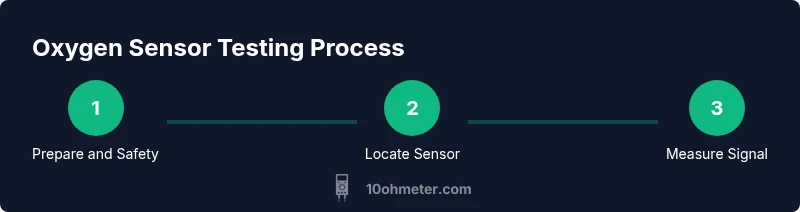
- 1
Prepare the vehicle and safety gear
Park the vehicle on a level surface, set parking brake, and ensure the engine is cool before starting. Disconnect the negative battery terminal if you will be probing near the ECU or wiring harness to minimize risk of short circuits. Gather your tools and protective gear so you can work safely without interruptions.
Tip: Always begin with engine off and keys removed; this reduces the chance of accidental electrical shock or shorts. - 2
Locate the O2 sensor and identify terminals
Find the downstream or upstream O2 sensor depending on your diagnostic goal. Use a wiring diagram or service manual to locate the signal wire and ground. Note the pin layout so you can attach a probe to the correct wire without damaging connectors.
Tip: Label wires with gentle tape if you’re testing multiple sensors to avoid miswiring. - 3
Set up test leads and access the signal wire
Attach a backprobe pin to the sensor signal wire if you have one; otherwise, carefully backprobe through the connector with minimal force. Ensure the ground reference is solid—either the sensor ground or a chassis ground. Keep leads tidy to avoid contact with hot exhaust components.
Tip: Avoid jamming probes into terminals; poor contact yields false readings. - 4
Warm up the engine to operating temperature
Start the engine and let it reach normal operating temperature to ensure the sensor heater is active. This typically takes several minutes; monitor the coolant temperature if your vehicle provides it. A stable warm-up is crucial for meaningful O2 sensor readings.
Tip: If you can't start the engine, you can conduct a bench test on a bypassed harness, but results may differ from in-vehicle conditions. - 5
Measure the signal and heater circuit
With the engine running, observe the sensor signal on the multimeter’s voltage scale. You should see rapid cycling between about 0.1 V (lean) and 0.9 V (rich). Also check the heater circuit resistance or voltage across the heater pins as specified in the service manual to verify heater operation.
Tip: Record the cycle rate and amplitude; a sluggish or erratic swing often indicates contamination or aging. - 6
Interpret results and decide next steps
If readings stay near a single value or swing slowly, the sensor may be failing. If heater voltage or resistance is out of spec, address the heater circuit first. Compare your findings to factory specs and consult the service manual for your exact model’s expected ranges.
Tip: Correlate sensor readings with drive cycles and fuel trims reported by the ECU for a complete picture.
Your Questions Answered
What voltage range should an O2 sensor show during testing?
Narrowband O2 sensors typically oscillate between 0.1 V and 0.9 V as the engine operates. A healthy sensor will switch rapidly during normal driving and warm-up; slower or flat readings indicate potential sensor or circuit problems.
O2 sensors usually switch between about 0.1 and 0.9 volts as the engine runs; slow or flat readings suggest a sensor issue.
Can I test an O2 sensor without removing it from the vehicle?
Yes, using backprobe pins or a non-destructive probe allows you to measure the signal wire in place. This preserves harness integrity and minimizes reassembly work.
Yes, you can test the signal wire in place with backprobe probes, which keeps the harness intact.
How long should the engine warm-up take before testing the sensor?
Aim for full operating temperature, typically reached within several minutes after starting the engine. This ensures the sensor heater is active and readings reflect real driving conditions.
Let the engine reach normal operating temperature, usually a few minutes, so the heater and sensor are in their working state.
Are wideband O2 sensors tested the same way as narrowband sensors?
Testing methods differ because wideband sensors provide a broader range and different signal processing. The basic voltage swing concept applies to narrowband sensors; for wideband types, consult the service manual for specific test procedures.
Wideband sensors behave differently; check your manual for the exact procedure, since they don’t use the same 0.1–0.9 V range.
What should I do if readings are erratic or don’t switch?
Erratic readings may indicate sensor contamination, wiring issues, or a failing heater. Verify connections, inspect for exhaust leaks, and compare readings across multiple engine loads. If unresolved, the sensor may need replacement.
If readings are erratic, check wiring and leaks, then consider replacing the sensor if it stays abnormal.
Is it safe to perform these tests with the engine running?
Yes, but exercise caution around hot exhaust components. Use insulated tools and PPE, and avoid loose clothing or jewelry that could snag wires or connectors.
Testing with the engine running is possible, just stay safe around hot parts and use protective gear.
Watch Video
Key Takeaways
- Understand the sensor’s voltage swing range (0.1–0.9 V) and heater function.
- Use backprobe techniques to keep connections intact and readings accurate.
- Warm up the engine to ensure meaningful O2 sensor behavior.
- Compare readings to vehicle-specific specs and ECU fuel trims for accurate diagnosis.
- Document results for maintenance records and future troubleshooting.