How to Test Alternator with Multimeter
Learn how to test an automotive alternator using a multimeter with clear, safe steps. Baseline battery voltage, measure charging voltage under idle and load, and troubleshoot common issues to keep your charging system healthy.


This guide shows how to test an alternator with a multimeter to verify charging performance and battery health in your vehicle. You will verify the battery voltage with the engine off, start the engine, and observe how the alternator maintains voltage under idle and load. Follow these steps for safe, accurate results.
Safety first when testing an automotive electrical system
Working on a vehicle's electrical system carries risk of shock, short circuits, and battery acid exposure. Wear eye protection and gloves, disconnect jewelry, and work in a well-ventilated area. Keep metal tools away from exposed terminals to prevent shorts. If you smell burning or see melted insulation, stop and seek professional help. Always ensure the ignition is off, the key is removed, and the parking brake is engaged before you touch battery terminals. When in doubt, consult your vehicle's service manual and use caution around live circuits.
How an alternator functions and what to measure
The alternator converts mechanical energy from the engine into electrical energy to recharge the battery and power the vehicle's electrical systems. The key readings you’ll assess are baseline battery voltage with the engine off, and the charging voltage once the engine is running. You’ll look for a stable output within a typical range and watch for excessive ripple or voltage drop under load. Understanding these readings helps you distinguish a bad alternator from a weak battery or faulty wiring.
Tools, setup, and safety prep
Before you start, gather the essential tools and ensure the area is safe. You’ll need a digital multimeter capable of measuring DC voltage, alligator clip leads, and protective gloves. Check that the battery terminals are clean and secure; corroded terminals can affect readings. Review your car manual for access points and warning indicators. Set your meter to a DC voltage range comfortable for automotive measurements, typically 20V or higher, and verify the meter’s accuracy with a known good source if possible.
Baseline reading: battery voltage with engine off
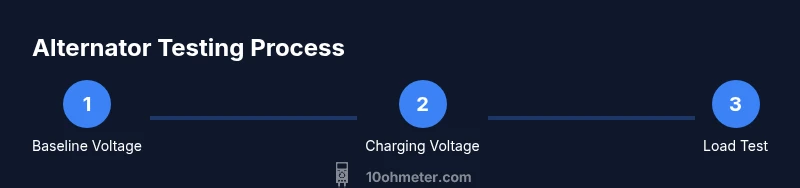
With the engine off and all accessories off, measure the battery’s resting voltage. A healthy 12V lead-acid battery typically sits around 12.6 to 12.8 volts. A significantly lower reading suggests a weak or discharged battery, which may confound further tests. If you observe higher than expected voltage, it could indicate a charging system issue or a faulty battery. Record this baseline as your control reading for comparison later in the test.
Charging voltage test: engine running
Start the engine and let it idle. Measure the voltage at the battery terminals with the multimeter. A healthy alternator should elevate the charging voltage to roughly 13.8 to 14.8 volts, depending on battery temperature and system design. If you see a voltage below about 13.5V, the alternator may not be charging, the belt tension may be wrong, or there could be a wiring fault. If the voltage is above 15V, you could be overcharging, which can damage the battery and electrical components.
Load testing and belt condition
To simulate real-world conditions, turn on headlights, AC, and rear window defroster while the engine is running and observe how the charging voltage holds. A healthy alternator should maintain voltage in the 13.8–14.8V range under load. If voltage drops significantly under load, inspect the drive belt for wear or looseness, check the alternator ground strap, and verify wiring connections. Loose grounds are a common source of low readings.
Diagnostics: what readings mean and next steps
If voltages are within the expected range during no-load and load tests, the alternator is likely functioning properly. If readings are inconsistent, test the battery under load or consider a professional alternator test. A bad diode can allow ripple on the charging signal, which can be measured with a scope or specialized tester. Document readings and plan follow-up steps such as belt replacement or replacing the alternator if needed.
Troubleshooting common mistakes
Common mistakes include measuring with the engine not running, using pins that touch metal, reading at the wrong points (e.g., battery terminals after a long cable run), and ignoring the impact of temperature on voltage. Clean terminals before testing, ensure the engine is on and revving gently during charging tests, and avoid shorting the meter leads to chassis ground. If readings don’t align with expectations, recheck connections and retest to confirm.
Putting it all together
You now have a systematic approach to testing an alternator with a multimeter. Use a clean baseline, monitor charging with the engine running under light and heavy loads, and watch for abnormal ripple or voltage drift. With careful documentation, you can decide whether the alternator, belt, wiring, or battery is the source of a charging fault—without guessing.
Tools & Materials
- Digital multimeter (auto-ranging preferred)(Set to DC voltage; 20V scale or higher is common for automotive tests.)
- Alligator clip leads(Helps you attach probes without stressing connections.)
- Safety gloves and eye protection(Protects from battery acid and sparks.)
- Shop rag or towel(For cleaning terminals if needed.)
- Vehicle owner's manual(Helpful for locating the alternator and specific warnings.)
- Torx/Allen keys or basic wrenches(For loosening terminal clamps if needed.)
Steps
Estimated time: Total time: 25-40 minutes
- 1
Prepare the vehicle and safety setup
Park on a level surface, engage the parking brake, and turn off all accessories. Put on safety gloves and glasses before touching the battery area. This prevents accidental shorts and protects you from acid exposure.
Tip: Keep metal tools away from exposed terminals to avoid shorts. - 2
Inspect belts and wiring
Check that the drive belt is intact and properly tensioned, and inspect for cracked insulation on wires near the alternator. Worn belts or frayed wiring can mimic a failing alternator by causing low output.
Tip: A slipping belt often reduces charging voltage under load. - 3
Baseline voltage with engine off
Set your multimeter to DC volts and connect to the battery posts with the engine off. Note the resting voltage; a healthy battery sits around 12.6–12.8V. Record this as your control reading for comparison later.
Tip: Ensure probes contact clean metal on battery terminals for stable readings. - 4
Start engine and measure charging voltage
With the engine running, measure at the battery terminals. Expect roughly 13.8–14.8V in normal operation. A reading below 13.5V or above 15V indicates a charging issue or a faulty component.
Tip: Rev the engine slightly to test voltage response and avoid stall readings. - 5
Test under load
Turn on high-draw accessories (headlights,AC, rear defroster) and observe voltage. A healthy system should stay within 13.8–14.8V; significant drops point to belt, wiring, or alternator faults.
Tip: Multiple load points give a clearer view of real-world performance. - 6
Check grounds and connections
Inspect the alternator ground strap and main battery ground. Loose or corroded grounds can cause readings to drift. Tighten and clean as needed.
Tip: A poor ground is a common source of false negatives. - 7
Optional diode/alternator health check
If you have the equipment, test the diodes or use a service manual procedure to verify rectifier health. A failing diode can cause ripple or poor charging.
Tip: Diode tests require proper instruction and equipment; skip if unsure. - 8
Document readings and decide next steps
Record voltages at no-load and under-load; compare to manufacturer specs in your manual. If readings stay out of spec, plan belt replacement, wiring repair, or a professional alternator replacement.
Tip: A clear log helps with later diagnostics.
Your Questions Answered
Can a bad alternator cause a dead battery?
Yes. If the alternator isn’t charging, the battery can discharge while the engine runs. Tests should show low charging voltage and poor performance under load.
Yes. A failing alternator can cause a dead battery because it’s not recharging the battery while the engine runs.
What voltage should I see when testing charging voltage?
In normal operation, you should see about 13.8–14.8 volts at the battery terminals with the engine running. Readings outside this range indicate a charging fault.
You should see roughly thirteen to fourteen and a half volts when charging properly.
Do I need to remove the battery to test the alternator?
No. You can test with the battery connected; just follow safe procedures to prevent shorts. The tests measure the system voltage while under load.
No, you don’t have to remove the battery; you can test in place with proper precautions.
What if the voltage reads low only under load?
That often points to a slipping belt, poor connections, or a failing alternator under load. Inspect belt tension, wiring, and grounds, and retest with the load applied.
If voltage drops under load, check the belt and wiring.
Is a diode test necessary?
A diode test can diagnose rectifier health, but it requires the right tools and procedure. If unsure, consult a service manual or professional.
A diode test helps but isn’t always required for a basic check.
What are signs of a failing alternator?
Dim lights, dashboard battery warning, and intermittent electrical issues often indicate a failing alternator. Confirm with voltage tests and belt inspection.
Common signs are dim lights and a battery warning; test to confirm.
Watch Video
Key Takeaways
- Identify baseline battery voltage before testing.
- Expect charging voltage within ~13.8–14.8V when engine runs.
- Check for voltage drop under load to reveal hidden faults.
- Inspect belts and grounds as common failure points.
- Document readings to guide next steps.