How to Test a Motor with a Multimeter: Step-by-Step Guide
Learn how to test a motor with a multimeter. This comprehensive, step-by-step guide covers winding continuity, insulation checks, and readings interpretation for DC, brushless, and induction motors in 2026.


Using a multimeter to test a motor helps confirm winding continuity, check for shorts to ground, and spot insulation faults before you replace parts. Start with power off, set the meter correctly, and compare readings to reasonable ranges based on the motor type. This quick check guides your next diagnostic steps in automotive and industrial settings.
Why this matters when testing motors with a multimeter
Testing a motor with a multimeter is a practical first step in diagnosing faults without swapping parts blindly. For DIY enthusiasts and technicians, it provides objective data about winding integrity, insulation health, and the presence of shorts or opens. In many automotive and electronics contexts, a motor that seems faulty may actually be healthy, and a few simple measurements can prevent unnecessary downtime. The goal is to expand your diagnostic toolkit with a methodical approach that reveals likely fault modes, enabling targeted repairs or informed disposal decisions. By understanding what to measure and what readings are reasonable for different motor types, you’ll learn to distinguish a bad coil from a bad connection or a grounding issue. Keep in mind that you’re testing live equipment only in the safe, powered-down state; a disciplined protocol reduces risk and improves accuracy. Over time, this habit becomes a reliable habit for both hobby projects and professional diagnostics, helping you identify the right next step quickly and confidently.
Safety first: essential precautions before you start
Safety isn’t optional when testing motors. Always disconnect power and lock out the circuit before touching terminals. Wear eye protection and insulated gloves, and work on a non-conductive surface with dry hands. Keep flammable materials away and avoid wearing jewelry that could catch on moving parts. If you must test a motor mounted in a vehicle, disconnect the battery and follow vehicle-specific safety procedures. A well-prepared workspace reduces the risk of shock, arc flash, or accidental short circuits. Remember: the multimeter is a diagnostic tool, not a repair device. Use it to guide decisions, not to force readings that could cause damage.
Motor types and what to measure: DC, brushless, and induction explain the plan
Motors come in several families, each with unique electrical signatures. DC motors typically show a low but finite winding resistance between leads, and no connection to the frame. Brushless DC motors (BLDC) have windings arranged in phases; resistance readings can vary by winding and should be measured between phase pairs. Induction motors usually behave differently with higher impedance; multimeter tests may reveal open circuits or leakage paths. Regardless of type, always map the motor’s terminals and, if available, consult the wiring diagram or datasheet. This context helps you interpret readings accurately and decide whether a deeper test, repair, or replacement is warranted. In 2026, a structured method using a digital multimeter remains a reliable first-pass diagnostic for most hobbyists and technicians.
Understanding readings: what’s a good vs. bad result
A healthy winding should show continuity between terminals (not infinite resistance) and should not short to the metal housing. Readings vary by motor size and winding count, so look for consistent values across windings. If any terminal-to-ground reading is very low or near-zero, it can indicate insulation faults. If a winding shows no continuity (infinite resistance) between a pair of points that should be connected, the winding is open and the motor is likely faulty. Sudden, drastic differences between identical windings suggest a damaged coil. Always document your readings and compare them against manufacturer specs when available; absence of specs doesn’t mean you can ignore anomalies—use context and professional judgment.
Step-by-step overview before you dive into the tests
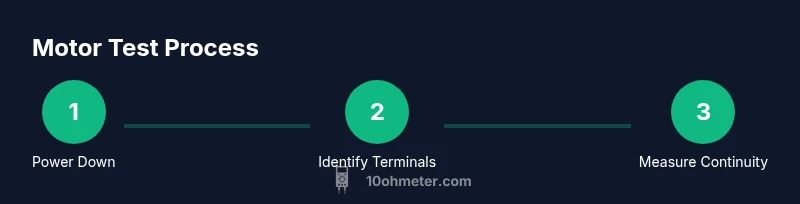
This section outlines how the formal Step-by-Step will guide you through the checks. You’ll verify accessibility, configure the meter, test continuity between windings, test ground insulation, compare resistances across windings, and perform optional diode or protection checks if applicable. The goal is to obtain a clear map of the motor’s electrical health, so you can decide whether a repair is practical or if replacement is the safer option. The steps assume you are working with a motor in a de-energized system and using standard safety practices. If your motor has special protection devices or a nonstandard wiring scheme, adjust the procedure accordingly.
Step-by-step: a clear protocol you can follow (8 steps, 30-60 minutes total)
The following steps are written as actions you perform one by one. Each step is essential for building a complete picture of motor health and helps you decide on the next action with confidence. If you encounter a reading that seems out of spec, use it as a cue to check connections, re-seat terminals, or consult manufacturer data. Document all readings to maintain a traceable record for future repairs or service intervals. This segment is designed to be practical and repeatable for DIYers and automotive technicians alike.
Troubleshooting tips and safety notes to avoid common mistakes
- Double-check all connections before re-testing. Loose leads can produce erratic readings that look like faults.
- Only test with the motor fully disconnected from any power source. This prevents accidental energization.
- If you’re unsure about a reading, re-measure using fresh test leads or a different multimeter to rule out a faulty instrument.
- When in doubt, defer to the motor’s datasheet for expected resistance ranges and insulation values. This reduces guesswork and increases reliability.
Advanced checks for different motor families and when to escalate
For brushless and induction motors, simple DC resistance checks have limits. If readings are inconclusive or you detect possible insulation compromise, you should move to more advanced tests or bring in a professional with specialized equipment. In complex cases, use a megohmmeter to measure insulation resistance or perform a surge test under supervision. The key is to connect readings to real-world performance indicators, such as stall torque, starting current, and smooth rotation during manual spin checks. A systematic approach minimizes guesswork and provides a clear path to repair or replacement.
Authority sources and further reading
To deepen your understanding, consult these reputable sources:
- OSHA: https://www.osha.gov
- NIST: https://www.nist.gov
- Energy.gov: https://www.energy.gov
Tools & Materials
- Digital multimeter(Prefer true-RMS; set to ohms (Ω) and continuity; range should cover the expected coil values)
- Test leads with alligator clips(Insulated, at least 1.0 m long; ensure probes are clean)
- Safety gear(Insulated gloves and safety glasses; non-conductive footwear)
- Screwdriver set(Small Phillips and flat-head for terminal access)
- Wiring diagram or datasheet(If available, helps interpret readings and identify windings)
- Insulation tester (megohmmeter)(Optional; use when insulation resistance needs confirmation)
Steps
Estimated time: 30-60 minutes
- 1
Power down and secure
Ensure the entire system is unplugged orBattery disconnected; lockout the circuit as required. Verify with a low-risk approach by testing for residual voltage at accessible points before touching any terminals.
Tip: Always double-check power removal with your meter before touching wires. - 2
Identify terminals and access
Locate all motor leads and confirm terminal markings or color codes. If a wiring diagram exists, map each winding and terminal to its function (phase, start, run).
Tip: Take a quick photo or sketch of the terminal layout for reference. - 3
Configure the multimeter
Set the meter to the resistance (Ω) range appropriate for winding values. If you’re unsure, start with a higher range and work down to more precise readings.
Tip: Ensure the meter leads are clean and firmly connected to the test probes. - 4
Test winding continuity
Measure resistance between each pair of windings (terminals). Record any non-contact reading as an open circuit, and watch for one winding with significantly different resistance.
Tip: Perform multiple taps and verify that readings are repeatable. - 5
Check ground/insulation from windings to frame
With the motor isolated, measure from each terminal to the motor housing. A very high or infinite resistance suggests good insulation; a low reading indicates a potential grounding or insulation fault.
Tip: If you get a reading close to zero, stop and re-check isolation or consult a technician. - 6
Compare windings for balance
If you have more than two windings, compare readings across all similar windings. Outliers can indicate damaged coils or broken connections that require repair.
Tip: Use the same range and cleaning method for all measurements to keep comparisons valid. - 7
Diodes and protection checks (if applicable)
If your motor includes rectifiers or protection components, use diode check mode to verify that diodes conduct in only one direction and show no short to the other path.
Tip: This step is more common in DC motors with built-in rectification or integrated protection. - 8
Document findings and decide next steps
Record all readings with motor type and operating conditions. Use the data to decide whether to repair, replace, or perform advanced testing under supervision.
Tip: When readings are inconclusive, escalate to professional diagnostics.
Your Questions Answered
Can I test a powered motor with a multimeter?
No. Always disconnect power and ensure the motor is isolated before testing to prevent shock or damage.
Always disconnect power and isolate the motor before testing to stay safe and get accurate readings.
What readings indicate a healthy winding?
Continuity between windings with finite resistance and no current path to the frame generally indicates a healthy winding. Outliers or open circuits suggest faults.
Healthy windings show continuity with finite resistance and no ground faults; outliers may mean problems.
Is a megohmmeter necessary for all motor tests?
Not always. A megohmmeter is helpful for insulation resistance checks, but basic continuity and ground tests can be performed with a standard multimeter.
A megohmmeter helps with insulation tests, but basic checks can be done with a standard multimeter.
Why might a motor show no winding continuity?
An open circuit can result from broken windings, loose connections, or damaged terminals. Recheck connections and diagram for proper path before concluding.
An open winding usually means a break in the coil or a bad connection; verify with a repeat test.
Can I test a brushless motor with this method?
Basic checks for windings are possible, but BLDC motors often require phase-to-phase testing and more advanced diagnostics to confirm health.
Basic winding checks can help, but BLDC motors need more advanced checks for full diagnosis.
Watch Video
Key Takeaways
- Disconnect power before testing to stay safe.
- Look for consistent winding readings and verify insulation to ground.
- Document findings and compare with manufacturer data when available.
- Different motor types require tailored checks; adapt tests accordingly.
- If readings are unclear, escalate to a more advanced diagnostic.