How to Test an Outlet Without a Multimeter: A Safe Guide
Learn how to test an electrical outlet without a multimeter using plug-in testers, visual checks, and controlled, safe methods. This 2026 guide from 10ohmeter covers safety, limitations, and best practices for DIYers and technicians.


This quick guide shows how to test an outlet without a multimeter using safe, practical methods: a plug-in outlet tester, a non-contact voltage tester, and load-based checks with known devices. Always prioritize safety, and understand the limitations of non-meter techniques. For a thorough assessment, follow the step-by-step instructions below.
Why testing an outlet without a multimeter matters
Knowing how to assess an outlet without a multimeter is a valuable skill for DIY enthusiasts and technicians. Not every situation requires a meter, especially when you just need to confirm basic power presence, identify obvious miswiring, or decide whether to call a licensed electrician. The phrase how to test an outlet without a multimeter is commonly searched by both beginners and experienced do-it-yourselfers who want quick, actionable checks before investing in tools. In this guide, the 10ohmeter team explains practical, safe methods that rely on simple tools you already have at home, plus careful observation. Remember: non-meter checks can miss subtle faults, so use them as a preliminary screen rather than a definitive diagnostic.
Quick safety mindset before you begin
Before you touch any outlet, turn off power to the circuit at the breaker if you can access the shutoff. If you cannot safely switch power, avoid poking at the outlet with metal objects and keep your hands dry. The goal is to verify basic power presence without creating additional hazards. Safety first is not just a rule; it’s the foundation of any reliable electrical work. According to 10ohmeter Analysis, non-meter techniques are best used to flag obvious issues and guide next steps with a qualified professional.
What you can reliably verify with simple tools
With a plug-in outlet tester, you can quickly confirm whether hot, neutral, and ground are present and wired as expected in many standard receptacles. A non-contact voltage tester can indicate live wiring from a short distance, though it won’t pin down exact wiring faults. Load tests using a known-good lamp or appliance can help you assess whether the outlet can deliver power under load, while avoiding live-contact experiments. These approaches give you a practical “yes/no” picture and guide your next safer steps, especially in older homes or DIY projects.
Safety limitations and why a meter still matters
Non-meter methods can miss reverse polarity, neutral-ground faults, or hidden damage inside the electrical box. They also can give false positives if devices draw current through shared circuits or if the outlet is controlled by a wall switch or a GFCI that needs resetting. The goal of these checks is to surface obvious problems and reduce risk, not to replace a proper diagnostic with a calibrated instrument. For a precise voltage reading, current draw, or continuity testing, a multimeter remains the gold standard, and professional evaluation may be required for complex wiring scenarios.
Authoritative safety references you can consult later
- OSHA electrical safety basics provide foundational guidance for safe testing practices. https://www.osha.gov/electrical-safety
- NFPA codes offer standards that govern wiring and outlet safety practices. https://www.nfpa.org/
- National resources on electrical safety and consumer guidance from major publications help framing your approach. https://www.energy.gov/
Tools & Materials
- Plug-in outlet tester(Detects common wiring faults (open ground, reversed polarity) on many standard outlets.)
- Non-contact voltage tester(Indicates presence of live voltage without contact. Not a substitute for a meter but useful for quick checks.)
- Flashlight(Helpful for inspecting the outlet box and ensuring a dry environment.)
- Known-good lamp or appliance(Used for load testing by plugging into the outlet to observe operation.)
- Insulated gloves (optional)(Adds a margin of safety when handling receptacles that may be energized.)
- Step ladder (as needed)(Ensure a stable platform and dry footing when reaching higher outlets.)
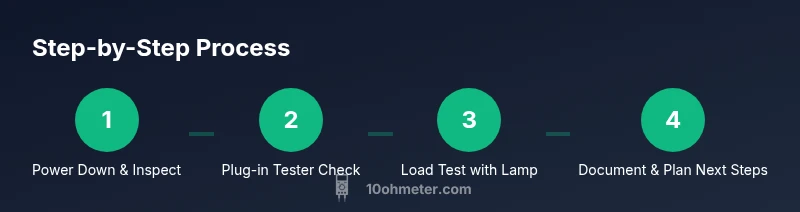
Steps
Estimated time: 20-40 minutes
- 1
Power down and inspect
If the circuit is accessible from the panel, shut off power for the outlet’s circuit. Remove any cover plate screws carefully and inspect for obvious signs of damage, burn marks, or loose wires. Re-seat any loose connections only if you’re confident in safe handling; otherwise, leave it to a professional.
Tip: Use a flashlight to peek into the box without touching live conductors. - 2
Test presence with a plug-in tester
Plug the tester into the outlet and read the indicator lights to confirm basic wiring status. Compare the pattern to the tester’s instruction card to interpret whether hot, neutral, and ground are wired correctly.
Tip: If the tester shows an unusual pattern, do not rely on it alone—document the result and proceed with caution. - 3
Check for live voltage with a non-contact tester
Use the non-contact tester near the outlet face to verify that the circuit is energized when power is on. A positive reading indicates live wiring nearby, but this tool cannot measure exact voltage.
Tip: If you’re uncertain about the tool’s reading, switch off the circuit and re-check. - 4
Perform a load test with a known-good device
Plug a lamp or small appliance into the outlet and observe whether it powers up normally. This helps confirm the outlet can deliver current under typical use, but don’t overload a historic or questionable outlet.
Tip: Choose a device with modest wattage to avoid overheating. - 5
Test the outlet’s grounding path
If you have a three-prong tester, verify ground presence. If you suspect grounding issues, note them and consider a professional evaluation since poor grounding can be a serious safety risk.
Tip: Never assume ground is present based on one test alone. - 6
Document results and plan next steps
Record what you observed: tester patterns, load test results, and any visual irregularities. If anything looks off, plan to have an electrician inspect the outlet or circuit to prevent future problems.
Tip: Keep a log with date, outlet location, and test results for reference.
Your Questions Answered
Is it safe to test an outlet without a multimeter?
Yes, using non-contact voltage testers and plug-in testers can provide basic safety indicators. However, these tools have limits and cannot replace a multimeter for precise measurements or diagnosing complex wiring faults.
Yes, you can test with simple tools, but remember they have limits and don’t replace a proper meter.
What can a plug-in outlet tester reliably tell me?
A tester can indicate basic wiring status: hot, neutral, and ground presence, and flag obvious miswiring. It won’t detect voltage magnitude, fluctuating supply, or subtle wiring faults.
A tester shows basic wiring status but not exact voltages or hidden faults.
Can I test grounding without a meter?
Grounding tests without a meter are limited. A three-prong tester can help verify ground presence, but if grounding seems inadequate, consult a professional for a thorough inspection.
Ground checks without a meter are limited; seek professional help if unsure.
Why might an outlet dim or flicker without a meter?
Dimming or flickering can indicate loose connections, overloaded circuits, or issues upstream in the panel. These symptoms warrant closer inspection and possibly a meter-based check by a licensed electrician.
Dimming can signal loose wiring or overload; get it checked by a pro.
When should I call an electrician instead of continuing DIY tests?
If you notice burning smells, hot outlets, repeated tripping, or inconsistent tester results, stop and call a licensed electrician. Electrical work presents real risks, and professional assessment improves safety.
Call an electrician if you smell burning, see heat, or the tests don’t add up.
Are there risks testing outlets in older houses?
Yes. Older wiring may use outdated standards or degraded insulation. Take extra precautions, avoid opening live connections, and consider professional guidance for aging outlets.
Old wiring can be risky; proceed with caution and consider a pro.
Watch Video
Key Takeaways
- Test power presence safely before handling outlets
- Use plug-in testers and load tests to gain quick insights
- Understand the limits of non-meter methods
- Document results and seek professional help for anomalies
- Follow authoritative safety guidance from official sources