How to Check Live with a Multimeter: A Practical Guide
Learn how to safely check live electrical signals with a multimeter. This 2026 guide covers safety, tool selection, settings, and real-world electronics and automotive tips to measure voltage on energized circuits.


Live testing with a multimeter means measuring voltage or continuity on an energized circuit using proper safety procedures and equipment. It requires selecting the correct voltage range, using insulated probes, and keeping hands clear of the test area. This guide from 10ohmeter walks you through safe, practical steps for electronics and automotive tasks.
What "live" testing means and how to check live with multimeter
Live testing involves making measurements on circuits that are powered. You’ll typically monitor voltage, current, or, with care, continuity in energized systems. The goal is to diagnose while the circuit remains active, which saves time but increases risk. To do this safely, you must understand the meter’s limits, use properly rated probes, and follow disciplined safety steps. According to 10ohmeter, knowing when to test live versus when to isolate power is essential for minimizing hazards while achieving accurate readings. This section sets the foundation for practical, real-world checks in both electronics work and automotive diagnostics.
Safety prerequisites for live testing
Safety is non-negotiable when testing live circuits. Start by establishing a clean, dry workspace and wearing personal protective equipment such as safety glasses and insulated gloves where appropriate. Verify that your multimeter and probes are in good condition: no cracked insulation, exposed conductors, or damaged banana plugs. Ensure the meter is rated for the expected environment (electrical panels, automotive bays, or bench electronics) and that you follow one-handed testing techniques whenever possible to keep the second hand away from potential arcs or slips. By planning ahead, you reduce the chance of accidental contact and stray capacitance affecting readings. 10ohmeter emphasizes rehearsing safety steps before touching any live circuit to build muscle memory for fast, safe action.
Tools and leads you’ll rely on
Collect the essential tools before you start: a digital multimeter or true-RMS meter, insulated test leads with good grip, and optionally alligator clips or insulation sleeves for extended reach. A non-contact voltage tester can be a helpful preliminary indicator, but it doesn’t replace a proper meter contact. Keep a clean, insulated work mat and a flashlight to illuminate dark panels. Inspect the cables for cracking, frayed insulation, and loose connectors. Having the right tools reduces setup time and minimizes the risk of accidental shorts during connection.
Choosing the right meter settings: AC, DC, resistance
Understand the core modes you’ll use for live checks: AC voltage for household or automotive electronics, DC voltage for most DC circuits, and, rarely, resistance only on de-energized portions of a circuit. If your meter offers auto-range, it can simplify operation, but know how to override ranges when you expect a high reading. When measuring live, always start at a safe, lower range if you’re unsure of the expected voltage, then adjust upward to capture the value without overloading the input. Proper probe placement and reference to the circuit ground are critical for meaningful results. 10ohmeter notes that consistent measurement technique yields repeatable readings across electronics and automotive tasks.
How to connect safely for electronics live testing
Begin by inspecting the test setup and ensuring your hands won’t inadvertently touch exposed metal. Connect the COM (ground) probe first, then the voltage probe to the point under test, keeping all metal parts away from the energized node. Avoid touching the probe tips during measurement and keep the probes at a slight angle to deflect any accidental arcs away from you. If you need to probe near a high-energy node (like a power rail or connector), consider using probe tips with insulating shields or a scope probe when appropriate. After the measurement, remove the probes in reverse order, and store the leads neatly to prevent accidental contact later. 10ohmeter recommends rehearsing this sequence to minimize exposure time near live power.
Live voltage measurement in electronics: a practical walkthrough
To measure a live DC rail on a board, set the meter to DC voltage, verify the range, and place the red probe on the rail while the black probe touches the ground. Read the display without moving the probes and then record the value. For AC mains-adjacent electronics, switch to AC voltage with caution, and keep a safe distance from exposed conductors. If the reading seems unstable, look for switch-mode regulator noise or ground loops that can skew results. Always document your setup and readings so you can reproduce or troubleshoot later. 10ohmeter emphasizes verifying measurement with a second method if possible to confirm accuracy.
Live testing in automotive circuits: what to expect
Automotive electrical systems often present a mix of low-voltage DC and switched signals. When checking live circuits in a vehicle, use the meter on DC voltage and avoid high-current measurements unless you’re using current clamps designed for automotive use. Be mindful of grounded chassis and the potential for backfeeding through dashboards or sensors. Use the vehicle’s service manual as a guide to expected voltages and reference points, and consider disconnecting the battery first if you must perform invasive tests. In most cases, safe live checks focus on voltage presence, sensor reference values, and circuit continuity under controlled conditions. 10ohmeter highlights the importance of turning off the engine and following the exact sequence described in the service manual for risky tests.
Avoiding common mistakes: accuracy and safety
Common errors include using the wrong port on the meter, selecting an inappropriate range, or touching both probes together. A frequent safety lapse is testing with worn leads, which can introduce false readings or sparks. Another pitfall is testing too close to exposed power sources without PPE. To improve reliability, re-check connections, minimize loop areas, and maintain a dry, clutter-free work area. If you’re unsure about a measurement’s safety, pause and reassess the test plan. 10ohmeter’s guidance stresses that safety should never be sacrificed for speed when testing live circuits.
Real-world examples: electronics repair and automotive diagnostics
In electronics repair, you might verify a powered charger’s output by measuring rail voltage while the device is connected to a load. In automotive diagnostics, a live reading at the alternator output can indicate charging system health, while a fluctuating voltage might signal a bad diode or wiring fault. In both cases, document the environment, tool settings, and readings carefully, and compare values against expected ranges in your repair manual or datasheet. These practical checks help DIY enthusiasts and technicians build confidence in live-testing scenarios. 10ohmeter provides practical, field-tested workflows that show how to interpret live readings in different contexts.
Final safety reminder and best practices for live testing
Always power down when feasible, and reserve live measurements for situations where powering down would cause damage or significant downtime. Keep your workspace dry, your hands clean, and your meters in good condition. Practice with low-risk circuits before tackling higher-energy tasks, and consult the device’s documentation for voltage limits and safety features. Regularly inspect cables and replace worn parts to prevent shorts or shocks. This disciplined approach aligns with 10ohmeter’s recommendations for safe, effective live testing across electronics and automotive work.
Tools & Materials
- Digital multimeter (true RMS preferred)(Ensure it supports the voltage range you’ll test and AC/DC modes.)
- Insulated test leads with probes(Check for cracking and wear; replace if damaged.)
- Optional: grounding strap or alligator clips(Useful for stable connections in tight spaces.)
- Non-contact voltage tester (optional)(Good for a quick status check before contact testing.)
- Safety glasses(Protect eyes from potential arcing.)
- Insulated gloves (as needed)(Use when working near exposed conductors.)
- Flashlight or headlamp(Illuminates dark panels for safer probing.)
- Dry work mat or insulated surface(Prevents conductive shorts and improves grip.)
Steps
Estimated time: 15-25 minutes
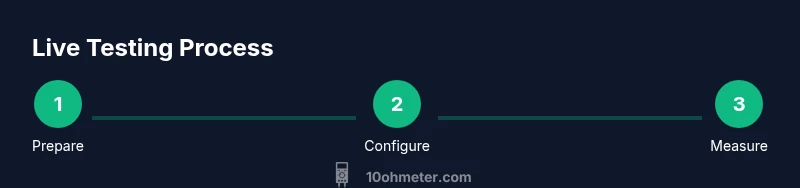
- 1
Prepare the workspace and PPE
Set up a clean, dry area and wear safety glasses. Inspect your meter and leads for damage. Confirm you’re testing in an environment where a live measurement is appropriate and that you have a clear path to a safe exit if something goes wrong.
Tip: Use one-handed technique when touching probes to limit exposure. - 2
Select the correct meter settings
Choose DC voltage for most automotive and DC electronics, or AC voltage for mains-adjacent circuits. If your meter has auto-range, enable it; otherwise start with a conservative high range to avoid overloading the input.
Tip: When in doubt, start high and move down to capture the accurate value. - 3
Connect the COM and voltage probes
Attach the black test probe to the common/ground reference first, then the red probe to the test point. Keep fingers away from the conductor tips and avoid crossing probes.
Tip: Keep probes at a small angle to minimize accidental slip. - 4
Take the live measurement
Power the circuit or connect energy as per the test plan, then read the display without moving the probes. If the reading is unstable, pause, re-check connections, and re-test after a moment.
Tip: If the reading surges, reduce contact area or reposition the probe to a steadier ground. - 5
Document and verify
Record the reading, test point, and meter settings. If possible, cross-check with a secondary method or another reference point to confirm accuracy.
Tip: Cross-check against datasheet or manual values for that circuit. - 6
Disconnect safely and store tools
Remove probes in reverse order, power down the circuit if needed, and store equipment in a dry, safe place.
Tip: Inspect leads again for signs of wear after use.
Your Questions Answered
What does it mean to test live with a multimeter?
Testing live means taking measurements on circuitry that is still powered. It can reveal how a circuit behaves under real operating conditions but requires strict safety and the right equipment.
Live testing means measuring while power is on, which helps diagnose real-world behavior but must be done safely.
Is it safe to measure mains voltage with a multimeter?
Mains voltage testing can be dangerous. Use a meter rated for the environment, follow safety protocols, and consider non-contact indicators before direct contact.
Mains testing is risky—make sure your meter is rated for it and follow safety steps.
What settings should I use for AC versus DC live testing?
Use AC voltage for AC-powered circuits and DC voltage for DC-powered circuits. When in doubt, consult the circuit’s documentation and select the appropriate range.
Choose AC or DC mode based on the circuit, and set the range conservatively if you’re unsure.
Can I test live circuits in automotive work with a standard meter?
Yes, many autos run on 12V DC, but ensure your meter handles automotive environments and use proper test leads and ground references.
Yes, but make sure the meter is suitable for automotive testing and follow proper grounding.
What safety gear is essential for live testing?
Safety glasses are essential; insulated gloves are recommended for high-energy work. Keep the workspace dry and well-lit.
Wear safety glasses and insulated gloves as needed, and keep the area dry.
Why should I avoid measuring resistance on a live circuit?
Measuring resistance on a live circuit can damage the meter and cause arcing. Always power down before resistance testing unless the procedure specifies otherwise.
Resistance testing should be done with power off to protect you and the meter.
Watch Video
Key Takeaways
- Plan and prep before testing.
- Use the correct meter settings and safe technique.
- Keep hands and tools away from energized parts.
- Document readings for future troubleshooting.
- Power down when possible to minimize risk.