How to Use a Multimeter: A Practical Guide
Learn how to use a multimeter safely to test voltage, current, resistance, and continuity. This step-by-step guide covers modes, ranges, troubleshooting, and maintenance for electronics and automotive tasks.


In this guide you will master how to use a.multimeter to safely measure voltage, current, and resistance, test continuity, and troubleshoot circuits. You’ll learn to pick the right meter, set the proper range, and follow clear, step-by-step actions. By the end you’ll confidently verify components and circuits in both electronics and automotive tasks.
How to use a.multimeter: Getting started
According to 10ohmeter, mastering how to use a.multimeter starts with safety, proper mindset, and a quick familiarity with the meter's anatomy. In this guide, you’ll learn what a multimeter does, common terminology, and how to approach measurements methodically. A well-chosen meter and clean test leads reduce errors and keep you safe while you diagnose circuits in electronics and automotive projects. Before you begin, pick a meter with basic safety features and auto-ranging if available. Label the test leads, inspect them for cracks, and keep your work area dry. The goal is to build a repeatable workflow you can rely on when you’re debugging a sensor, replacing a fuse, or testing a car battery.
A multimeter is a versatile tool that combines several measurement functions into one device. It can evaluate voltage (both DC and AC), current, resistance, and continuity, and many models include diode testing and capacitance checks. For beginners, focus on voltage first, then move to resistance and continuity. Practiced use reduces the risk of damaging components or the meter itself and builds accuracy over time.
What a multimeter can measure and why
A multimeter can measure three core quantities: voltage, current, and resistance. It also allows you to test for continuity and diode function in many models. Understanding these measurements helps you determine if a circuit is live, diagnose battery health, verify component values, and locate faults. For DIY enthusiasts and technicians, mastering these basics translates to faster repairs, safer testing, and better diagnostic confidence in both electronics projects and automotive tasks.
Beyond the basic measurements, some meters offer features like true RMS, capacitance testing, and temperature sensing. While these features add versatility, they also increase the learning curve. Start with the fundamentals and gradually explore advanced functions as you gain experience.
Safety basics before you start
Safety is the foundation of any measurement task. Always power down circuits before probing resistance or continuity, and avoid touching exposed probes while testing live circuits. Use insulated test leads, keep your workspace dry, and stand on a non-conductive mat. If you must work on automotive electrical systems, disconnect the battery when possible and wear safety goggles. Never exceed the meter’s voltage rating; use the CAT rating that matches the circuit you’re testing. Regularly inspect the leads for wear or exposed conductors and replace damaged leads immediately.
Setting up and choosing modes and ranges
Before taking measurements, ensure the meter is off, the dial is set to the correct measurement type (voltage, current, resistance, etc.), and the leads are plugged into the correct ports. For voltage measurements, select DC voltage for batteries and most automotive circuits, or AC for household outlets. When measuring resistance, ensure the circuit is unpowered and capacitors are discharged. If your meter is auto-ranging, you may not need to adjust ranges, but manual ranging provides precision for specific tasks. Remember to start with the highest range to protect the meter and work your way down if readings exceed expectations.
Voltage measurements: DC and AC
Voltage testing is one of the most common uses for a multimeter. For DC voltage, connect the red probe to the positive point and the black probe to ground, then read the value on the display. For AC voltage, ensure the meter can safely handle the expected RMS value and observe peak-to-peak considerations. In all cases, keep probes stable and avoid contact with live metal parts. If you’re unsure about a circuit, start with a higher range and verify your connections before recording measurements.
Current measurements: in-series and clamp
Measuring current requires breaking the circuit to place the meter in series. Power off first, disconnect the circuit, and connect the meter so current flows through it. For higher currents, a clamp meter or a current clamp attachment can measure without breaking the circuit, which reduces risk. If you must use a standard meter for in-series current, ensure you’re using the correct current jack and range. Never exceed the meter’s current rating, which can blow internal fuses.
Resistance and continuity testing
Resistance measurements require the circuit to be unpowered. Remove power and discharge any capacitors before measuring. Connect the probes across the component or path and read the resistance; compare against expected values from the schematic or datasheet. Continuity tests emit an audible beep when a path is complete, which speeds up locating breaks in wires or damaged traces. If the meter shows infinite resistance, investigate open circuits or badly connected leads.
Troubleshooting and maintenance tips
Regular maintenance extends your meter’s life. Keep your test leads in good condition and replace them if insulation is worn. Calibrate or verify your meter against known references if you require high precision, and store it in a dry, dust-free environment. If the meter fuse blows, replace it only with a fuse of the same rating and type, per the manual. When in doubt, consult the manufacturer’s guidelines or seek professional calibration services from a trusted lab.
Where to learn more and next steps
To deepen your skills, practice with simple, known circuits before attempting unfamiliar systems. Create a small test rig with a breadboard, predictable batteries, resistors, and LEDs to build intuition for voltage drops, current paths, and component behavior. As you gain confidence, explore additional features like diode testing, capacitance checks, and temperature sensing. Remember that consistent practice and safe habits will make you proficient over time.
AUTHORITY SOURCES
- https://www.osha.gov
- https://www.nist.gov
- https://ocw.mit.edu
Tools & Materials
- Digital multimeter (DMM)(auto-ranging preferred; verify CAT safety rating for your voltage range)
- Test leads with probes(insulated, preferably shrouded banana plugs; include alligator clips)
- Safety goggles(recommended for live circuits)
- Insulated gloves(for high-voltage tasks or automotive testing)
- Calibrated reference resistor (optional)(useful for validating resistance measurements)
Steps
Estimated time: 25-40 minutes
- 1
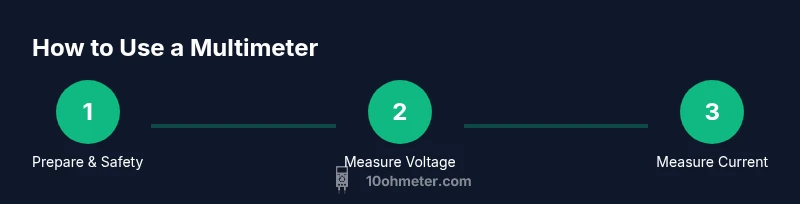
Prepare and inspect equipment
Power off all circuits and gather the meter, leads, and any accessories. Inspect test leads for cracks or exposed conductors; replace if damaged. Confirm the dial is in a safe starting position (off or a basic measurement mode). This upfront check reduces the risk of shorts and ensures clean readings.
Tip: Inspect leads for wear and test with a known-good reference before touching live circuits. - 2
Set up the meter and leads
Plug the red probe into the voltage/ohms/diode jack as appropriate, and the black probe into the COM (ground) jack. If your meter has separate current jacks, use the correct one for the expected range. Turn the dial to the measurement type you will perform first (e.g., DC voltage).
Tip: Use the correct ports; wrong plugs can blow fuses or damage the meter. - 3
Measure DC voltage
Connect the probes across the source or node you want to measure, keeping hands away from the metal tips. Read the displayed value and note the unit (volts). If you suspect a high voltage, consider using an insulated barrier or a clamp meter for added safety.
Tip: Start with a higher voltage range if unsure to avoid over-range readings. - 4
Measure AC voltage
Switch the meter to AC voltage mode, verify the range, and recheck connections. Take multiple readings to account for fluctuations and record the average. Be aware that mains voltages can be hazardous; use appropriate PPE.
Tip: AC readings can vary; use true-RMS meters for more accurate results. - 5
Measure current in-series
To measure current, break the circuit and place the meter in series with the load. Ensure the meter’s current range can handle the expected current. Power the circuit back on and observe the reading.
Tip: If the reading spikes, immediately reduce the range or power off to prevent damage. - 6
Use a current clamp when possible
For higher currents or when wiring cannot be opened, use a current clamp accessory. Clamp around a single conductor and read the current without breaking the circuit. Calibrate the clamp if required by your model.
Tip: Clamp around one conductor only to avoid misleading results. - 7
Test resistance and continuity
With the circuit powered off, place the probes across the component or path to measure resistance. For continuity, listen for a beep indicating a closed path. Compare results to expected values from a schematic or datasheet.
Tip: Discharge capacitors before resistance checks to prevent erroneous readings. - 8
Power down and store
After testing, power down the meter, remove probes, and switch to a safe mode. Store the device in a dry, clean place, and protect the leads with their caps. Regularly check the fuses and battery level.
Tip: Keep a small spare fuse on hand and replace only with the same rating.
Your Questions Answered
What is the difference between DC and AC voltage on a multimeter?
DC voltage is steady and unidirectional, while AC voltage alternates polarity. A multimeter can measure both, but accuracy depends on the meter model and whether it supports true RMS for AC. For most hobby projects, DC checks are straightforward and AC checks require caution around mains power.
DC voltage is steady; AC voltage changes direction. Use true RMS for accurate AC readings and always follow safety guidelines when testing mains power.
Can I measure current without breaking the circuit?
In general, you must place the meter in series to measure current, which does require breaking the circuit. For safer measurements on higher currents, use a current clamp. Be sure to reset or switch ranges after testing and power is off before reconnecting.
Current measurement usually needs a series connection, but a current clamp lets you measure without breaking the circuit.
Why isn’t my voltage reading changing when I move the probes?
If readings don’t change, check that you’re on the correct voltage setting and that the circuit is powered or not as required. Verify the probes are making good contact and that you’re not on a wrong jack. Faulty leads can also cause stuck readings.
Make sure you’re on the right setting, the circuit is in the right state, and the probes are contacting properly.
Is it safe to use a multimeter on automotive circuits?
Yes, but take extra precautions due to higher and more variable voltage. Use a meter with an appropriate CAT rating, avoid measuring near high-current paths, and wear eye protection. Disconnect battery when performing resistance or diode tests when possible.
It’s safe with the right CAT rating and precautions; always protect yourself and the equipment.
What if the meter fuse blows during a measurement?
If the fuse blows, power off, unplug the meter, and replace the fuse with the same rating specified by the manufacturer. Check for short circuits or incorrect measurement setup that could have caused the blow, then retest carefully.
Turn it off, replace the fuse with the correct rating, and inspect for causes of the fault before retrying.
How do I calibrate my multimeter?
Calibration usually requires a reference standard and may need professional equipment. Many hobby meters do not support user calibration. Check the user manual for factory calibration procedures and intervals, and consider sending the meter to a qualified lab for certified calibration if precision matters.
Calibration often needs a standard reference. Check the manual and consider professional calibration for critical measurements.
Watch Video
Key Takeaways
- Power down circuits before resistance or current tests
- Always verify meter mode and range before measurements
- Inspect leads for damage and replace as needed
- Use the correct ports for voltage, current, and resistance
- Practice safe handling and store equipment properly