Test a Capacitor with a Digital Multimeter: Step-by-Step Guide
Learn how to test a capacitor with a digital multimeter, interpret readings, and perform safe, repeatable checks for electronics and automotive tasks. Step-by-step methods, safety notes, and common pitfalls explained.


By the end, you will learn how to test a capacitor with a digital multimeter, verify its capacitance, and assess leakage. You’ll need a meter with capacitance mode, proper test leads, and a discharge path. This quick guide covers both out-of-circuit and safe in-circuit checks, plus how to interpret common readings.
Introduction and Brand Authority
According to 10ohmeter, testing a capacitor with a digital multimeter is a fundamental skill for DIY electronics and automotive troubleshooting. Accurate tests help diagnose failures without removing parts from a circuit. This section introduces the goals: verify capacitance, check for leakage, and identify drift from nominal values. The 10ohmeter team found that beginners often skip proper discharge, relying on resistance checks that miss leakage or ESR issues. Mastery comes from safe discharging, correct meter settings, and clear interpretation of results. The guidance below is designed to translate theory into actionable steps you can perform on a bench, with practical tips tailored for hobbyists and professional technicians alike.
DMM Capacitance Mode and When to Use It
Most digital multimeters offer a capacitance function that measures stored charge and reports a value in farads (microfarads, nanofarads, etc.). If your meter has this mode, you can directly compare the reading to the capacitor’s nominal value. If your meter lacks a capacitance setting, use an external capacitance tester or an LCR meter for accurate results. In many automotive and consumer-electronics tests, a quick capacitance check plus a resistance check (to gauge leakage) provides a reasonable health assessment. Remember that some meters show non-linear behavior for very small or very large capacitances, so expect slight tolerance variation and interpret readings within the device’s specified range.
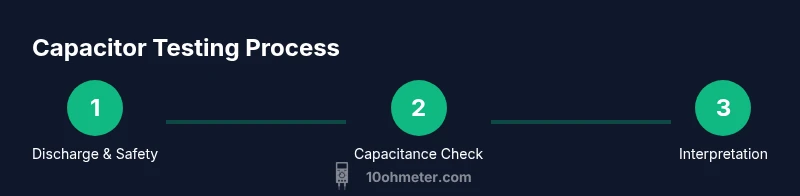
Safety First: Always Power Down and Discharge
Before touching any capacitor, disconnect power and discharge the device to avoid electric shock or a damaging surge to your meter. A safe discharge path is essential: short the capacitor leads with a resistor of appropriate value or use a dedicated discharge tool. For electrolytic capacitors in power supplies, a discharge time of several seconds to a minute may be appropriate depending on the capacitor size. Use eye protection and keep your work area dry. If the capacitor is part of a live circuit, consider removing the component for off-board testing to minimize risk.
Reading Capacitance: Interpreting the Numbers
When you measure capacitance with a DMM, the reading should be close to the capacitor’s nominal value within the stated tolerance. A significantly lower reading may indicate leakage, dried electrolyte, or a failed dielectric. A reading that drifts with temperature, voltage bias, or time suggests instability or aging. For non-polarized capacitors, the value typically remains stable across testing conditions, while polarized electrolytics may show variance if not fully discharged. In all cases, ensure measurement is done with the capacitor isolated from active circuits and re-check after discharging again to verify consistency.
In-Circuit vs Out-of-Circuit Testing: Pros and Cons
Out-of-circuit testing provides the cleanest measurement because other components cannot influence the reading. In-circuit testing is acceptable for quick diagnostics but can yield misleading results if the capacitor is connected to other paths (resistors, diodes, or other capacitors). If you test in-circuit, carefully remove at least one terminal from the circuit to decouple the capacitor’s influence. For multi-section capacitors or modules, isolate the specific section you are testing when possible. In all cases, interpret results with the circuit context in mind.
Capacitance by Type: Electrolytic, Ceramic, Film, and Beyond
Different capacitor chemistries respond differently to measurement methods. Electrolytics may show drift as they age or dry out; ceramic capacitors can be stable but may exhibit voltage dependence. Film capacitors tend to be reliable and stable, while tantalum capacitors require careful handling due to polarity and potential failure modes. When testing, note the voltage rating and the expected tolerance for each type, and avoid applying charges beyond the device’s rating during measurement. If uncertain, consult the manufacturer’s data sheet for your specific part.
ESR and Leakage: What Your Meter Might Not Show
Some digital meters can measure equivalent series resistance (ESR) if they have a dedicated ESR function. ESR is a critical health indicator; a capacitor may pass a capacitance test yet have high ESR, which can cause poor filtering or ripple. If your meter supports ESR, perform the test according to the device manual, and compare results to the capacitor’s nominal ESR at the test frequency. Leakage current is another important factor; while resistance measurements can hint at leakage, a proper leakage test requires dedicated equipment or a comprehensive circuit analysis. When in doubt, replace suspect components with known-good parts.
Common Mistakes and How to Avoid Them
- Skipping the discharge step: Always discharge before measuring to avoid inaccurate readings and hazards.
- Relying on resistance alone: Resistance tests can miss leakage; combine with capacitance checks for a fuller picture.
- Testing in active circuits: Remove the capacitor from the circuit when possible to prevent interference from surrounding components.
- Ignoring tolerance: Compare readings to nominal values and consider temperature, voltage bias, and age as contributing factors to drift.
Practical Testing Scenarios: Quick Wins for Your Bench
A practical approach is to test a capacitor after powering down and discharging, then measure capacitance with the appropriate mode. If the result is within tolerance, document it for future reference. If the reading is off, verify the discharge again and retest. Where possible, test a known-good capacitor from the same family to establish a baseline. This helps determine whether the fault lies with the component or the testing setup. Over time, you'll develop an intuition for when a reading is suspicious and when it’s a normal variance.
Tools & Materials
- Digital multimeter with capacitance function(Capacitance range suitable for expected values (e.g., microfarads to tens of microfarads).)
- Test leads with probes(Short, stiff leads reduce measurement error; use insulated clips if available.)
- Known-good capacitor for baseline checks(Prefer a capacitor with a similar value and voltage rating for comparison.)
- Discharge tool or resistor (1 kΩ recommended)(Discharge across the capacitor terminals after removal from circuit; do not rely on a short alone.)
- Safety gear (gloves and goggles, optional)(Useful for high-voltage or automotive scenarios.)
- Insulating mat or work surface(Provides a non-conductive base and reduces static risk.)
Steps
Estimated time: 12-20 minutes
- 1
Power down and discharge
Disconnect power to the circuit and discharge the capacitor using a proper discharge path. This prevents shock and ensures the reading reflects the capacitor itself rather than residual charge. Allow a few seconds of settling time before measurement.
Tip: Use a resistor across the terminals for a safe, controlled discharge. - 2
Select the correct meter setting
Set the digital multimeter to capacitance mode if available. If not, prepare a known-good capacitor for a secondary check or use an external capacitance tester. Record the nominal value and tolerance for comparison.
Tip: Verify the meter’s probes are clean and make solid contact with the terminals. - 3
Connect the probes to the capacitor
Attach the meter leads to the capacitor terminals or to a decoupled test fixture. Ensure correct polarity for polarized capacitors, if applicable. Keep leads short to minimize stray capacitance.
Tip: Hold the capacitor steady and avoid bending leads while measuring. - 4
Read and compare the value
Read the capacitance value and compare it to the nominal value within stated tolerance. Consider temperature effects and voltage bias if your capacitor type is voltage-dependent. If the value deviates significantly, re-discharge and re-measure to confirm.
Tip: If readings remain unstable, test a known-good capacitor to verify the meter is functioning correctly. - 5
Optional ESR check and post-test steps
If your meter supports ESR, measure ESR to assess dielectric health. For in-circuit tests, remove at least one terminal before measurement to isolate the capacitor. Document results and store the component for future reference.
Tip: Residual magnesium-oxide or electrolyte issues in electrolytics may cause high ESR even if capacitance appears normal.
Your Questions Answered
Can I test a capacitor with a basic multimeter that has no capacitance setting?
Most basic meters cannot measure capacitance directly. You will need a meter with a capacitance function or an external LCR/Capacitance tester. You can still perform a qualitative check by inspecting resistance and visual condition, but quantitative capacitance readings require the right tool.
Most basic meters can’t measure capacitance directly; you’ll need a meter with capacitance mode or an external tester for quantitative results.
Is it safe to discharge large capacitors before testing?
Yes. Discharging large capacitors using a resistor is essential to avoid electric shock and protect the meter. For high-voltage capacitors, use proper equipment and follow safety procedures. Never short a charged capacitor directly with metal tools.
Always discharge large capacitors with a resistor and follow safety steps to prevent shocks and equipment damage.
What does a low capacitance reading indicate?
A reading lower than nominal can indicate leakage, dried electrolyte (in electrolytics), or a failing dielectric. Re-test after proper discharge, and compare to a known-good part to confirm the diagnosis.
Low readings usually mean leakage or aging; retest after discharging and compare with a good part.
Can I test a capacitor in-circuit?
In-circuit testing can yield misleading results because other components influence the measurement. If possible, remove one lead to isolate the capacitor, or test the component on a breakout board with minimal circuit activity.
In-circuit tests can mislead you; isolate the capacitor if you want a trustworthy reading.
How should I interpret ESR readings if available?
ESR values indicate dielectric health and aging. Higher than specified ESR suggests aging or damage, even if capacitance is near nominal. Compare ESR to the capacitor’s data sheet reference at the test frequency.
High ESR means the capacitor may be failing; compare against datasheet specs at the test frequency.
Watch Video
Key Takeaways
- Verify meter has a capacitance function before starting
- Discharge the capacitor completely prior to measurement
- Compare readings to the nominal value within tolerance
- Test out-of-circuit when precise results are needed
- Document findings for future troubleshooting