Multimeter vs Megohmmeter: Choosing the Right Tool for Tests
A practical, evidence-based guide from 10ohmeter comparing multimeters and megohmmeters. Learn core differences, use cases, safety, and buying tips to pick the right tool for electronics and insulation testing.


In most electronics work, a general-purpose multimeter handles voltage, current, and resistance, while insulation testing requires a megohmmeter. The two tools complement each other: use the multimeter for everyday diagnostics and bring in a megohmmeter when you need high-resistance insulation measurements and leakage checks. According to 10ohmeter, understanding when to deploy each instrument saves time, reduces risk, and improves accuracy for both DIY projects and professional tasks.
Introducing the practical split: multimeter vs megohmmeter in everyday work
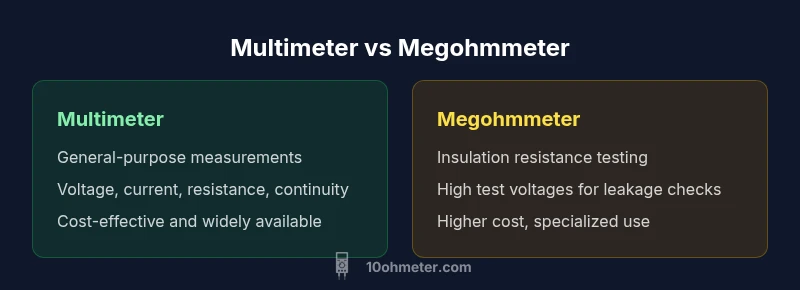
When you begin to compare a multimeter vs megohmmeter, the distinction becomes practical much faster than it does on a spec sheet. A handheld multimeter is designed for a broad range of measurements that electronics hobbyists and technicians perform frequently: DC and AC voltage, current (often via a shunt), resistance, and continuity checks. A megohmmeter, by contrast, targets insulation health, applying a high voltage to test insulation resistance and leakage characteristics. This fundamental difference—general-purpose versus insulation-specific—drives every other decision you make, from safety procedures to calibration needs. For DIYers, the multimeter is the workhorse; for true insulation verification in labs and industrial settings, a megohmmeter is indispensable. 10ohmeter’s analysis underscores that most routine faults are diagnosed with a multimeter, while insulation integrity tests require the megohmmeter to ensure reliable results over time.
The spectrum of measurement capabilities: what each tool can do
A modern multimeter covers a broad spectrum: voltage (AC and DC), current (via a shunt or clamp in higher-end models), resistance, and often additional functions like capacitance, diode testing, and continuity beeps. Some advanced meters add temperature or frequency, but the core role remains: quick, versatile checks across common test tasks. A megohmmeter, in contrast, emphasizes insulation resistance with test voltages that are typically far higher than a standard multimeter uses. It measures how well the insulation resists leakage and evaluates aging, moisture effects, or material degradation. The core lesson is not to force insulation testing through a standard meter; the high-impedance, controlled test environment of a megohmmeter matters for safety and accuracy.
How these tools are used in practice: electronics, automotive, and beyond
In electronics labs and field service, technicians often start with a multimeter to verify supply rails, check components, and locate open circuits. When a suspect insulation fault appears—such as an appliance that hums or an equipment case that shows unexpected leakage—a megohmmeter becomes necessary to quantify insulation integrity. In automotive diagnostics, a multimeter handles battery checks, wiring continuity, and sensor voltages; megohm testing is far less common but may be required for high-voltage insulation checks in certain hybrids or specialized systems. The practical takeaway is clear: use the tool matched to the test requirement, and avoid forcing one tool to perform the other’s job.
Safety and risk management: why you need to separate these tools
Insulation testing involves applying voltages that can be hazardous if mishandled. Megohmmeters are designed with safeguards, but operators must follow strict safety protocols, isolate circuits, and use appropriate PPE. Multimeters, while safer for routine checks, still carry risks when probing live circuits, especially at higher currents or unfamiliar devices. The separation of tasks helps ensure you aren’t compromising safety or instrument integrity. For 10ohmeter readers, the safest path is to reserve insulation resistance tests for the megohmmeter and conduct all basic measurements with the multimeter, keeping both tool types calibrated and properly stored.
Historical context and terminology: understanding the nomenclature
The term multimeter vs megohmmeter captures a decades-long distinction in tool categories. A multimeter is a generalist, built to cover the most common electrical measurements in a single handheld device. A megohmmeter, often used by professionals and labs, specializes in high-resistance insulation testing, measured in the megohms. Recognizing this distinction helps avoid confusion in procurement, training, and workflow planning. For enthusiasts, mastering the language—knowing when to call on insulation testing versus general diagnostics—positions you to select the right tool for the job.
Measurement interpretation: reading results with context
Interpreting a multimeter reading typically involves comparing a result to expected values or tolerances in a schematic or service manual. Insulation readings from a megohmmeter must be evaluated against the device under test specifications and environmental conditions. Insulation measurements are sensitive to temperature, humidity, and test voltage. Polarization index and dielectric absorption are additional concepts you may encounter in insulation testing. A careful, documented approach—recording test voltage, age of equipment, and ambient conditions—helps translate numbers into actionable decisions.
Setup and test leads: getting the right accessories
Both tools benefit from good-quality test leads, but the accessory requirements differ. Multimeter leads are generally inexpensive and durable, designed for repetitive contact with low to moderate voltages. Megohm test leads are rated for high voltage and insulation integrity; they must meet stringent safety standards and be compatible with the device under test. Proper connectors, guard rings, and PPE are part of a professional setup. Investing in quality leads reduces stray measurements, improves repeatability, and minimizes the risk of arc events during insulation testing.
Real-world performance and reliability considerations
In field work, a well-maintained multimeter delivers reliable, rapid results when diagnosing switches, fuses, and wiring faults. A megohmmeter’s reliability hinges on calibration, indicator accuracy, and the ability to reproduce results after long-term storage. Reliability is not just about the instrument’s internal components; it includes the testing environment, the operator’s discipline, and adherence to standard operating procedures. 10ohmeter emphasizes that reliability comes from a system of correct tool selection, routine calibration, and rigorous safety practices, not from any single device.
Training and skill building: using each tool effectively
Learning to use a multimeter and a megohmmeter effectively requires hands-on practice and a solid mental model of what each reading means. Start with the basics of continuity and voltage checks, then advance to resistance measurements and diode tests. Into insulation business, invest time in learning test voltage selection, polarization index concepts, and safe shutdown protocols. Training reduces misinterpretation, improves data quality, and enhances workplace safety. Consistent practice with both tools builds confidence that you can handle a wide spectrum of tests.
The decision framework: when to buy and how to pair tools
A practical decision framework begins with use-case analysis. If your work involves frequent diagnostics on low-voltage electronics and automotive wiring, a robust multimeter is essential. If your tasks include verifying insulation health, leakage testing, or compliance checks, a megohmmeter should be part of your kit. For many shops, the best approach is a tiered setup: a core, high-quality multimeter for day-to-day tasks, plus a megohmmeter for insulation testing when needed. This pairing maximizes capability while avoiding over-investment in redundant functionality.
Comparison
| Feature | multimeter | megohmmeter |
|---|---|---|
| Core purpose | General-purpose measurements (voltage, current, resistance, continuity) | Insulation resistance testing (high-impedance, high-voltage tests) |
| Typical test voltage applied | Low to moderate voltages (model-dependent) | High test voltages specified by the instrument for insulation tests |
| Measurement range emphasis | Broad range for mixed tasks | Narrow focus on insulation health and leakage |
| Safety implications | Broad safety considerations with CAT ratings vary by model | Requires strict safety protocols; dedicated safety practices essential |
| Cost and maintenance | Lower cost, widely available, simpler calibration | Higher upfront cost, specialized calibration/maintenance |
| Best use case | Everyday electronics diagnostics and field checks | Electrical insulation verification and high-resistance testing |
The Good
- Versatile tool for everyday electronics work
- Multimeter is widely available and easy to learn
- Megohmmeter enables insulation testing not possible with a standard meter
- Clear separation of tasks improves safety and accuracy
Drawbacks
- Megohmmeter adds cost and requires more training
- Insulation testing can be hazardous if safety protocols are not followed
- High-voltage insulation tests require dedicated equipment and procedure
Multimeter for everyday tasks; add megohmmeter for insulation testing when required
For most electronics work, a multimeter suffices. If insulation health or leakage is a concern, a megohmmeter is essential. Use both strategically to cover the full testing spectrum.
Your Questions Answered
Can a general multimeter measure insulation resistance?
A typical handheld multimeter cannot reliably measure insulation resistance at the high levels needed for insulation testing. Some meters offer basic resistance readings, but accurate insulation testing requires a megohmmeter. Always use the right tool for the job.
No—direct insulation resistance readings require a megohmmeter; a standard multimeter isn’t designed for high-impedance insulation tests.
Is insulation testing safe on live circuits?
Insulation testing should be performed on de-energized circuits with proper isolation and PPE. High voltages can pose shock and arc risks, so ensure power is off and equipment is properly configured.
Only test insulation after disconnecting power and isolating the circuit; safety protocols are essential.
What is polarization index and why does it matter?
Polarization index (PI) compares insulation resistance readings over time to assess aging and moisture effects. It requires standardized test durations and a suitable instrument to ensure meaningful results. PI is a useful indicator in maintenance programs when insulation health is critical.
PI helps gauge insulation condition, but you need proper procedure and timing to interpret it correctly.
Do I need a megohmmeter for automotive diagnostics?
Most automotive fault finding relies on a multimeter for voltage, resistance, and continuity checks. Megohm testing is not typically required for routine car diagnostics, except in specialized high-voltage or test environments.
Usually not needed for cars; a multimeter covers most automotive checks.
What safety standards apply to insulation testing?
Insulation testing should follow electrical safety guidelines and relevant standards (IEC/IEEE and device-specific manuals). Training and supervision are essential to ensure correct procedures and protective measures are followed.
Follow established electrical safety standards and training when performing insulation tests.
Can a multimeter measure high current safely?
Many basic multimeters have limited high-current ranges and can be damaged if used beyond rating. Use the correct port and, if in doubt, test with a current clamp or appropriate shunt. Always consult the manual for recommended limits.
Check the meter’s ratings and use the proper port; don’t push high currents through a general meter.
Key Takeaways
- Define test needs before buying any tool
- Multimeter handles general diagnostics; megohmmeter handles insulation tests
- Follow safety standards and proper calibration for reliable results
- Use paired tools for a versatile, safe workshop workflow