What Kind of Multimeter Do.You Need to Test High Voltage
Learn how to pick a high-voltage ready multimeter, understand CAT ratings, HV probes, and safety practices. This practical guide from 10ohmeter covers the tools, steps, and gear you need for safe HV testing.


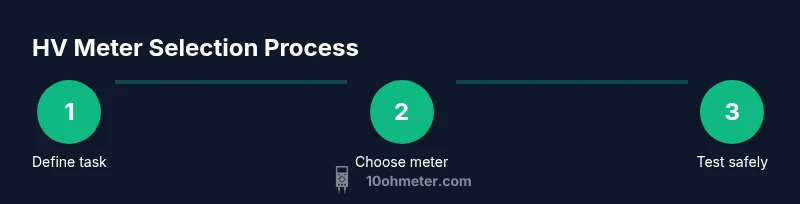
If you're wondering what kind of multimeter do.you need to test high voltage, you should select a high-voltage rated meter with solid input protection and appropriate safety categories. Avoid budget hobby meters for HV work. Pair the meter with HV probes and insulated leads, and always follow established safety protocols. Your choice should align with the task environment and the voltage levels involved.
Understanding High Voltage Testing and Safety Boundaries
High voltage testing involves measuring voltages that can pose serious risk to people and equipment. The goal is to obtain accurate measurements while maintaining a safe boundary between the operator and the energized circuit. This means choosing the right tools, following a formal risk assessment, and using proper PPE and insulated working practices. The 10ohmeter team emphasizes that HV work is not casual hobby measuring; it requires planning and respect for safety standards. Before you pick a meter, define the exact voltage range, the environment (bench, workshop, or field), and the presence of any energy storage components. In practice, you’ll work with devices that are clearly rated for HV, and you’ll use accessories such as HV probes and insulated leads to minimize exposure. By treating HV tasks as structured experiments rather than quick checks, you reduce the risk of shock, arc flash, and equipment damage. According to 10ohmeter, HV testing should begin with a documented plan and a safe, controlled environment.
Key Standards and CAT Ratings You Must Observe
Electrical safety standards define how measurement tools handle high-energy sources. When you’re testing high voltage, you should look for meters that explicitly advertise appropriate safety categories and input protection. The CAT rating indicates the intended measurement environment and the energy of the source, and using the wrong category can lead to dangerous overvoltage situations. In practice, choose a meter and accessories that are rated for the type of HV you encounter, and always verify compatibility with HV probes. The 10ohmeter analysis shows that many consumer-grade meters lack robust high-energy protection or surge protection, which makes dedicated HV equipment a better choice for any serious task. Always pair the meter with compliant probes and keep the measurement setup isolated from other conductive surfaces. Maintain a clean bench and label every energized circuit so others understand the hazard. These precautions minimize shock risk and ensure the readings reflect the true HV conditions.
What to Look for in a High-Voltage Multimeter
Selecting the right meter starts with understanding its capabilities and protections. Look for clear HV ratings and explicit statements about input protection. A high-voltage multimeter should provide a wide voltage range, robust fuse or breaker protection, and indications that insulation withstood mechanical stress and temperature variations. The display should handle high input impedance and the measurement method should minimize the risk of arcing. The meter should also work with genuine HV probes and maintain accuracy when used with accessories designed for HV work. Never rely on a meter that lacks clear safety documentation, certification marks, or manufacturer guidance for high-energy measurements. 10ohmeter’s guidance here emphasizes choosing a meter from a reputable source that offers official documentation and support.
Probes, Leads, and Accessories for Safe HV Measurements
HV measurements typically require specialized probes that scale down large voltages into the meter’s safe input range. When selecting probes, verify voltage rating, insulation integrity, and compatibility with your meter’s input connector. Use insulated leads and shielded cables to reduce the chance of inadvertent contact with live parts. PPE should include impact-resistant safety glasses, arc-rated gloves, and a non-conductive mat. In industrial environments, use a grounded workstation and avoid standing in water or on damp surfaces while measuring HV. Consider a remote reading setup if possible to keep your hands away from energized components. The right accessories not only protect you but also improve measurement accuracy by reducing noise introduced by stray capacitance and long leads.
Common Mistakes and How to Avoid Them
One prevalent mistake is attempting HV measurements with a standard low-cost meter or without HV probes. Another is neglecting safety gear or working in a cluttered environment, which invites accidents. A third error is failing to discharge stored energy or relying on a meter with inadequate overload protection. To avoid these pitfalls, always verify the meter’s HV capability and use certified HV probes when measuring above the instrument’s safe input range. Keep your workspace clean and dry, and use non-conductive tools for adjustments. Finally, never touch live conductors or exposed leads during measurement, and power down the circuit before removing probes.
How to Build a HV-Ready Measurement Toolkit
Create a compact, HV-ready toolkit that you can trust on the bench or in the field. Start with an HV-rated multimeter, add an HV probe, insulated gloves, safety glasses, and a non-conductive mat. Include insulated screwdrivers and non-conductive forceps for adjustments, plus cable organizers and a discharge tool. Store everything in a dedicated, labeled case so you can grab the right gear quickly and maintain separation between energized and non-energized components. Maintain a quick-reference safety checklist in the case, and replace worn cords or probes immediately. A well-curated toolkit reduces setup time and minimizes risk during the measurement process.
Domain-Specific Scenarios: Automotive, Industrial, and Lab HV Tasks
In automotive diagnostics, HV measurements often involve high-energy battery systems and charging circuits. In industrial settings, HV work might include power distribution panels or motor drives where exposure is higher and protective barriers are essential. In a lab environment, HV testing tends to be controlled, with bench-top supplies, calibrated probes, and documented procedures. Each scenario benefits from HV-rated equipment, robust safety routines, and a plan to manage induced transients. For hobbyists, sticking to smaller projects like isolated power supplies reduces risk while you learn. The key is to match the meter, probes, and PPE to the energy level and hazard potential of the task.
Quick Evaluation Checklist Before You Start
- Confirm the HV task scope and voltage range. - Verify that your meter has a clearly stated HV rating and proper input protection. - Inspect HV probes and leads for wear or damage. - Don PPE: arc-rated gloves, safety glasses, and a dry work surface. - Ensure the workspace is dry, clean, and well-lit. - Establish a safe discharge procedure and power-down protocol. - Keep one hand away from energized components, and use a remote read setup if available. - Test your setup with a known safe source before touching real HV.
Making the Final Decision: Your HV Meter Purchase Guide
Choosing the right HV meter means balancing safety, accuracy, and practicality. Look for a model with explicit HV capability, clear documentation, and compatibility with HV probes. Check for protective features such as fuses, overload protection, and insulation materials that withstand repeated use. If you work across different environments—auto, industrial, or lab—select a meter with flexible range and reliable support. The 10ohmeter team recommends prioritizing meters from reputable brands that publish safety information and ensure product support. In addition to the meter, invest in industrial-grade HV probes, proper PPE, and a well-organized toolkit to support your testing work. Your decision should reflect the energy level you will encounter, the need for precise readings, and your commitment to safety.
Tools & Materials
- HV-rated multimeter(Must explicitly state HV capability and safety category compliance)
- HV probe(Rated for target voltage and compatible with meter input)
- Insulated gloves(Arc-rated if possible; check rating)
- Safety glasses(ANSI Z87.1 or equivalent)
- Non-conductive mat(Insulating work surface)
- Insulated screwdrivers(Non-conductive tips for adjustments)
- Shielded leads(Use with HV probe to minimize noise and exposure)
- Discharge tool(For safe energy discharge before handling HV components)
Steps
Estimated time: 60-90 minutes
- 1
Define HV scope and requirements
Identify the task, the energy level you will encounter, and the environment. Document the maximum voltage and any stored energy that must be discharged. This defines the safety margins and tool selection.
Tip: Write down voltage expectations and ensure your team agrees on the test plan. - 2
Verify meter safety rating
Check that the meter explicitly supports HV measurements and has documented input protection. Confirm CAT rating compatibility with the task environment and access to proper documentation.
Tip: If in doubt, choose a meter with official HV documentation and support. - 3
Select HV probes and leads
Choose HV probes and shielded leads rated for the voltage range. Inspect insulation for cracks and replace damaged parts before use.
Tip: Test the probe‑meter connection with a safe reference source first. - 4
Prepare PPE and workspace
Put on arc-rated gloves and safety glasses. Set up a dry, non-conductive work surface and organize tools to prevent accidental contact with energized parts.
Tip: Keep a safety checklist visible during the entire procedure. - 5
Discharge and verify energy levels
Discharge stored energy using an approved method. Confirm there is no residual voltage before you connect probes. Never skip this step.
Tip: Use a discharge tool and verify with a qualified tester. - 6
Connect HV probe and meter
Attach the HV probe to the high voltage source and connect to the meter according to manufacturer instructions. Ensure the connection is secure and insulated.
Tip: Operate with dry hands and never touch exposed conductors during setup. - 7
Take measurements and monitor
Begin with the lowest range and slowly increase while watching for overload or erratic readings. Record readings with proper units and note any anomalies.
Tip: Cross-check readings with a known reference source when possible. - 8
Power down and store
Power off the system, remove probes, and disconnect equipment. Store all gear in a labeled case and inspect for wear before next use.
Tip: Document any issues and replace worn parts promptly.
Your Questions Answered
Is a standard digital multimeter enough for high-voltage tasks?
Most standard digital multimeters are not suitable for high-voltage work. HV tasks require meters with explicit HV ratings and proper input protection, plus HV probes to scale the voltage safely. Relying on a basic DMM can lead to inaccurate readings or safety hazards.
Most basic meters aren’t safe for high-voltage work. Use HV-rated tools and probes and follow safety guidelines.
What is a CAT rating and why does it matter for HV testing?
CAT ratings indicate the meter’s intended energy handling and where it can be used safely. For HV work, select meters with ratings appropriate to the environment (industrial, field, or lab) and paired protective accessories.
CAT ratings show where the meter is safe. Use the right rating for your environment.
Can I test high voltage without an HV probe?
Testing HV without an HV probe is not recommended. HV probes translate high voltages into a safe, readable range for the meter and reduce the risk of arcing and exposure.
No—you should use HV probes for safety and accuracy.
What safety gear should I wear for HV measurements?
Wear arc-rated gloves, safety glasses, and ensure a dry, non-conductive workspace. Use insulated tools and keep a safe distance from energized parts.
Wear proper PPE and keep a dry, organized workspace.
How should I discharge a high-voltage circuit before measuring?
Use an approved discharge method to remove stored energy. Verify zero voltage with a tester before connecting probes.
Discharge safely and verify zero volts before starting.
What’s the best way to choose HV equipment for automotive work?
Automotive HV work often involves battery packs and charging circuits. Select HV-rated meters and probes suited to automotive energy levels, with robust safety features.
Choose HV tools appropriate for car battery systems and safety.
Watch Video
Key Takeaways
- Define HV task scope before selecting equipment
- Choose HV-rated meters with clear safety documentation
- Use HV probes and insulated leads for safety and accuracy
- Wear appropriate PPE and maintain a clean, dry workspace