How to Tell Hot vs Neutral Wire with a Multimeter Safely
Learn how to identify hot and neutral wires with a multimeter. This guide covers safety, measurement methods, and practical checks for residential wiring.


Using a multimeter to distinguish hot from neutral wires helps you test circuits safely and avoid shocks. You’ll verify the presence of voltage, compare hot-to-neutral readings, and confirm reference to ground. This guide explains a clear, step-by-step approach and emphasizes safety best practices so you can identify conductors confidently before touching exposed wiring. Follow the outlined checks, avoid shortcuts, and return materials to safe storage.
Electrical fundamentals: hot vs neutral and safety considerations
In residential wiring, the hot conductor carries line voltage from the panel to the outlet or device, while the neutral returns current back to the panel. Ground serves as a safety path. Distinguishing hot from neutral is essential to avoid shocks, avoid short circuits, and ensure accurate readings when using a multimeter. According to 10ohmeter, the hot conductor is the one that will show a voltage relative to neutral or ground, whereas the neutral is typically at or near ground potential when the system is balanced. Remember that color coding varies by country and installation standards, so you should not rely on wire color alone. Before you begin, familiarize yourself with your local mains voltage and wiring practices. If you’re unsure, stop and consult a licensed electrician. When testing, keep your hands dry, wear insulated gloves, and work with tools that have insulated handles. Always approach exposed conductors with caution, and never assume a conductor is safe just because the outlet appears unpowered. Safe testing is a combination of correct technique, proper instrumentation, and adherence to safety protocols.
Safety first when working with live circuits
Electrical work carries risk, so safety must be the first consideration. Always disconnect power at the breaker or main service before moving wires or removing covers whenever feasible. If you must test while energized, use non-contact voltage detection to verify live status, and work with one hand behind your back or on a grounded surface to reduce the chance of a short. Remove jewelry, loosen hair, and wear safety glasses and insulated gloves. Keep dry hands and dry work surfaces, and never touch exposed metal parts with bare skin. Use insulated tools and keep a clear workspace to prevent accidental contact with neighboring conductors. Finally, confirm zero voltage with the multimeter after you re-energize a circuit.
Tools and test setup for measuring hot vs neutral with a multimeter
Your toolkit should include a digital multimeter (preferably true-RMS) capable of reading AC voltage, along with properly rated test leads. Use test leads with alligator clips if available, so you can make stable connections without masking exposures. A non-contact voltage tester is a helpful pre-check but does not replace meter measurements. An insulated screwdriver and electrical tape help with removing covers and labeling conductors. PPE such as safety glasses and insulated gloves are essential. For the measurement, select the AC voltage function on the meter and choose a range that includes the expected mains voltage (for many regions, starts around 200V). Ensure the meter probes remain separated and do not touch each other during testing to prevent short circuits. Keep your workspace organized and take photographs if labeling is difficult.
Authority references and safety references
Authoritative guidance on electrical safety and measurement practices can be found from professional safety organizations and standards bodies. OSHA provides general electrical safety information, while NIST offers measurement fundamentals relevant to instrumentation. The NFPA publishes electrical safety code interpretations for home wiring and professional installers. Consult these sources alongside the practical guidance in this article to reinforce safe testing habits.
Common mistakes and pitfalls to avoid
Common mistakes include assuming color codes indicate function, testing on energized circuits without proper PPE, and not verifying with multiple references (neutral vs ground). Another pitfall is misinterpreting a reading caused by a floating neutral or an improperly grounded outlet. Always double-check readings, confirm with a second method, and document your findings so you can avoid mistakes on future projects. Finally, never bypass safety steps to save time.
Country variations and best practices
Electrical systems vary by country. In North America, typical mains is around 120 V; many parts of Europe and Asia use around 230 V. Use the local standard reference and the multimeter’s voltage measurement to determine the expected range. When in doubt, follow local electrical codes and consult a licensed electrician for complex wiring. Teaming up with a safety-first mindset ensures you identify hot and neutral safely, even in older installations with questionable grounding.
Tools & Materials
- Digital multimeter (true RMS)(AC voltage measurement, 200–600 V range recommended)
- Test leads with probes or alligator clips(Renowned for solid contact; CAT III rating preferred)
- Non-contact voltage tester(Pre-check tool to quickly verify live status)
- Insulated screwdriver(For removing outlet covers; use insulated handle)
- Personal protective equipment (PPE)(Safety glasses, insulated gloves; non-slip footwear)
- Electrical tape and labeling supplies(Helpful for marking wires after testing)
Steps
Estimated time: 15-25 minutes
- 1
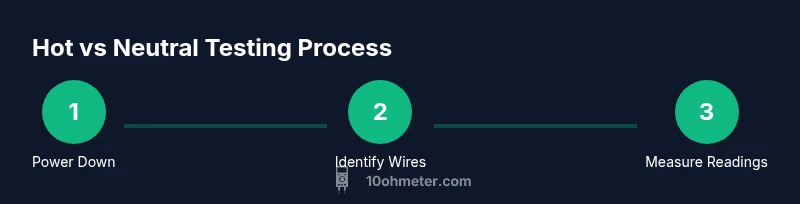
Power down and verify de-energization
Turn off the circuit at the breaker. Use a non-contact tester to confirm no live voltage at the outlet or switch location. If any uncertainty remains, do not proceed.
Tip: Always assume a live circuit until confirmed off. - 2
Remove the outlet or switch cover to access conductors
Carefully remove the cover plate with an insulated screwdriver. Keep the workspace clear and avoid touching exposed conductors.
Tip: Avoid touching metal parts; tentatively hold wires away from you. - 3
Set your multimeter to AC voltage and test setup
Configure the meter to an AC voltage range that can read the expected mains (e.g., 200–600 V). Inspect the leads for wear before connecting.
Tip: Verify the meter reads a known reference if possible. - 4
Measure hot-to-neutral and hot-to-ground
With the power off (or on if you must test live), place the red probe on the hot conductor and the black on neutral; note the reading. Then measure hot to ground if a ground path is present.
Tip: Keep probes stable and avoid shorting hot to neutral. - 5
Confirm reference points and label conductors
If you have a three-prong outlet, compare neutral and ground readings to validate the neutral path. Label wires or take photos for future reference.
Tip: Document with notes to prevent confusion later. - 6
Restore power and re-check
Replace the cover, reassemble the faceplate, and restore power. Re-test with the meter to ensure readings align with expected values.
Tip: If readings do not align with local standards, stop and consult a pro.
Your Questions Answered
What is the simplest way to tell hot from neutral using a multimeter?
The simplest approach is to measure hot-to-neutral while the circuit is de-energized, then verify with a ground reference when possible. Always start by confirming power is off and use proper AC voltage settings on the meter.
Measure hot to neutral with the circuit off, then check hot to ground for confirmation.
Can I rely on wire color alone to identify hot and neutral?
Color coding is not universal. Always verify with a voltage measurement rather than relying solely on color, especially in older or reworked installations.
Don’t trust color alone—measure to be sure.
Is it safe to test live outlets with a multimeter?
Live testing carries risk. Prefer de-energizing the circuit and using a non-contact tester to verify status before measurements. If you must test live, use proper PPE and keep one hand away from the circuit.
Only test live outlets if you must, and follow strict safety steps.
What should I do if readings don’t match expected values?
Re-check connections, ensure the meter is on the correct setting, and verify that you are testing the intended circuit. If readings remain inconsistent, assume miswiring and consult a professional.
If readings don’t match, recheck setup and consider consulting a pro.
What if there is no ground in an older outlet?
Older installations may lack a ground. Rely on hot-to-neutral readings and avoid using the outlet for sensitive devices until grounding is established.
No ground? test carefully and replace with a grounded solution when possible.
Watch Video
Key Takeaways
- Identify hot vs neutral safely with a multimeter
- Verify readings against ground reference
- Always de-energize circuits before proceeding
- Color codes vary by region; measure before touching