How to Measure DC Amps with a Multimeter: A Practical Guide
Learn how to measure DC amps safely with a multimeter. This guide covers in-series current measurements, using a shunt resistor, safety practices, and practical electronics and automotive examples.


By measuring DC amps with a multimeter, you insert the meter in series with the load or use a low-value shunt and calculate current from the voltage drop. Start by confirming your meter’s DC current range and fuse rating, then follow safe, step-by-step procedures to avoid damaging the circuit or the instrument.
Why measuring DC amps matters
DC current measurement is a fundamental skill for diagnosing electronics and automotive circuits. Knowing the actual current flowing through a component helps you verify that a motor is drawing its expected startup surge, that a sensor isn't overloading its input, or that a charging circuit is delivering the right amount of current. In practical terms, accurate current readings prevent overheating, blown fuses, and misdiagnosis of problems. The 10ohmeter team emphasizes that understanding amperage is essential for safe, reliable experimentation and repair work, whether you’re prototyping a power supply or diagnosing a car’s electrical system. By learning to measure DC amps correctly, you gain a clearer view of circuit behavior and can design safer, more robust projects.
In many projects, current is more telling than voltage alone. A battery may read healthy voltage while internal resistance causes a load to draw too much current, or a motor may stall and spike current briefly. Mastery of this measurement also helps you select appropriate wires, fuses, and heat dissipation strategies. As you read this guide, you’ll develop a practical intuition for when to probe, how to interpret a reading, and what steps to take if the current seems unexpectedly high or low.
Safety and preparation before you measure
Before you touch a meter or a circuit, establish a safety-first mindset. Power down the circuit and disconnect power sources. If you’re working with capacitors or energy storage devices, discharge them safely to reduce the risk of a shock or a spark. Wear eye protection and keep your workspace dry and well-lit. Use insulated tools and keep your fingers away from exposed conductors. Label the circuit clearly so others in the workshop don’t accidentally re-energize it while you’re measuring. Finally, inspect your multimeter’s fuses and leads for any signs of damage; a cracked lead can cause arcing or a misleading reading. Following these precautions reduces risk and protects both you and the device under test.
Understanding DC current ranges and fuses
Most handheld multimeters provide several DC current ranges and at least one dedicated current-jack. The correct approach is to use the smallest range that safely encompasses the expected current, minimizing burden voltage and protecting the meter’s fuse. Some meters offer separate ports for microamps, milliamps, and amperes; never attempt high-current measurements in the microamp port. If the circuit can produce a surge beyond the meter’s limit, pause and switch to a safer method, such as using a shunt resistor to measure current indirectly. Always consult the user manual for your specific model to confirm jack configurations, fuse ratings, and any cautions about measuring current in live circuits.
Method 1: In-series measurement with the meter's current jack
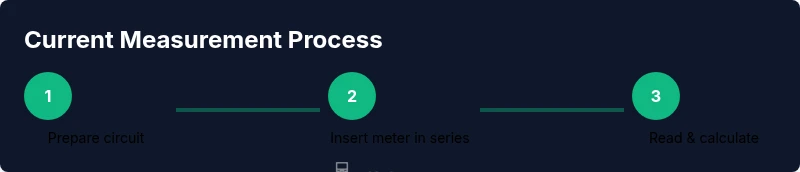
In-series current measurement requires breaking the circuit so the current flows through the meter. Start by turning the meter to DC current (A) mode and selecting the appropriate range. Move the red test lead to the dedicated current jack (often marked A or mA/∆). Break the circuit at a convenient point and connect the meter leads so the current passes through the meter. Reconnect power and observe the reading. Ensure you maintain a solid, secure connection throughout the test to avoid intermittents or hot-sparks. After measurement, power down again before detaching the meter and restoring the circuit to its normal wiring.
Key considerations include keeping the test leads short, avoiding parallel paths that bypass the meter, and never measuring current across a live load without the circuit being in series. If the current is unknown or could exceed the meter’s range, do not force the reading; instead, switch to the next higher range or use the shunt method described later.
Method 2: Using a precision shunt resistor to measure current indirectly
A shunt resistor provides a known low resistance so that the current through the circuit generates a small, interpretable voltage drop. Place the shunt in series with the load, then measure the voltage drop across the shunt with the meter’s DC voltage mode. Calculate current with I = V / R, where V is the measured voltage drop and R is the shunt resistance. This method is useful for higher currents or when the meter’s current range is limited by its fuse or jack. Ensure the shunt’s value is appropriate for the expected current and that connections are secure to minimize measurement error.
When using this method, account for burden voltage—the voltage drop across the shunt itself—which can affect the circuit if the shunt is not very low in resistance. Keep the measurement leads short and clean, and verify the reading by sampling multiple times or using a known reference load for comparison.
Practical electronics vs automotive scenarios
In electronics projects, DC current measurement helps verify load behavior in power supplies, microcontroller circuits, and LED drivers. In automotive contexts, current readings can diagnose charging, lighting, and sensor circuits. For both domains, start with the smallest safe measurement range, use proper fuses, and ensure your tools are rated for the expected currents. Automotive work often involves higher currents and more substantial wiring, so having a plan for safely isolating the circuit and protecting yourself from shorts is essential. The goal is to obtain meaningful data without compromising the circuit or your safety.
How to verify results and avoid common mistakes
To build confidence in your readings, cross-check with an alternate method (e.g., compare the in-series measurement with a shunt-based calculation) when possible. Avoid measuring current directly across components that aren’t intended to be in series with the load. Double-check lead polarity and ensure the meter’s fuse is intact; damaged fuses can cause false readings or create a hazard. If a reading seems off, consider re-measuring with a different range, inspecting connections, or performing a no-load check to identify parasitic paths. Finally, document readings and conditions (voltage, temperature, and circuit state) to track anomalies over time.
Troubleshooting and common mistakes
Common mistakes include placing the meter in parallel with the load (which can short the supply), using the voltage jack for current measurement, and neglecting fuse protection. Burden voltage from a high-value shunt or a too-tight probe contact can skew readings. A loose connection can introduce noise, and measuring in a high-impedance circuit may appear unstable. By following proper in-series measurement techniques, verifying fuse integrity, and using a shunt when appropriate, you’ll obtain safer, more accurate current readings.
Tools & Materials
- Digital Multimeter (DC current capable)(Ensure it has a dedicated current input (A or mA range) and a functioning fuse.)
- Test leads with alligator clips(Keep connections secure and minimize exposed conductors.)
- Low-value shunt resistor (optional)(Value around 0.01–0.1 ohms; use to minimize burden voltage.)
- Insulated wires or jumpers(Short leads help reduce noise and voltage drop.)
- Wire cutters/strippers(For clean, safe circuit breaks when inserting in-series.)
- Safety gear (goggles, gloves)(Protect hands and eyes when working with live circuits.)
Steps
Estimated time: 20-30 minutes
- 1
Power down and prep the circuit
Turn off power, unplug supplies, and discharge any capacitors where safe. Inspect leads and connectors for damage before touching them. This reduces the risk of shock or arc formation when you break the circuit.
Tip: Check for stored energy in capacitors and wait a few seconds after power down to ensure voltage settles. - 2
Choose the measurement method and range
Decide whether you’ll measure in-series with the meter’s current jack or use a shunt. Select the smallest safe range that can cover the expected current to minimize burden voltage and protect the fuse.
Tip: If unsure about the current, start at the lowest practical range and work up carefully. - 3
Open the circuit and insert the meter in series
Break the circuit at a convenient point and connect the meter so all current flows through it. Ensure correct polarity and stable contact to avoid reading fluctuations.
Tip: Keep the wiring tidy to prevent accidental disconnections during measurement. - 4
Take the reading and verify polarity
Power the circuit and read the current value. Confirm that the meter’s reading aligns with expectations based on the circuit design and load.
Tip: If the reading is unstable, reinsert connectors and check for loose grips or corrosion. - 5
Cross-check with a shunt method (optional)
If you’re using a shunt, measure the voltage drop across the shunt, then calculate I = V / R. Compare this with the in-series reading for consistency.
Tip: Ensure the shunt’s rating matches the anticipated current to keep burden voltage low. - 6
Restore the circuit and document results
Remove the meter, reassemble the circuit, and re-energize. Document the conditions (voltage, temperature) and note any anomalies for future reference.
Tip: Replace any blown fuse if readings indicate abuse; check for overloads before re-testing.
Your Questions Answered
Can a standard multimeter measure DC current directly?
Yes, most meters can measure DC current if they have a dedicated current input and fuse protection. Follow the manual for proper jack selection and range settings to avoid damaging the meter or circuit.
Most meters can measure DC current if they have a proper current input and fuse protection. Always follow the manual for the correct jack and range.
What should I do if the meter fuse blows during a current measurement?
Power down the circuit, disconnect the meter, and replace the fuse with the correct rating. Inspect leads for damage before re-testing. If repeatedly blowing, reassess the circuit design and measurement method to avoid overcurrent.
If the fuse blows, power down, replace the fuse with the right rating, and inspect the leads. If it keeps happening, check the circuit and measurement method.
Is using a shunt resistor safer for high currents?
A low-value shunt minimizes burden voltage and allows measurement of higher currents indirectly. It requires calculating current from the voltage drop, which reduces the risk of overloading the meter's current input.
Yes. A shunt lets you measure higher currents safely by reading the voltage drop and calculating the current.
Why might my current reading look lower than expected?
Possible causes include an oversized burden voltage, poor connections, an improper range, or a circuit path bypassing the meter. Recheck connections, ensure correct range, and consider using a shunt method to confirm.
It could be due to burden voltage, bad connections, or the wrong range. Recheck and verify with a shunt if needed.
Can I measure DC current without breaking the circuit?
In most cases, measuring current requires placing the meter in series, which means breaking the circuit temporarily. For non-invasive checks, monitor voltage drop across a known resistor or use an external shunt with calculated current.
Generally, you need to put the meter in series, which means briefly breaking the circuit. For non-invasive checks, use a shunt with voltage measurement.
Watch Video
Key Takeaways
- Insert the meter in series to measure DC current safely
- Know your meter’s fuses and current ranges
- Use a shunt for high currents when necessary
- Verify readings with multiple methods when possible
- Prioritize safety and proper circuit isolation