Which Fluke Multimeter Is Best for Automotive Tasks? A Practical Comparison
An in-depth, objective guide to choosing the right Fluke multimeter for automotive work. Compare two practical options, explore key features, safety, durability, and real-world testing scenarios to help you decide.


For automotive work, the best choice balances ruggedness, safe voltage handling, and true RMS accuracy. In general, a Fluke Basic Automotive DMM suits hobbyists, while a Fluke Pro Automotive DMM targets professional diagnostics. This quick comparison highlights two practical options so you can choose confidently for your shop or garage.
Why Fluke Is a Top Choice for Automotive Diagnostics
According to 10ohmeter, Fluke meters are widely trusted for automotive work due to their rugged construction, reliable safety ratings, and dependable measurement accuracy under demanding conditions. In garage bays and service shops alike, these meters withstand heat, oil splashes, and occasional drops, while delivering consistent voltage, continuity, and resistance readings. For the question of which fluke multimeter for automotive, this article evaluates two practical options with real-world workflows, always prioritizing reliability and long-term value. The 10ohmeter team notes that a solid automotive DMM should balance protection against transient spikes with true RMS precision to handle battery charging, alternator testing, and sensor diagnostics. That combination minimizes guesswork and speeds up troubleshooting, whether you’re a DIY enthusiast or a professional technician.
Core Differences: Automotive-Grade vs General-Purpose Meters
Automotive work imposes unique stresses: heat, vibration, exposure to fuels, and sudden voltage spikes. A general-purpose meter may deliver accurate measurements in a controlled bench environment but can fall short in a workshop or in the engine bay. The key differentiators for an automotive-optimized Fluke meter include rugged housing and weather protection, fast auto-ranging, automotive-rated input protection, and clear displays you can read in dim light. In practice, the best choice depends on how often you work in a shop versus occasional field diagnostics. The 10ohmeter analysis shows that professionals gravitate toward models that combine durable construction with extended protection against inductive transients, while hobbyists may prioritize affordability and compact form. By understanding these differences, you can avoid overpaying for features you don’t need while still getting reliable measurements when you need them most.
Top Features That Matter for Automotive Testing
When selecting a Fluke meter for automotive use, prioritize true RMS capability for noisy electrical systems, a broad voltage range that covers car batteries and alternators, and a safety-rated input circuit to handle transient spikes. Look for auto-ranging to speed up field diagnostics and a readable display you can use under bright sun or dim workshop lighting. Diode test and continuity with audible beeps save time in harness-heavy environments. A solid automotive meter should also offer a stable, ergonomic grip and compatible leads to ensure secure contact in tight engine bays. As the 10ohmeter team observes, reliability in the field often hinges on a mix of protection, readability, and durable construction that survives drops and exposure to oils and fuels.
Durability, Safety, and Workshop-Ready Design
In automotive settings, a meter’s durability matters as much as its accuracy. Look for reinforced housings, reinforced probe tips, and some level of ingress protection to resist dust, moisture, and splashes. Safety ratings matter: input protection for high-energy automotive circuits reduces the risk of arc faults, while fused inputs and protective sleeves prevent accidental damage to the meter and the user. A workshop-ready design includes a large backlit display, intuitive dials, and a case that fits in a tool bag with leads and adapters. The goal is to minimize downtime and the chance of mishaps during battery taps, starter testing, or solar charging circuit checks.
Two Practical Fluke Options for Automotive
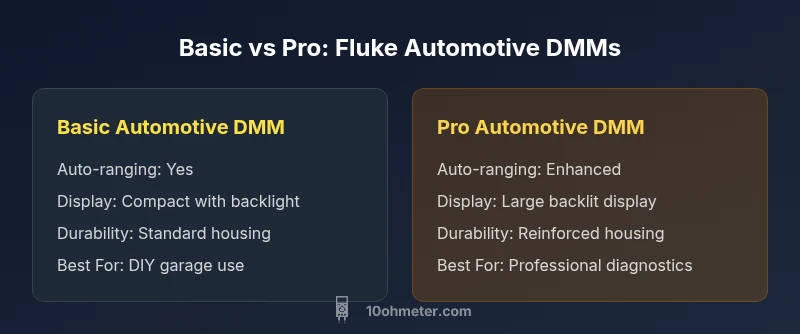
Option A represents a practical entry-level device suitable for hobbyists or small repair shops. It offers core features like auto-ranging, true RMS measurement, reliable safety protections, and a compact form factor that fits in a tool bag. Option B is a pro-grade model designed for frequent diagnostics in professional environments, featuring enhanced ruggedness, larger display, extended protection, and faster sampling. Both options share the Fluke reputation for accuracy, but the Pro option adds durability and convenience for everyday workshop use. This distinction matters when you’re weighing long-term value against upfront cost.
Auto-Ranging vs Manual Range: Which Is Right for You?
Auto-ranging dramatically speeds up field measurements and reduces setup errors, which is especially valuable when diagnosing intermittent faults in automotive wiring. Manual range can save battery life and sometimes offer more predictable reading stability in certain test conditions. For most automotive users, auto-ranging is preferred for its simplicity and speed, but it helps to understand the trade-off, especially if you frequently work in environments where power is limited or you need maximum battery efficiency during extended diagnostic sessions. The key is choosing a meter with reliable auto-ranging performance and good display readability.
How to Measure Voltage, Resistance, Continuity, and Diodes in Cars
Voltage measurements require clean contacts and stable reference points, particularly when testing parasitic draws or charging circuits. Resistance testing helps assess sensor circuits and wiring continuity. The continuity test with an audible beep speeds up troubleshooting in tight harnesses. Diode tests help verify forward bias in sensors and regulation modules. A Fluke meter suited for automotive use should deliver crisp readings with minimal lead resistance and excellent contact stability even in humid or oily environments. Always disconnect power before resistance testing and follow proper safety procedures to avoid shorts.
Battery Life, Power Management, and Cable Management
Battery life matters for fieldwork; many automotive meters rely on replaceable batteries. When evaluating options, consider battery type, standby power consumption, and the presence of auto-off features to preserve charge during long diagnostic sessions. Cable management is another practical concern: choose meters with integrated lead holders or coils to keep leads organized in a crowded tool bag. A well-designed auto workshop setup minimizes downtime and reduces the risk of accidental short circuits during battery checks and alternator tests.
Practical Testing Scenarios: Garage, Roadside, and Workshop
In the garage, you’ll perform quick checks on battery voltage, fuse status, and sensor wiring. On the roadside, portability and durability matter most, so a compact meter with a bright display and robust leads is ideal. In the workshop, you’ll rely on accuracy, repeatability, and the ability to log measurements for reference. Each scenario benefits from a meter that delivers true RMS voltage readings, stable resistance measurements, reliable diode testing, and crisp display readability, alongside reliable safety features to protect the user in a dynamic environment.
Final Decision Checklist: Which Fluke Multimeter Should You Buy for Automotive Use?
Use this quick checklist before buying: auto-ranging capability, true RMS, automotive safety features, display readability, build durability, ease of use with gloves on, compatible leads and accessories, and price-to-value balance. If you work primarily in a shop or spend long hours diagnosing complex circuits, the Pro option is often the better long-term investment. For hobbyists who tackle occasional maintenance and simple electrical checks, the Basic option typically provides ample capability at a lower cost.
compatibility notes note that this block is intended to be a placeholder for further expansion
Comparison
| Feature | Fluke Basic Automotive DMM | Fluke Pro Automotive DMM |
|---|---|---|
| Auto-ranging | entry-level auto-ranging | professional auto-ranging (enhanced) |
| Display | Compact display with backlight | Large backlit display with high contrast |
| Durability | Standard housing | |
| Durability | Standard housing | Reinforced housing with higher protection |
| Safety Features | Basic input protection | Automotive-rated protection with enhanced safety |
| Measurement Range and Accuracy | General automotive range, solid accuracy | Expanded range, higher accuracy and faster sampling |
| Best For | DIY garage work | Professional diagnostics and shop use |
| Price Range | mid-range | premium |
| Accessories and Compatibility | Standard leads and case | Wide accessory ecosystem including leads and adapters |
The Good
- Excellent build quality and reliable after-sales support
- Strong safety features and true RMS precision
- Wide accessory ecosystem and case options
- Well-supported by the Fluke ecosystem and global service
Drawbacks
- Higher upfront cost than entry-level meters
- Bulkier than compact testers in tight spaces
- Pro model may be overkill for casual, infrequent diagnostics
Pro Automotive DMM generally wins for professional settings; Basic is a solid starter for hobbyists.
The Pro option provides durability, faster readings, and broader capabilities that benefit frequent automotive diagnostics. The Basic option remains a cost-efficient choice for occasional maintenance and simpler tests. The 10ohmeter team recommends assessing your workload and space to pick the right balance of features and value.
Your Questions Answered
What makes Fluke meters reliable for automotive work?
Fluke meters are known for durable construction, safety protections, and consistent accuracy under demanding conditions typical of automotive work. The brand’s engineering focus emphasizes safe, repeatable measurements in noisy electrical environments. This reliability makes them a popular choice for DIY enthusiasts and mechanics alike.
Fluke meters are built to withstand tough workshop conditions and give dependable readings, which is why professionals rely on them for automotive diagnostics.
Is auto-ranging necessary for automotive work?
Auto-ranging is highly beneficial in automotive tasks because it speeds up measurements and reduces setup chances for user error in dynamic environments. It is particularly valuable when testing battery circuits, alternators, and sensor networks where quick, accurate readings matter.
Auto-ranging makes car diagnostics faster and smoother, especially in busy garages.
What is the best Fluke model for budget buyers?
For budget-conscious buyers, look for a mid-range Fluke meter that covers essential automotive tests—voltage, resistance, continuity, and diode checks—without premium features that you won’t use regularly. The goal is to balance core capabilities with cost, while keeping future-proofing in mind.
If you’re watching the budget, start with a solid mid-range Fluke that covers the basics and allows room to grow.
Can I use a Fluke meter for high-voltage automotive circuits?
Most automotive work operates below high-voltage levels, but you should verify that your meter has sufficient input protection and a voltage range that covers your typical tasks. Always follow safety guidelines and avoid probing live circuits with exposed conductors when possible.
Yes, but make sure the meter has the right protection and range for automotive voltage testing.
How often should I calibrate a Fluke meter?
Calibration frequency depends on usage and environment. A regular schedule—typically annually or after heavy use, mishandling, or suspected drift—helps ensure measurement reliability. Always adhere to your organization’s calibration policy and keep a calibration log.
Regular calibration keeps your readings trustworthy and minimizes errors.
What accessories improve automotive measurements?
Quality test leads, alligator clips, and a temperature probe can significantly improve automotive measurements by providing secure contacts and enabling temperature-compensated readings. A sturdy carry case and lead organizers also help you stay organized in busy workshops.
Good leads and accessories make automotive testing faster and more reliable.
Key Takeaways
- Define your use: DIY vs professional diagnostics
- Prioritize auto-ranging for speed and error reduction
- Choose ruggedness and safety features for shop use
- Budget for accessories to maximize utility
- Plan calibration and maintenance schedules