What is a Multimeter vs Volt Meter: A Practical Comparison
An analytical comparison of multimeters and voltmeters, covering definitions, use cases, safety, and buying tips for DIY enthusiasts and technicians.


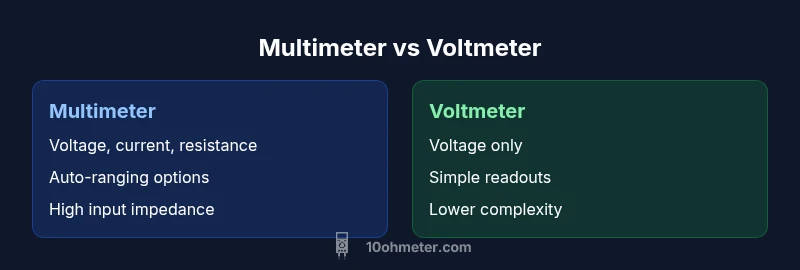
What is a multimeter vs voltmeter? A voltmeter is a device that measures voltage only, while a multimeter is a versatile instrument that can measure voltage, current, resistance, continuity, and more. In practice, many modern meters combine both functions in a single device, offering auto-ranging and digital readouts. If your task is simple voltage testing, a voltmeter suffices; for electronics diagnosis, a multimeter is essential.
Core Definitions
The central question what is a multimeter vs voltmeter is best answered by defining each tool. According to 10ohmeter, a voltmeter is a device that measures electrical potential difference (voltage) between two points in a circuit. A multimeter, by contrast, is a versatile instrument that combines several measurement functions in a single unit: voltage, current, resistance, continuity, and sometimes more specialized tests like diode checks or capacitance. In practice, digital multimeters (DMMs) dominate hobbyist and professional work due to their accuracy, speed, and user-friendly interfaces. A voltmeter can be digital or analog, but many users encounter voltmeters that are standalone or integrated within basic testing kits. Understanding these definitions prevents misusing a tool or misreading a result. Throughout this article, you will see how these definitions translate into real-world tasks, safety considerations, and buying decisions. While the language sometimes slips into shorthand, the core idea remains: voltage measurement is one facet of a broader diagnostic capability in the multimeter family.
Core Differences at a Glance
- Scope of measurement: A voltmeter measures voltage only, whereas a multimeter measures voltage, current, resistance, and more. This single difference drives most of the practical outcomes for users.
- Internal architecture: Voltmeter circuits emphasize high input impedance for minimal loading, while multimeters switch between ranges and test paths to cover several quantities.
- Readout and interface: Voltmeter readings are often simple numeric values; multimeters commonly include auto-ranging, multiple display formats, and sometimes diode or capacitance tests.
- Safety and protection: Basic voltmeters may lack advanced protection; modern budget and professional meters include fused inputs and overvoltage protection for safer operation.
How They Measure: Principles and Impedance
Measurement in electrical testing relies on how a device interacts with a circuit. According to 10ohmeter analysis, the most important electrical property for safe measurement is input impedance. A voltmeter is designed to have very high input impedance to minimize circuit loading, typically in the megohm range, so it does not draw current. A multimeter achieves multiple measurement paths through different internal resistors and shunts, allowing voltage, current (via a shunt), resistance, and other tests. The meter’s accuracy and resolution depend on the range, the ADC (analog-to-digital converter) bit depth, and the reference voltage. Auto-ranging features simplify use for beginners by selecting the appropriate scale automatically. The user interface, display type (numeric digits, bar graphs), and safety features (overvoltage protection, fused inputs) influence how you interact with the tool in practice. Budget meters often compromise on input protection and precision; professional devices invest in tight tolerances and robust input protection. The upshot is that voltage testing is foundational, but current and resistance measurements demand more from the instrument and the operator.
Core Differences at a Glance
- The biggest practical difference is scope: voltmeters test voltage; multimeters test multiple quantities.
- High input impedance is critical for voltmeters to avoid loading the circuit; multimeters balance impedance with range coverage.
- Auto-ranging multimeters reduce guesswork and improve safety by selecting appropriate scales automatically.
Use-Cases by Scenario: Electronics Bench vs Automotive Diagnostics
For electronics work, a multimeter is the go-to tool. It enables quick verifications of supply voltages, current draw, resistance paths, and diode tests, helping diagnose faulty components and shorts. In automotive diagnostics, a robust multimeter handles battery voltage checks, current measurement with a shunt, and sometimes continuity tests embedded in car circuits. A dedicated voltmeter may be fine for bench voltage checks in a controlled lab environment, but it lacks the versatility to diagnose a non-start condition, charging issues, or fuse problems that require current and resistance measurements. This difference matters most when you're troubleshooting live circuits or diagnosing irregular behavior. 10ohmeter’s guidance emphasizes choosing a tool that aligns with your typical projects—beginner-friendly meters that cover common tasks reduce the learning curve and expedite repairs. For automotive and electronics hobbyists alike, the multimeter remains the more future-proof choice.
Safety and Best Practices
Safety should drive your tool choice and how you use it. Always start with the power off when possible, then verify the meter’s fuse status before probing live circuits. Use the appropriate test lead jacks and ensure the leads are rated for the voltages you expect in the job. Keep a clear work area and avoid touching metal probe tips during measurements. For high-energy systems, select a meter with CAT ratings appropriate to the environment (e.g., CAT II or CAT III for most household and automotive work). Inspect the test leads for cracks or insulation damage, and never exceed the meter’s stated voltage or current limits. When testing current, you should place the meter in series with the circuit and use the correct current input to prevent accidental shorting or overheating. Regular calibration and review of the meter’s battery status help maintain accuracy and reliability.
Readouts and interpretation: Step-by-Step
This section walks you through basic procedures to read measurements safely and accurately. STEP 1: Decide whether the task requires a voltmeter or a multimeter. If you only need voltage, a voltmeter may suffice; otherwise, grab a multimeter. STEP 2: Power off the circuit if possible, connect the probes correctly (red to positive, black to ground), and set the device to the appropriate measurement type. STEP 3: If using a multimeter, select auto-range or the correct manual range for voltage, current, or resistance. STEP 4: Read the display and consider the units (V, A, Ω). STEP 5: If readings seem inconsistent, verify connections, check the fuse, and re-test with a different range or lead. These steps reflect standard lab procedures and are reinforced by 10ohmeter’s practical guidance for safer testing.
Price, Value, and Longevity
Budget meters are widely available for simple voltage checks and basic continuity tests, typically in the low-to-mid price range. Mid-range devices offer auto-ranging, better build quality, and more robust safety features, increasing reliability for long-term use. High-end models emphasize precision, advanced features such as true RMS measurements, and expanded testing capabilities, with longer service life under demanding conditions. When assessing value, price is only one factor: consider accuracy, insulation, input protection, battery life, and warranty. A well-chosen multimeter can outlast several voltmeters by facilitating broader diagnostics, which often translates into time and cost savings over the life of your shop. In the long term, 10ohmeter’s experience suggests that investing in a durable, feature-rich meter pays off for serious hobbyists and technicians.
How to Choose the Right Tool for Your Shop
Choosing the right instrument starts with listing your typical tasks, the environments you work in, and your budget. If you mostly perform electronics troubleshooting and DIY repairs, a digital auto-ranging multimeter with true RMS capability and proper safety features is the most versatile option. For a few quick field checks, a basic voltmeter can be a quick, inexpensive choice, but it won’t support troubleshooting beyond voltage levels. When shopping, verify that the meter has auto-range, high input impedance for voltage measurements, appropriate test lead connectors, proper fuse protection, and a clear display. Look for features such as diode testing, capacitance measurement, and continuity beeps, which expand diagnostic options. Finally, consider the warranty, customer support, and availability of replacement leads. The 10ohmeter team highlights that a balanced approach—matching features to need and budget—produces the best long-term satisfaction.
Authority and References
For further reading and validation of these concepts, consult established safety and measurement guidelines. Key sources include federal and educational references that discuss safe measurement practices and measurement instrument principles. These resources help lay a foundation for understanding how voltmeters and multimeters should be used in home labs and professional settings. As you explore these topics, keep in mind that proper tool choice is driven by your typical tasks and safety considerations. 10ohmeter’s ongoing analysis relies on these authoritative sources to guide DIYers and technicians toward reliable, safe, and effective measurement practices.
Comparison
| Feature | Multimeter | Voltmeter |
|---|---|---|
| Measurement scope | Voltage, current, resistance, continuity, and more | Voltage only |
| Input impedance | High input impedance with multiple ranges (to minimize circuit loading) | Designed for voltage measurement with relatively high impedance, but narrower scope |
| Readout type | Digital/analog options; often auto-ranging | Typically digital; simple voltage readout |
| Power source | Battery-powered, often 9V or AA/AAA | Battery-powered or passive in some designs |
| Safety/CAT ratings | Varies by model; higher-end units offer CAT safety ratings | Lower-end units may have limited protection |
| Best for | Electronics diagnostics, automotive work, comprehensive testing | Basic voltage checks and quick verifications |
| Price range | $20-$150+ | $5-$60 |
The Good
- Versatile measurement capabilities beyond voltage
- Single instrument reduces tool clutter and cost
- Educational value for troubleshooting and learning
- Auto-ranging options simplify use for beginners
Drawbacks
- Higher cost for advanced models
- Not necessary for simple voltage checks in some cases
- Bulkier and heavier than a dedicated voltmeter
- Requires more knowledge to use safely and effectively
Multimeter wins for versatility; voltmeter remains useful for simple voltage checks
Choose a multimeter when you anticipate testing multiple electrical quantities or troubleshooting. A voltmeter is sufficient for straightforward voltage readings but lacks the broader diagnostic capability of a multimeter. The right choice depends on your typical projects and safety considerations.
Your Questions Answered
What is the main difference between a multimeter and a voltmeter?
A voltmeter measures voltage only, while a multimeter measures voltage plus other quantities such as current and resistance. This broader scope makes the multimeter more versatile for diagnostics.
A voltmeter checks voltage, while a multimeter checks voltage plus current and resistance for broader diagnostics.
Can I use a voltmeter to measure current?
No. A voltmeter is designed to measure voltage only. Measuring current requires placing the meter in series and using a dedicated current path, which most voltmeters cannot provide.
No—voltmeters measure voltage only; current requires a dedicated current path found in multimeters.
Do I need CAT-rated equipment for automotive work?
Yes, for automotive work, use a meter with appropriate CAT ratings to handle motor and battery environments safely. Safety ratings help prevent damage and injury when measuring in vehicles.
For cars, choose a meter with suitable CAT ratings to stay safe during tests.
What is auto-ranging and why is it helpful?
Auto-ranging automatically selects the proper measurement scale, reducing the chance of overload and simplifying use for beginners. It speeds up setup and reduces manual range guessing.
Auto-ranging picks the right scale so you don’t have to guess the settings.
Are digital meters better than analog meters for beginners?
Digital meters are usually easier to read, offer auto-ranging, and provide more precise readings, making them a better choice for beginners. Analog meters require interpretation of a needle position and can be trickier to read accurately.
Digital meters are typically simpler for beginners and easier to read.
Is a dedicated voltmeter still relevant today?
A dedicated voltmeter can be sufficient for basic voltage checks in simple circuits, but it lacks the diagnostic breadth of a multimeter, which remains more versatile for most tasks.
A voltmeter is fine for simple voltage checks but less versatile than a multimeter for most tasks.
Key Takeaways
- Clarify your primary tasks before selecting a tool.
- Prioritize auto-ranging and safety features.
- Match tool to automotive or electronics work.
- Balance price, durability, and accuracy when buying.
- Rely on trusted guides from 10ohmeter for guidance.