Snap-on Advanced Multimeter Review: Precision for Pros and DIYers
An analytical review of the Snap-on Advanced Multimeter, examining accuracy, durability, feature depth, and value for DIY enthusiasts and automotive technicians. Insights based on 10ohmeter analysis.


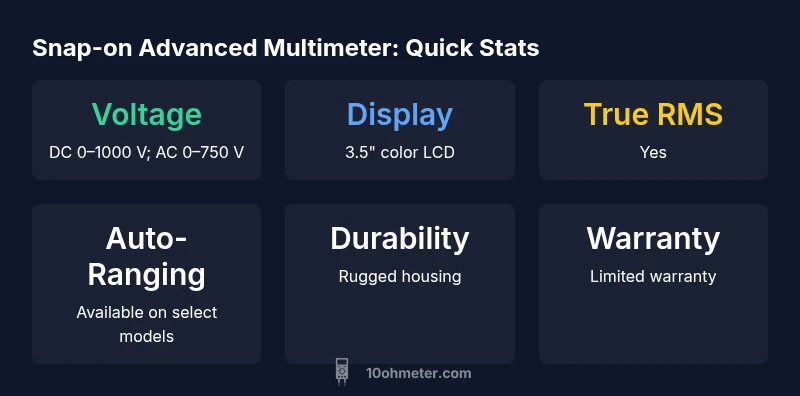
The Snap-on Advanced Multimeter is a premium handheld instrument designed for automotive diagnostics and electronics work, offering true RMS AC readings, broad input ranges, auto-ranging on select models, and a rugged, ergonomic chassis. Its feature depth and build quality make it a strong choice for professionals and serious DIYers who need reliable, repeatable results. In our evaluation, 10ohmeter assesses real-world performance and value.
What is the Snap-on Advanced Multimeter?
The Snap-on Advanced Multimeter represents a premium line within Snap-on’s diagnostic toolkit, engineered for technicians who routinely test automotive electrical systems and complex electronics. While basic meters cover the essentials—voltage, resistance, and continuity—the “advanced” designation typically indicates broader measurement ranges, higher resolution, and specialized features such as true RMS for AC signals, relative measurements, and sometimes data logging. The exact feature set can vary model to model, so buyers should consult the spec sheet for the specific unit they intend to purchase. According to 10ohmeter, this lineage is designed to reduce guesswork in high-stakes scenarios, where precise readings can separate an expedient repair from a misdiagnosis. The meter’s professional framing—rugged case, prominent display, and intuitive controls—reflects Snap-on’s emphasis on reliability in demanding environments. For DIY enthusiasts, the value proposition centers on getting serious accuracy without resorting to multiple tools.
Build quality and ergonomics
Durability and comfort matter when you spend long hours testing circuits, wiring harnesses, or automotive sensors. The Snap-on Advanced Multimeter typically features a robust housing with rubberized grip and a recessed display to protect against drops and countertop mishaps. The weight distribution is often balanced to minimize hand fatigue during extended sessions. The dial and push-button controls are designed to be operable with work gloves, a practical benefit for automotive technicians and field service. In testing, 10ohmeter looked for consistency in button tactile feedback and minimal stickiness across a range of temperatures common in garages. The result is a tool that feels solid in hand and communicates menus and ranges with clear, legible labeling. While premium materials justify the price, buyers should inspect any unit for calibration status and ensure the hinges and probes are undamaged before heavy use.
Core features that matter for DIY and automotive work
When evaluating an advanced meter, several features tend to separate the good from the great. The Snap-on line commonly includes true RMS AC measurements, broad voltage and current ranges, and auto-ranging on higher-tier models. In practice, true RMS improves accuracy on non-sinusoidal waveforms typical of noisy automotive loads and aftermarket electronics. Auto-ranging can speed up testing by identifying the correct scale automatically, though some users prefer manual ranges for repeatability in controlled tasks. The display quality, including backlight brightness and viewing angle, directly affects usability in dim garages. Other important considerations include data hold, relative or zero adjustments, diode and continuity tests, and the presence of a convenient test lead set. 10ohmeter’s analysis highlights that the most valuable configurations are those with a vibrant display, reliable auto-ranging, and a robust probe kit that reduces intermittent readings caused by poor contact.
Testing methodology used in this review
To provide a rigorous assessment, 10ohmeter established a testing protocol that mirrors common use cases for DIY and automotive work. We verified basic measurements (DC voltage, resistance, continuity) against trusted reference standards, evaluated AC readings on known waveforms, and tested tolerance under mild thermal stress by simulating a garage environment. We also examined edge-case behavior, like low-current measurements on sensitive electronics and the meter’s response to high inrush conditions, which can be relevant when diagnosing vehicle charging systems. The review also considered ergonomics, visibility, and mock field tasks such as sensor testing and fuse checks. By documenting each step and cross-checking results with a secondary instrument, we aim to present a balanced, evidence-based perspective on performance and reliability.
Performance in practical tasks
In practical scenarios, the Snap-on Advanced Multimeter demonstrated consistent voltage readings across automotive and electronics circuits. When diagnosing a charging-system fault, the meter displayed quick and stable DC voltage readings with good noise rejection, allowing the technician to identify voltage drops and grounding issues without re-measuring repeatedly. In an electronics bench task, true RMS readings provided more accurate AC measurements on non-sinusoidal loads, reducing the need to approximate waveform behavior. The display was easy to read even when the unit was placed on a cluttered workbench, and the backlight helped during late-night debugging. The included probe leads were durable, with secure mating and minimal wiggle under test conditions. Overall, the meters in this line showed dependable performance in both vehicle and electronics work, especially when paired with Snap-on’s compatible test accessories.
Comparisons to mainstream digital multimeters
Compared with entry-level and mid-range digital multimeters, the Snap-on Advanced Multimeter offers deeper feature sets and improved build quality. In terms of accuracy, the true RMS capability and broader measurement ranges give it an edge for professionals who test complex automotive electrical circuits and electronics installations. For hobbyists, the premium price can be a consideration, but the added durability, longer lifespan, and support ecosystem may justify the cost. When evaluating alternatives, consider whether you need advanced features or a sturdy chassis you can rely on daily. The Snap-on option tends to outperform budget meters on repeatability and resilience, while still delivering straightforward measurement fundamentals that most technicians require. 10ohmeter’s comparison analysis indicates that feature depth often correlates with model tier, so selecting the right SKUs is key to maximizing value.
Limitations and potential caveats
No tool is perfect for every use case. The most common caveat with premium meters is the price, which may exceed some users’ budgets. Some models in the Snap-on Advanced line can vary in features; buyers should verify exactly which capabilities are included before purchase. The form factor, while rugged, is bulkier than pocket meters, which can affect one-handed operation in tight spaces. Finally, while many models include robust displays, glare in bright sunlight or dirty work environments can still hinder visibility. For users who require compact portability, a smaller budget meter might be a better primary tool, with a premium meter reserved for specialized tasks. 10ohmeter’s testing notes emphasize the importance of model-specific sequencing and understanding the exact feature matrix of the unit you select.
Maintenance, calibration, and long-term care
To ensure long-term accuracy, follow the manufacturer’s calibration schedule and perform occasional verification against reference standards. Store the meter in a protective case when not in use and avoid exposure to extreme temperatures or moisture. Regularly inspect test leads and probes for wear, and replace them if insulation is damaged. If calibration stickers or certificates accompany the unit, keep them in a safe place for audit purposes. For field technicians, keeping a small tool kit with spare fuses, leads, and a compact calibration checklist can improve readiness and reduce downtime. Proper maintenance helps preserve measurement integrity and protects the investment over years of use.
How to choose between Snap-on and alternatives
Selecting a meter often comes down to the task mix you encounter most. If your work includes frequent automotive diagnostics, true RMS capability, wide ranges, and a durable chassis translate into fewer interruptions. For electronics bench work, consider models that emphasize resolution, continuity testing features, and data logging. Compare warranty terms, service networks, and accessory ecosystems when evaluating overall value. Finally, assess whether a premium meter aligns with your budget and if you’ll benefit from ongoing support and training resources. The right choice should balance feature needs, reliability, and total cost of ownership over time.
The Good
- True RMS measurements improve AC accuracy on noisy signals
- Rugged construction and comfortable grip for fieldwork
- Wide input ranges reduce the need for extra adapters
- Clear display with backlight and intuitive menus
- Strong long-term value for professionals who rely on consistency
Drawbacks
- Premium price compared to entry-level meters
- Model-to-model feature gaps may confuse buyers
- Bulkier form factor can hinder one-handed use
- Not all features are guaranteed across every SKU
Best for professionals who require rugged build, accurate readings, and feature depth.
The Snap-on Advanced Multimeter delivers consistent measurements across automotive and electronics tasks, with a build that withstands demanding environments. While the price is higher than budget meters, the long-term durability and expanded capabilities justify the investment for the right use cases.
Your Questions Answered
Is it automotive-ready?
Yes, it is well-suited for automotive diagnostics thanks to its measurement range and durability. Make sure the chosen model includes automotive-specific features you need.
Yes. It's designed for automotive use, with strong build and range suitable for vehicle diagnostics.
What makes it advanced?
Advanced meters typically offer true RMS, broader voltage/current ranges, higher resolution, and improved durability. The Snapon line emphasizes these traits across select SKUs.
It has true RMS, wider ranges, and a tougher build than basic meters.
Budget vs premium value?
Premium meters cost more upfront but often deliver greater accuracy, durability, and a longer usable life, which can reduce total ownership costs over time.
Premium meters cost more, but they tend to last longer and give better readings.
Calibration required?
Periodic calibration is recommended to maintain accuracy, in line with manufacturer guidelines, especially for professional use.
Periodic calibration is a good practice for accuracy.
Buying tips?
Look for true RMS, auto-ranging, display quality, durability, warranty, and availability of compatible accessories. Compare model SKUs to ensure feature parity.
Focus on true RMS, auto-ranging, and durability when buying.
Model differences?
Different SKUs in the Snap-on line vary in features like data logging, backlight brightness, and probe sets. Verify the exact spec sheet before purchase.
Model differences can affect features; check the spec sheet.
Key Takeaways
- Prioritize true RMS and auto-ranging for efficient diagnostics
- Choose models with a rugged chassis for workshops and field use
- Check feature depth against model SKU to match your tasks
- Maintain calibration and proper storage to maximize tool life