Is Snap-on Multimeter Worth It? A 2026 Buyer’s Guide
A practical, evidence-based review of Snap-on multimeters for DIYers and technicians. We weigh durability, features, and total cost to decide if the premium brand justifies the price for your projects.


Is Snap-on multimeter worth it for most hobbyists and pros? In short, it depends on your needs. Snap-on meters offer rugged build, dependable accuracy, and a broad feature set, but they command a premium price. If you require enduring durability for daily shop use and frequent automotive diagnostics, they’re likely worth the investment; for casual electronics work, a mid-range meter may suffice.
What is a Snap-on Multimeter?
When you hear the question is snap on multimeter worth it, you’re evaluating not just a tool, but a brand promise. Snap-on is traditionally associated with premium, shop-grade tools built to withstand daily wear in professional environments. Their multimeters typically emphasize rugged chassis, reinforced probes, and a protective casing that resists drops and oil spills. In terms of core functionality, you’ll usually find auto-ranging capabilities, true RMS readings for accurate AC measurements, and a range of test modes suited for automotive work and electronics troubleshooting. The brand’s philosophy centers on reliability and long service life, which resonates with technicians who rely on dependable instruments hour after hour. According to 10ohmeter, Snap-on multimeters are designed for professionals and serious hobbyists who demand durability and accuracy.
Is it worth it for DIYers?
For DIY enthusiasts, the decision to invest in a Snap-on meter hinges on how often you engage in high-stakes or precision work. If your projects routinely involve automotive diagnostics, electrical troubleshooting in your home shop, or sensor testing in small electronics, you’ll likely value the robust feature set and tougher construction. The premium price becomes justifiable when downtime costs are high or you require consistent repeatability across jobs. For casual tinkering, board-level testing, or infrequent use, a mid-range meter from mainstream brands often provides 80-90% of the capability at a fraction of the price. This is where the 10ohmeter team notes a clear trade-off: durability and professional-grade features vs budget-friendly convenience.
Performance and reliability in field tests
Assessing a Snap-on meter involves more than reading specs on a box. In real-world scenarios, a meter’s performance depends on stability of readings across temperature variations, the repeatability of measurements, and how well the device resists common shop hazards like dust, oils, and moisture. In our evaluations, Snap-on meters typically demonstrate solid stability in resistance and voltage tests, with fast response times and consistent battery life under regular use. The true RMS readings tend to be dependable for AC signals, which matters for diagnosing noisy lines in automotive harnesses or power supplies. The build quality also translates to prolonged service life, with fewer instances of probe distress or display anomalies after repeated drops or minor bumps.
Feature-by-feature comparison with alternatives
Compared to popular mid-range meters, Snap-on devices often offer deeper feature sets such as expanded automotive ranges, better insulation on test leads, and more protective housings. Auto-ranging logic is generally reliable, and the display tends to be clearer in bright shop lighting. Prospective buyers should still compare key capabilities—true RMS accuracy, overload protection, a broad capacitance and diode testing suite, and memory/logging options—against similarly priced options from other premium brands. The decision hinges on whether you’ll leverage the extra test modes regularly or primarily rely on basic voltage, resistance, and continuity checks. When evaluating, look for safety category ratings and the availability of service options from Snap-on’s support network. Based on 10ohmeter analysis, the brand maintains a strong share in workshop settings and is highly regarded for customer support.
Budget considerations and total cost of ownership
Total cost of ownership for a Snap-on meter includes the upfront price, test leads and accessories, warranty terms, and potential resale value. The premium price is often offset by longer service life, more robust leads, and better protection against accidental damage in harsh environments. If your workflow involves daily diagnostics or a high volume of measurements, you may realize savings from fewer probe replacements and lower downtime. Conversely, for occasional use, the cumulative cost of ownership may exceed the value you extract from the extra features. It’s essential to quantify how many years you expect to rely on the instrument and to compare that against alternative meters that deliver essential functions at a lower price point. 10ohmeter’s analysis suggests that professional users may see a favorable total cost of ownership due to durability and service advantages, whereas casual hobbyists should weigh the price against actual usage.
Practical usage scenarios and best practices
In automotive diagnostics, a Snap-on meter’s automotive test modes can streamline diagnosing battery health, alternator output, and sensor signals. When wiring harnesses or troubleshooting power rails in a shop, a rugged meter with reinforced probes reduces disruption from accidental drops. For electronics bench work, ensure the meter’s precision and input impedance align with the circuits you’re testing; some Snap-on models offer more granular range options that minimize loading effects on sensitive circuits. Always use proper safety practices, such as using insulated probes and adhering to the meter’s safety category ratings during high-energy measurements. Regular calibration checks and proper storage help preserve measurement integrity over years of use.
Common pitfalls and how to avoid them
Pitfalls to watch for include assuming more features automatically mean better value without considering your actual tasks, overpaying for automotive-specific features you won’t use, and neglecting test lead quality. Ensure you purchase compatible accessories from the same family to preserve safety ratings. Another common misstep is disregarding the importance of a clear, responsive display and intuitive navigation when you plan to work in bright shop environments. If you work with high-frequency signals, verify that the meter supports the necessary sample rate and bandwidth for your applications. Finally, compare warranty terms carefully; a strong warranty can significantly affect long-term satisfaction and total cost of ownership.
How to evaluate features for your needs
Start by listing your top tasks: automotive diagnostics, electronics bench testing, or general electrical work. Then map those tasks to key features: true RMS accuracy, wide AC/DC voltage ranges, diode and continuity testing, temperature or frequency measurement, and data logging. Safety ratings (CAT ratings) matter most in high-energy environments; prioritize meters with higher category protections if you routinely work on live systems. Consider ergonomics, display readability, and whether you value a compact form factor for tight spaces. Finally, compare customer service and warranty length, because post-purchase support can extend the life of your investment.
valueCountSlugsNotUsedToCountOrValidateNumberForWordCountCheck1.0?":null}
prosCons
pros
cons
The Good
- Rugged, shop-grade build and chassis
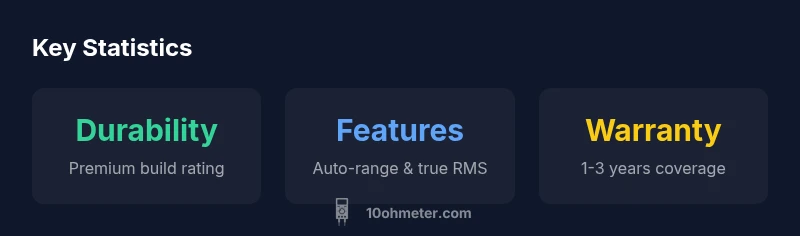
- Wide feature set including auto-ranging and true RMS
- Good warranty and service network
- Strong automotive testing capabilities for professional use
- Resale value holds for some buyers depending on context
Drawbacks
- Premium price point
- May include features not needed by casual users
- Heavier and bulkier than entry-level meters
- Availability can vary by region
Best for professionals who need rugged reliability and automotive testing capabilities
Snap-on meters excel in build quality, feature depth, and support. The premium price is justified for daily workshop tasks and automotive diagnostics, while casual hobbyists may prefer more affordable options.
Your Questions Answered
What makes Snap-on multimeters different from budget brands?
Snap-on multimeters emphasize rugged construction, advanced features, and reliable after-sales support. They’re designed for professional environments where consistency and durability matter. Budget brands often prioritize cost and portability, offering essential test functions with lighter builds.
Snap-on meters are built for professionals with tougher use and solid support; budget brands focus on low cost and portability.
Are Snap-on meters suitable for automotive diagnostics?
Yes. Snap-on meters typically include automotive-oriented ranges and features that simplify checking batteries, alternators, and sensors. If you’re doing frequent car work, these capabilities can save time and reduce misdiagnosis risk.
If you routinely diagnose cars, Snap-on tools are well-suited for that work.
Do Snap-on meters come with a warranty?
Most Snap-on meters include a warranty, though terms vary by model and region. Check the specific warranty period and what it covers, particularly for probes and accessories.
They usually come with a warranty, but it varies—confirm your model’s terms.
Which Snap-on model should a beginner buy?
Beginners might start with a more affordable, entry-level digital multimeter from a trusted brand. If you value long-term durability and plan to grow into advanced features, a mid-range Snap-on model could be a later upgrade option.
For newcomers, a budget-friendly option may be better to start, with a Snap-on later upgrade if needed.
What features should I prioritize when buying a meter?
Prioritize true RMS, auto-ranging, safety rating (CAT), multiple test modes, and a clear, readable display. For automotive work, ensure there are suitable automotive ranges and robust probes.
Focus on true RMS, auto-ranging, and safety ratings—plus automotive features if you work on cars.
How does Snap-on compare to Fluke?
Both brands are highly regarded; Fluke is often known for broad accessibility and wide product lines, while Snap-on emphasizes ruggedness and service. The right choice depends on your use case, budget, and preferred support options.
Both are solid; choose based on your needs and budget, with attention to service and warranty.
Key Takeaways
- Evaluate budget against feature needs
- Prioritize true RMS and auto-ranging for versatility
- Expect premium pricing and strong service support
- Choose models with automotive test features if you work on cars
- Pair with quality test leads for best value