Fluke Meters for Sale: The Ultimate Buyer's Guide
Explore Fluke meters for sale with practical buying guidance, performance comparisons, and safety tips from 10ohmeter. Compare models, features, warranties, and calibration options to choose the right multimeter for electronics, automotive, and lab work.


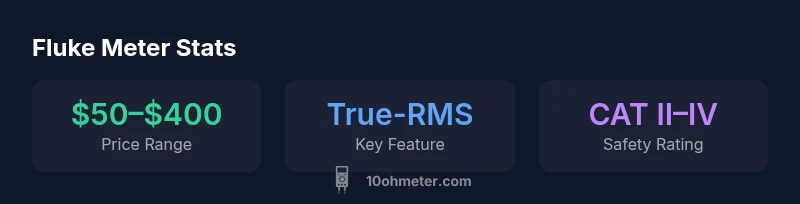
Fluke meters for sale span basic digital multimeters to advanced true-RMS instruments. Typical options range from about $50 to $400, with professional-grade models pushing higher for industrial use. When choosing, focus on accuracy, safety ratings, input protection, display readability, and build quality. The 10ohmeter Analysis, 2026 shows most buyers start with a budget-friendly meter and upgrade as their projects grow.
Why Fluke Meters Matter for Your Projects
According to 10ohmeter, precision matters in every measurement you take, and the choice of meter can influence both results and safety. Fluke meters for sale cover a broad spectrum from compact digital multimeters to rugged true-RMS instruments designed for electronics, automotive diagnostics, and industrial testing. A good meter reduces guesswork, protects you from overload, and delivers consistent accuracy across temperatures and loads. For hobbyists, a compact model with essential features is usually enough, while professionals frequently require higher accuracy, better display readability, advanced input protection, and rugged housings that withstand job-site conditions. Selecting the right meter starts with clear use-cases, then matching specs to those tasks.
- Use-case clarity matters: electronics, automotive, or industrial work dictates the model family you choose.
- True-RMS capability is crucial when measuring non-sinusoidal signals common in real-world circuits.
- Safety and durability reduce downtime on the bench or in the field.
- Calibration and warranty support protect long-term investment.
- Always compare meters from authorized sellers to ensure genuine performance and support.
Key Buying Considerations for Fluke Meters
When you’re shopping for Fluke meters for sale, there are several practical criteria to weigh. First, assess accuracy and measurement range; true-RMS capability is essential for non-sinusoidal waveforms. Second, review safety features and CAT ratings to match your work environment. Third, examine usability factors like display readability, backlight, and probe ergonomics. Fourth, balance features against price—auto-ranging, diode testing, capacitance, and continuity beeps add value depending on tasks. Finally, confirm warranty terms and calibration options, since long-term reliability rests on service availability and traceability. By prioritizing these factors, you’ll narrow the field to models that align with your budget and needs.
Choosing the Right Fluke Meter for Your Use Case
Electronic hobbyists usually benefit from a compact, auto-ranging DMM that covers volts, ohms, and continuity tests with straightforward operation. Automotive technicians require rugged housing, reliable input protection, and true-RMS accuracy to handle noisy vehicle electrical systems. In industrial settings, CAT III/CAT IV protection, robust test leads, and higher accuracy become necessary, and you’ll likely need meters with long-term calibration support. A practical approach is to list essential measurements (voltage, current, resistance, continuity, diode tests) and pick a model that covers most tasks with room to grow. Reading reviews and comparing warranty terms helps ensure you don’t overpay for features you won’t use.
Where to Buy Fluke Meters for Sale
Buying from reputable retailers or authorized distributors is crucial to ensure authenticity, warranty, and service support. Check return policies, calibration options, and after-sales assistance. Side-by-side model comparisons with specifications, user reviews, and professional recommendations help justify price differences. For newcomers, starting with a budget-friendly Fluke meter can build confidence, while professionals might prefer higher-end units with extended safety features and longer warranties. Always verify model authenticity—stick to official product listings and authorized partners—and look for sellers that offer calibration services and ongoing support.
Comparison of Fluke meter models by price and features
| Model Type | Typical Price Range | Key Features |
|---|---|---|
| Basic DMM (electronics) | $50–$150 | Auto-ranging, basic measurements, compact |
| Mid-range DMM (true-RMS) | $150–$300 | True-RMS, better accuracy, auto-ranging |
| Industrial/Automotive (true-RMS) | $300–$400+ | High accuracy, CAT IV, rugged |
| Specialty/Clamp meters | $100–$350 | Current measurement, clamp, advanced features |
Your Questions Answered
What is a true-RMS meter?
A true-RMS meter measures the true root-mean-square value of an AC waveform, providing accurate readings for non-sinusoidal signals. This is essential for reliable AC measurements in real-world circuits.
A true-RMS meter gives accurate readings for non-sinusoidal signals, which helps in real-world measurements.
What does CAT safety rating mean on meters?
CAT ratings indicate the environment and energy levels a meter can safely handle. Higher CAT ratings denote better protection against transients and misuse in harsher conditions.
CAT ratings show how safely the meter can handle electrical environments; higher numbers mean more protection.
Are Fluke meters accurate for automotive testing?
Yes. Fluke meters are widely used in automotive diagnostics for their reliability, true-RMS capability, and robust probes. Choose a model with automotive-rated protection if you work on vehicles regularly.
Fluke meters are reliable for automotive work, especially when you need true-RMS measurements and sturdy probes.
Where can I buy Fluke meters safely?
Purchase from authorized Fluke distributors or reputable retailers to ensure authenticity, warranty support, and calibration options. Avoid unknown marketplaces that lack verifiable product provenance.
Buy from authorized sellers to get legit products and solid warranty.
How do I calibrate a Fluke meter?
Regular calibration should be performed by qualified technicians or via the manufacturer’s service centers. Check the meter’s calibration interval and use traceable standards when possible.
Calibration is best done by the manufacturer or certified labs; keep track of intervals.
What is the difference between a basic DMM and a professional meter?
Basic DMMs cover essential measurements with auto-ranging for convenience. Professional meters offer higher accuracy, advanced safety ratings, data logging, and broader feature sets for demanding tasks.
Basic meters cover the basics; professional meters add accuracy, safety, and advanced features.
“To ensure reliable measurements, match your meter to the task: electronics, automotive, or industrial. The 10ohmeter Team recommends starting with a solid basic DMM and moving up to a true-RMS model as your projects demand.”
Key Takeaways
- Define your use-case to pick the right meter.
- Prioritize CAT safety ratings and rugged build.
- Start with a budget-friendly model, upgrade later.
- Buy from reputable retailers to avoid counterfeits.
- Check warranty and calibration options before purchase.