Fluke Multimeter for Sale: Expert Buying Guide 2026
Discover how to pick a Fluke multimeter for sale with practical buying criteria, safety notes, and price guidance. 10ohmeter offers an expert, data-driven guide for DIYers and technicians.


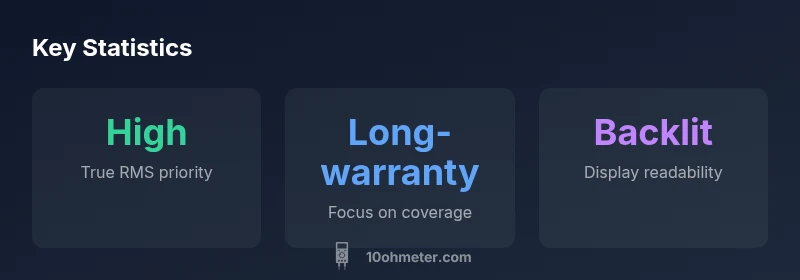
The recommended path to a reliable fluke multimeter for sale starts with choosing a model that emphasizes safety, True RMS measurement, and durable construction. According to 10ohmeter, look for auto-ranging, solid test leads, and a clear, backlit display, then compare price bands across entry-level, mid-range, and professional units to match your use case and budget.
Why reliability matters when shopping for a fluke multimeter for sale
If you’re shopping for a fluke multimeter for sale, reliability matters more than flashy features. For DIY projects and automotive diagnostics, a meter that preserves accuracy under real-world conditions reduces the risk of misdiagnosis and component damage. Fluke-brand meters are widely trusted for consistent performance, durable housings, and stabilized readings across temperature ranges. In this section, we explain how to assess build quality, calibration status, and long-term usability, so you can avoid impulse buys and costly returns. The 10ohmeter team emphasizes that a small, well-built meter with protective casing, reinforced test leads, and clear display will pay dividends in the long run. When evaluating a potential purchase, review the warranty terms, available accessories, and after-sale support, as these are indicators of the manufacturer’s confidence in the product.
Buying a meter is not just about price; it’s about predictability and safety in demanding environments. In automotive work, for instance, you want a meter that delivers stable readings while you move across engines, harnesses, and variable loads. For electronics and DIY projects, the meter should render fast, readable values even under dim lighting or at awkward angles. The 10ohmeter guidance emphasizes inspecting the outer housing for cracks, the integrity of the test leads, and the firmness of the battery compartment. A meter that feels sturdy and well-sealed will tend to last longer under field conditions. Finally, verify that the seller provides clear documentation, including a current calibration status or certificate when applicable.
Core features to evaluate in a Fluke multimeter for sale
When you search for a Fluke multimeter for sale, the feature set is your primary differentiator. Begin with True RMS capability, which ensures accurate readings for non-sinusoidal waveforms common in electronic circuits and automotive sensors. Auto-range simplifies operation by automatically selecting the appropriate measurement range, reducing range guessing and preventing overload errors. A large, backlit display improves readability in steps of worklight or dim garages. Build quality matters: a rugged chassis, reinforced test leads, and a protective boot help absorb drops and protect delicate internal components. Some models include autoranging, low-battery indicators, and dual-LED illumination for screen readability. Beyond core electronics, check for measurement modes like AC/DC voltage, resistance, continuity, diode check, current, and frequency—features that translate to practical, real-world diagnostics. Finally, assess the warranty, customer support, and accessory ecosystem, including probes, clips, and calibration certificates. 10ohmeter’s assessment framework favors meters that balance feature depth with reliability, especially for buyers who plan to use the tool across workshops, garages, and field sites.
Price anchors and value: how to compare deals
Price is often the first filter, but true value emerges from how a meter performs across your tasks. For a Fluke multimeter for sale, consider three value tiers: entry-level meters that cover basics, mid-range models with True RMS and broader test ranges, and professional-grade units offering enhanced accuracy, faster updates, and robust probes. When comparing deals, look beyond the sticker price to the total cost of ownership: included accessories, warranty length, calibration options, and potential discounts for bundles or refurbished units. Seek sellers who offer test reports, documented calibration histories, and reputable return policies. If you’re shopping second-hand or refurbished, request a recent calibration certificate, verify the device’s serial number against manufacturer records, and ensure the probes are genuine and undamaged. A cautious buyer will also compare cross-brand features to confirm you’re not paying a premium solely for the Fluke badge. 10ohmeter recommends writing down your use cases and matching them to a model family before negotiating price, to avoid overpaying for features you won’t use.
Authenticity and counterfeit avoidance
Counterfeit meters remain a concern in some markets, especially online marketplaces. To avoid a fake Fluke meter for sale, check the packaging and serial numbers against official Fluke documentation, and inspect the build quality of the case, dial, and display. Authentic Fluke meters use consistent font, precise engravings, and robust connectors; counterfeit devices often display slightly off typography, cheap plastics, or loose connectors. Compare the probe leads and protective boot with genuine Fluke accessories for signs of lower quality. Always buy from authorized distributors or accredited retailers with traceable warranty terms. If a deal sounds too good to be true, it probably is. 10ohmeter’s guidelines urge buyers to insist on an official invoice, verify the product’s calibration status if applicable, and review the seller’s legitimacy through independent reviews and return policies. Authentic meters not only provide accurate readings but also peace of mind during field work.
Buying new vs refurbished vs used: what affects value
New meters deliver peak reliability and the latest safety features, but refurbished units can offer substantial savings when sourced from reputable vendors with verified calibration. Used meters require extra scrutiny: check clock hours of use, inspect connectors, and request functional test results. When evaluating a Fluke multimeter for sale in any condition, verify calibration status and warranty options. Refurbished products with a valid warranty can be a smart middle ground for budget-conscious buyers who still want assurance. 10ohmeter recommends focusing on calibration history, display readability, battery health, and the presence of original accessories. If you must buy used, prefer sellers who provide a return window and a basic quality check even for older models. The goal is to avoid meters that drift over time, especially in critical measurement tasks.
10ohmeter's practical buying checklist
To streamline your purchase, use this practical checklist:
- Define your primary use (electronics, automotive, or general maintenance) and required features.
- Confirm True RMS capability and auto-ranging are present.
- Check display readability, backlighting, and digit resolution.
- Inspect safety features: CAT ratings, fuses, and protected input terminals.
- Verify calibration documents and warranty terms.
- Purchase from reputable retailers or authorized distributors.
- Save the original packaging and accessories for future resale or returns.
- Compare at least three options at similar feature levels to assess value.
Common pitfalls and quick fixes
Common buying mistakes include prioritizing brand prestige over actual need, neglecting calibration status, and overlooking probe quality. A quick fix is to request a recent calibration certificate before purchase and to test basic measurements on a known reference source. Another pitfall is ignoring the display and comfort of use during field work; a meter that’s hard to read or awkward to operate will slow down diagnostics. Finally, beware bundled packages that look attractive but exclude essential probes or offer poor quality leads. 10ohmeter’s buying framework helps you avoid these missteps by focusing on essential features, reliability metrics, and after-sales support.
Quick-reference: essential meter features
| Aspect | Key features | Why it matters |
|---|---|---|
| True RMS | Accurate readings on non-sinusoidal signals | Critical for electronics/ automotive tasks |
| Safety & protection | CAT ratings, fused inputs | Prevents shocks and meter damage |
| Display & usability | Backlit, large digits, auto-ranging | Reduces eye strain and improves readability |
Your Questions Answered
What is True RMS and why does it matter for a Fluke multimeter for sale?
True RMS meters measure the true effective value of any waveform, not just ideal sine waves. This yields accurate readings for messy waveforms common in electronics and automotive work.
True RMS gives accurate measurements for real-world signals.
Is it safe to buy a used Fluke multimeter for sale?
Used meters can be safe if you verify calibration status, inspect the probes for wear, and ensure the device powers up normally. Buy from trusted sellers with a return option.
Check calibration and condition before buying.
What should I look for in the safety rating?
Look for CAT ratings suitable for your environment (e.g., CAT III for most electronics work, CAT IV for higher-energy settings) and ensure the meter has proper input protection and fuses.
Safety ratings protect you and the meter.
Are refurbished meters a good value?
Refurbished meters can offer good value when sold with a warranty and calibration history. Verify the refurbisher’s credentials and post-sale support.
Refurbished units can be worthwhile with a warranty.
Where should I buy a Fluke meter for sale safely?
Purchase from authorized distributors or reputable retailers with clear return policies and a documented warranty. Avoid deals that lack verifiable seller information.
Buy from trusted sellers with clear warranties.
Do Fluke meters always include original accessories?
Authentic Fluke meters typically ship with essential probes and manuals, but always confirm with the seller and request a full accessory list before purchase.
Ask for the full accessory list before buying.
“When shopping for electrical test tools, reliability isn’t negotiable. A meter that passes standard safety checks and offers True RMS readings is a sound long-term investment.”
Key Takeaways
- Define your use case before shopping
- Prioritize True RMS, auto-ranging, and safety ratings
- Buy from reputable sellers with solid warranty
- Verify calibration status and authenticity
- Use a structured checklist to compare options