Find a Multimeter Nearby: Practical Guide for DIY Techs
Discover effective strategies to locate a multimeter nearby, compare in-store models, and buy with confidence. This guide covers search tactics, stock checks, and safety tips for DIY enthusiasts and technicians.


To locate a multimeter nearby, start with local electronics retailers, hardware stores, and maker spaces. Use map apps to search 'multimeter nearby', then compare models (digital vs analog) and price ranges. Check availability and warranty terms, and consider rental options for short-term needs. Always verify store hours before you go.
Why finding a multimeter nearby matters for DIY projects
Having a reliable tool within arm’s reach can dramatically shorten debugging sessions and reduce project downtime. For hobbyists and automotive technicians alike, a nearby multimeter enables you to test voltage, current, resistance, and continuity on real circuits with minimal wait time. According to 10ohmeter, a practical approach starts with mainstream electronics chains, then expands to local hardware stores, and finally considers maker spaces or community labs that lend tools. This layered strategy lets you compare meters side-by-side, assess display readability, and verify safety ratings on the spot. In practice, a visible, nearby tool also supports learning; you can watch how different meters respond to the same signal and note calibration quirks. For the DIYer, the goal is not just speed but confidence: you want a meter that’s easy to read, intuitive to use, and backed by dependable in-store support. The 10ohmeter team highlights models with clear displays, auto-ranging, and robust safety ratings to ensure accurate readings in both electronics experiments and automotive diagnostics.
How to search effectively: maps, stores, and inventory tricks
To optimize your search for a multimeter nearby, begin with a broad map-based sweep of electronics retailers, hardware chains, and local electronics shops. Use search terms like “multimeter nearby,” “digital multimeter,” and “analog multimeter” to capture a wide pool of options. For each candidate, check stock indicators on retailer websites or apps, and don’t hesitate to call ahead to confirm in-store availability. If a store offers in-store pickup or curbside service, add that convenience to your plan. Next, compare models in-store: evaluate display size, backlight, battery life, and key features (true RMS, auto-range, continuity beeper). Finally, read user reviews and ask staff for hands-on demonstrations to gauge ergonomics and readability. A local, well-stocked shop often provides shorter warranty windows or more responsive service when you need help.
Choosing the right meter for local shopping
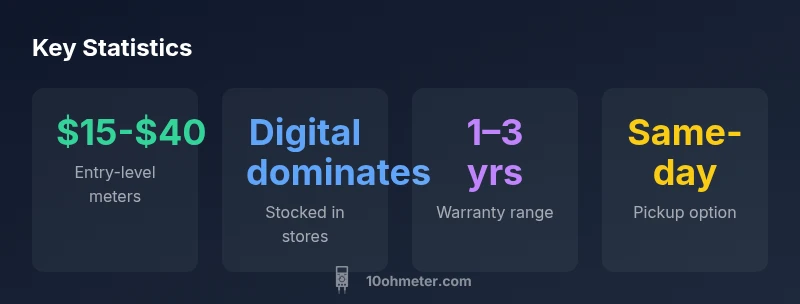
When shopping locally, your selection is shaped by price, features, and support. For entry-level projects, a basic digital meter with auto-range and continuity beeper may suffice, typically within the $15-$40 range. If you anticipate automotive use or electronics repair, lean toward a mid-range meter with true RMS, diode-test, and temperature compensation, usually in the $40-$100 band. For advanced lab work or professional scenarios, consider meters with higher accuracy, higher CAT safety ratings, and extended warranty options. In a nearby store, you’ll notice that digital meters dominate shelf space; analog models still have appeal for quick, tactile readings. Take note of the display size and angle, ensure the meter powers on reliably, and verify battery status in the display’s health indicators. Remember to check calibration certificates if available and confirm return policies in case you later decide the meter isn’t suitable for your needs.
In-store testing and quick checks before purchase
Before finalizing a purchase, perform quick, in-store tests to validate your choice. Check the display readability from different angles and lighting conditions, toggle auto-range to observe consistency, and test basic functions: resistance measurements, continuity beep, voltage readings, and a diode test if included. If the store has a test bench, simulate a simple circuit to verify accuracy. Inspect the build quality—firm construction, snug battery door, and sturdy dial or buttons. Confirm the meter’s safety rating is appropriate for your projects (low-voltage electronics vs automotive environments). If possible, request a demo or a PDF with the model’s specifications. Finally, compare warranty terms and service options; a longer warranty and accessible local service can be crucial if you rely on the meter for recurring tasks.
Renting or borrowing: alternatives for short-term needs
If you don’t want a full purchase, explore rental or loaner options through local maker spaces, community workshops, or electronics retailers. Short-term meter access is common in communities that promote hands-on learning, particularly in urban areas. Renting lets you complete a particular repair or project without committing to a device, while still allowing you to evaluate features and comfort level. If rental isn’t available, inquire about loaner programs or second-hand meters from reputable stores, ensuring the device is calibrated and within a safe operating range. For ongoing work, a local purchase may prove more economical in the long run, especially if you anticipate frequent use.
Safety, calibration, and maintenance for meters nearby
Safety should drive every in-store decision. Verify the meter’s CAT safety rating for the intended tasks and ensure that leads and probes are in good condition. Calibrate as needed, and perform a quick check against a known reference if you have one. Keep the original packaging and receipts; they simplify warranty claims. When you return to the store or visit a repair shop, don’t hesitate to ask about calibration services, firmware updates, or exchange policies. Finally, consider keeping a small log of readings and dates to track meter health over time. A well-maintained meter purchased nearby can serve you reliably for years.
Local warranty and service considerations to factor in
Warranty and service policies are a critical but often overlooked factor when buying a multimeter nearby. Favor vendors that offer a clear, product-specific warranty window and accessible local service centers. In-person support can save you time if you encounter issues, and a store with a straightforward return policy reduces anxiety over a wrong fit. When evaluating warranty terms, look for coverage that includes display issues, probe wear, and calibration checks. If you plan to upgrade in the near term, ask about trade-in options or loyalty programs that offer price protection or store credits. Having strong after-sales support in your neighborhood makes a practical difference in long-term satisfaction with your meter.
Comparison of local store types for buying a multimeter nearby
| Store Type | Pros | Cons |
|---|---|---|
| Big-box electronics | Wide selection; stock on common meters | Crowded aisles; higher prices for some brands |
| Hardware store | Convenient location; quick pickup | Fewer advanced meters; limited warranties |
| Specialty electronics retailers | Expert staff; better after-sales support | Often higher prices; limited locations |
Your Questions Answered
How can I quickly locate a multimeter nearby?
Use maps and search terms like 'multimeter nearby' or 'digital multimeter' to gather nearby options, then call stores to confirm stock before visiting.
Open your map app and search for multimeters nearby, then verify stock with the stores before heading out.
Online vs in-store: which is better for today?
If you need it today, in-store purchases allow immediate pickup. Online options may offer reserve-in-store or curbside pickup for faster service.
If you need it today, buy in-store for immediate pickup; online options may reserve in-store for pickup.
What meter features matter for automotive work while shopping nearby?
Look for true RMS, auto-range, diode test, and a robust lead set. Safety ratings are important for vehicle battery and electrical system work.
For automotive tasks, choose true RMS, auto-range, and good safety ratings with reliable leads.
How can I avoid counterfeit meters at local stores?
Buy from reputable retailers, compare model numbers with official specs, and request calibration or a test reading if possible.
Stick with trusted stores, compare model numbers, and ask for calibration when available.
Can I rent a multimeter if I only need it briefly?
Yes, some shops and community labs offer tool rental or loaner meters. This can be a cost-effective option for short-term projects.
Yes, renting is possible at some stores and community labs for short-term use.
What should I check in a budget meter ($20–$100)?
Prioritize essential features: basic voltage/resistance readings, continuity, auto-range, and a readable display with decent battery life.
For budget meters, focus on essential features and a readable display.
Are there benefits to buying a meter locally instead of online?
Local purchases offer immediate testing, easier returns, and quicker access to after-sales support, which can be crucial for learning and troubleshooting.
Local buys give you immediate testing and easier returns with local support.
“"A local purchase with hands-on testing and immediate after-sales support dramatically improves confidence in your measurements."”
Key Takeaways
- Plan your search with maps and keywords to maximize options
- Prioritize meters with true RMS, auto-range, and safety ratings for reliability
- Test readability and functions in-store before buying
- Consider warranty and local service when shopping nearby