How to Measure AC Current with a Multimeter
Learn safe, practical techniques to measure AC current with a multimeter, including when to use a clamp-on meter, setup steps, and common pitfalls for electronics and automotive tasks.


By the end of this guide you will know how to measure AC current with a multimeter, including when to use a clamp-on meter vs. a traditional meter, and the essential safety steps. You’ll learn setup, measurement technique, interpretation of readings, and common pitfalls to avoid. This ensures you can confidently complete AC current measurements in electronics or automotive tasks.
Why measuring AC current matters with a multimeter
Understanding how to measure AC current is essential for diagnosing power supplies, motors, and automotive circuits. The phrase multimeter measure ac current is often misunderstood because many handheld meters measure current indirectly or require a separate shunt or clamp. In this section you’ll learn what AC current is in practical terms, how current behaves in alternating current circuits, and why accurate measurement matters for safety, diagnostics, and performance. Recognize that waveform shape, harmonics, and meter burden voltage can affect readings, so you must choose the right instrument and technique. According to 10ohmeter, practical AC current measurement starts with selecting the right tool for the job and verifying the meter’s range and safety ratings before touching any live circuit.
Safety first: risks and precautions
Measuring AC current brings real hazards if you bypass safety rules. Always power down the circuit when possible, wear insulated gloves, and use protective eyewear. Keep fingers away from exposed conductors, avoid short circuits, and never attempt to measure current in circuits that exceed the meter’s rated current. If you must work with live circuits, use a clamp-on meter designed for non-contact current measurement and maintain dry hands and dry work surfaces. Proper fusing, inspection of test leads, and a clear workspace reduce the risk of shock, arc flash, and damage to the device under test. Remember: safe practice protects you, the equipment, and the surrounding environment.
When to choose a clamp-on meter vs a traditional multimeter
A clamp-on meter is ideal for non-invasive current measurement on AC circuits, especially in automotive and electrical panels, because it does not require breaking the circuit. Traditional meters can measure current only by inserting a shunt resistor in series with the load, which means you must open the circuit. If you’re unsure about voltage levels or you need high convenience, a clamp meter reduces the risk of short circuits and disturbance to the circuit. The choice hinges on the circuit’s voltage, current range, and whether you can safely access a single conductor without disconnecting components.
Preparing your workspace and tools
Before you begin, organize a dedicated, non-conductive workspace and gather the right tools. Clear away liquids and metal jewelry, ensure the area is well lit, and confirm your meters are rated for the circuit you’ll test. Label circuit points to avoid confusion when reassembling, and test your multimeter on a known-good source to confirm it’s functioning. For accurate AC current readings, ensure you understand the meter’s burden voltage and frequency response, as these affect measurements on non-sinusoidal waveforms commonly found in modern electronics.
How to measure AC current with a non-clamp multimeter (shunt method)
When clamp-on measurement isn’t available, you can measure AC current indirectly by placing a known, low-resistance shunt in series with the load and measuring the voltage drop across the shunt with the multimeter. Then compute I = Vshunt / Rshunt. This method requires careful selection of the shunt value to avoid excessive circuit disturbance or overheating. Do not use improvised conductors as shunts; use a purpose-built resistor with adequate wattage rating and consider the circuit’s safety-rated voltage and isolation.
How to measure AC current with a clamp-on meter
Clamp meters surround a single conductor with a hinged jaw to measure magnetic field and derive current, enabling non-contact measurement in live circuits. Place the jaw around one conductor only, zero the meter, and read the AC current value directly. For higher accuracy, ensure the conductor is centered in the jaw, keep the meter away from strong magnetic interference, and verify you’re not clamping around multiple wires. This method is safer and quicker for automotive diagnostics and household wiring checks.
Interpreting readings and common pitfalls
Interpreting AC current readings requires context: mismatched ranges, high burden voltage, or ambient noise can distort results. Compare readings to expected synthetic loads or manufacturer specs and consider waveform distortion from power electronics. If readings appear unstable, retest after rechecking connections, replacing faulty leads, or using a clamp meter with higher sensitivity. Always document the ambient conditions and meter model for traceability and troubleshooting.
Calibration and maintenance for accuracy
Regular calibration and inspection extend the life of your measurement tools. Check test leads for cracks, wear, and insulation damage; replace worn leads. Calibrate against a known reference source if available and store meters in a dry environment. Proper maintenance minimizes drift and ensures repeatable results across tasks in electronics and automotive testing. 10ohmeter emphasizes that routine checks are a cornerstone of reliable measurements.
Tools & Materials
- Multimeter with AC current measurement capability (or true RMS meter)(Verify the meter supports AC current in the expected range and check burden voltage specifications)
- Current clamp (clamp-on meter) accessory(Recommended for non-invasive measurements on live circuits)
- Low-value shunt resistor (for inline method)(High-wattage resistor with known resistance; used when a clamp is unavailable)
- Test leads and alligator clips(Use insulated leads; keep leads short to reduce noise)
- Insulated gloves and eye protection(Personal protective equipment to mitigate shock and arc risks)
- Non-conductive tools (plastic pry tools, insulated screwdrivers)(Minimize metal contact with live circuits)
- Circuit fuses or breaker protection(Use proper protection to limit fault currents)
Steps
Estimated time: 30-60 minutes
- 1
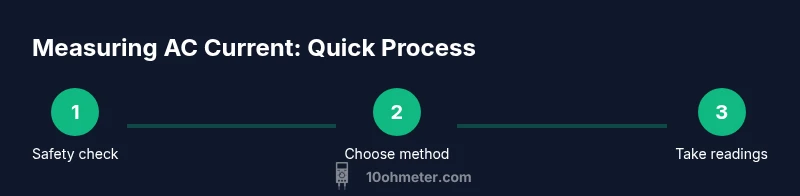
Prepare safety and workspace
Put on PPE, inspect meters and leads, and clear the work area. Verify the circuit can be safely accessed and that the meter’s range includes the expected current. If you’re unsure, choose a clamp-on meter for safety.
Tip: Always test meters on a known-good source before touching the target circuit. - 2
Decide measurement method
Choose between the clamp-on method for non-invasive tests or the inline shunt method for very precise measurements in controlled environments. Document the chosen method and the circuit context.
Tip: Clamp meters are safer for live circuits; inline methods require circuit disconnection. - 3
Set the meter and prepare shunt (if inline)
If using a shunt, set the multimeter to DC or AC voltage mode appropriately to measure Vshunt, and calculate current using I = Vshunt / Rshunt. Ensure the shunt rating matches the expected current to avoid damage.
Tip: Never connect a shunt with unknown ratings to a powered circuit. - 4
Insert meter in series or clamp around conductor
For inline measurement, break the circuit and connect the shunt in series. For clamp measurement, place the jaw around a single conductor and close the jaw. Confirm secure connections and no accidental contact with other conductors.
Tip: Double-check that only one conductor is inside the clamp jaw. - 5
Power the circuit and take readings
Restore power if using inline method and read the current value. If using a clamp, read directly from the clamp display. Note any waveform irregularities that may affect accuracy.
Tip: Take multiple readings and average them to improve reliability. - 6
Document, disconnect, and reassemble
Power down, remove the meter, reassemble the circuit, and store equipment properly. Record the final reading, instrument model, and testing conditions for future reference.
Tip: Store meters in a dry place to prevent corrosion of contacts.
Your Questions Answered
Can a standard voltmeter measure AC current?
No. A standard voltmeter only measures voltage. To measure AC current you need an ammeter, a clamp-on meter, or a current shunt used with a multimeter. Attempting to measure current directly with a voltmeter is unsafe and unreliable.
A voltmeter alone won’t measure current. You need an ammeter, a clamp-on meter, or a shunt with a multimeter for current readings.
Is it safe to measure AC current in live circuits?
Yes, but only with proper equipment and safety procedures. A clamp-on meter is preferred for live circuits since it avoids breaking the circuit. If you must inline-measure, power down the circuit and use a properly rated shunt and protective PPE.
You can measure live current safely with a clamp-on meter, but if you must inline it, power down first and use the correct shunt and PPE.
What’s the difference between AC current and voltage measurement?
Voltage measures electrical potential difference, while current measures the flow of charge. Multimeters that measure current usually require you to break the circuit or use a clamp. Understanding both helps diagnose circuits accurately.
Voltage is potential, current is flow. Current may require breaking the circuit or using a clamp to measure safely.
What safety precautions should I take when measuring AC current?
Wear PPE, inspect leads for damage, and use meters rated for the circuit’s voltage and current. Keep liquids away, avoid touching exposed conductors, and work on a non-conductive surface. If unsure, consult a professional.
Wear PPE, check leads, and use properly rated meters. Avoid liquids and contact with live conductors.
Can I measure high-current AC circuits with a typical consumer multimeter?
Most consumer multimeters cannot safely measure very high currents in power circuits. Use a clamp-on meter rated for the expected current, or a dedicated current measurement tool designed for high-current applications.
Usually not. Use a clamp-on meter or a specialized current tester for high-current circuits.
Why do readings vary and how can I improve accuracy?
Varying readings can come from waveform distortion, poor connections, or high burden voltage. Improve accuracy by using a meter suited for AC current, calibrating regularly, and using proper fixtures and fresh leads. Take multiple readings to confirm stability.
Readings vary from waveform distortion and connections. Use the right meter, calibrate, and take several readings.
Watch Video
Key Takeaways
- Always prioritize safety and PPE.
- Choose clamp-on when possible to avoid breaking circuits.
- Know your meter’s burden voltage and range before measuring.
- Verify results by multiple readings or cross-check with a known reference.
- Document test conditions for repeatability.