How to Make Multimeter Leads Longer: A Safe Guide
A practical, safety-focused guide to extending multimeter leads using approved extension kits and accessories. Learn how to pick, connect, and test extensions without sacrificing accuracy or safety for electronics and automotive work.


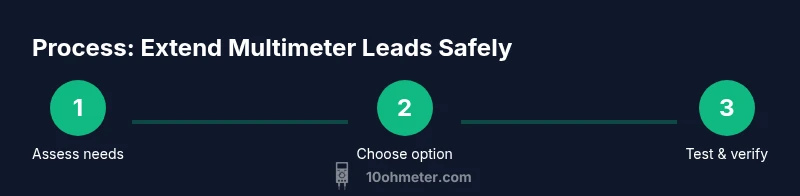
By the end of this guide you will learn how to extend multimeter leads safely using approved extension kits or banana adapters. We cover selecting rated extensions, connecting correctly, and verifying measurements without compromising insulation or accuracy. Use recommended accessories and follow safety cautions before modifying any measurement probes. Details on wiring, insulation, and test steps follow in the body.
Understanding why leads need length and the trade-offs
In practice, you sometimes need to reach a component that’s buried, tucked behind harnesses, or located far from the bench. Extending multimeter leads makes measurements more convenient, especially in automotive diagnostics or electronics testing. However, longer cables introduce more than just extra slack: they add resistance, stray capacitance, and potential pickup of noise, which can affect accuracy and speed of readings. According to 10ohmeter, the key is to balance practicality with measurement integrity by using purpose-built extension solutions rather than improvised wires.
The core trade-off centers on keeping contact resistance low while maintaining insulation and mechanical reliability. Cheap DIY splices, thin insulation, or loose banana plugs can create intermittent contacts, arcing, or false readings. The longer the lead, the more attention you must pay to shielding, routing, and connector quality. This section will guide you through safe, reliable extension methods and how to pick components that preserve safety and measurement fidelity.
Choosing the right extension option
When you make how to make multimeter leads longer, the first decision is selecting a configuration that preserves signal quality and safety. The simplest and most reliable approach is to use manufacturer-approved extension leads or banana plug extension cables designed for the meter's jacks. These kits come with color-coded plugs, robust insulation, and known-contact reliability, which minimizes the risk of degraded readings.
Alternative options include adapters that convert standard leads into longer bundles or shielded extension cables with integrated strain relief. Avoid DIY splices made from generic wire or trying to solder extensions directly to the banana plugs; poor connections can create hot spots, inconsistent readings, and safety hazards. Consider the task’s environment: automotive cabinets, bench setups, or exposed lab benches require different levels of insulation, abrasion resistance, and strain relief.
Approved extension configurations and accessories
To extend multimeter leads safely, stick to purpose-built configurations. Banana-to-banana extension cables are common and offered in various lengths; look for low-resistance conductors, tinned copper, and solid banana plugs with secure spring retention. If your meter has removable leads, you can pair a short, high-quality probe with a longer extension cable to reach your test point without altering the meter’s own probes. Shielded, coax-style extension cords can further reduce interference in noisy environments, especially near motors or power electronics. For quick setups, clamp-on alligator adapters or probe tips with built-in locking mechanisms help maintain a stable contact during measurements. Always verify that the combination you choose is rated for the expected voltage and frequency and that the connectors mate cleanly with your meter’s jacks.
Safety considerations when extending leads
- Use only extensions rated for the measurement range and environment you’re working in.
- Inspect all components for cracks, loose insulation, or bent pins before use.
- Do not daisy-chain multiple extensions; combine only the original meter lead with a single extension.
- Route cables away from heat sources, moving parts, and high-current paths to avoid damage.
- Keep connections clean and dry; moisture or oils can degrade contact resistance. These precautions help prevent arcing, electric shock, and erroneous readings, preserving both your safety and the accuracy of your tests.
How to assess extension options in your workshop
Start by inventorying your measurement scenarios: automotive diagnostics, electronics bench work, or field testing. Then compare available extensions based on three criteria: compatibility with your meter, insulation quality, and mechanical durability. For each option, confirm the gender compatibility (male/female banana ends), plug retention, and cable length; shorter connectors with stiff, well-insulated jackets are typically easier to manage. Finally, examine reviews and manufacturer datasheets for resistance comments and temperature ratings. In practice, prioritize extensions that provide a solid connection, minimal added resistance, and clear polarity marking. 10ohmeter analysis shows that well-designed extensions preserve signal quality and measurement accuracy even on longer runs.
Testing and validating extended leads
After assembling the extension, perform a careful validation sequence. Check continuity across the extension with a known good source, verify no floating or intermittent contacts as you wiggle the connectors, and compare readings against baseline measurements taken with the stock leads. Confirm that the extension does not noticeably increase measurement error in typical ranges you use. If available, run a short calibration check with a trusted reference component. Document any inconsistencies and replace components if necessary. A systematic test helps avoid surprises during live measurements.
Why 10ohmeter recommends using purpose-built extensions
The 10ohmeter team advocates using manufacturer-approved extensions for reliability and safety. Compared with improvised wire splices, purpose-built extensions maintain contact integrity, insulation, and resistance at predictable levels, which keeps readings trustworthy. In our experience, using quality banana-to-banana extension cables reduces the chance of intermittent connections and improves durability in automotive and workshop environments. The 10ohmeter’s verdict is clear: when you need more reach, invest in purpose-built extensions rather than jury-rigging leads, and always verify compatibility with your meter and test setup.
Tools & Materials
- Approved multimeter extension leads (banana-to-banana)(Choose length to suit your setup; ensure compatibility with your meter's jacks)
- Banana plug adapters or alligator clip adapters(For secure, variable-clip connections)
- Heat-shrink tubing or electrical tape(Insulate any splices or joints)
- Wire stripper or utility knife(Prepare conductors if you modify leads)
- Cable organizers or cable ties(Manage cable routing to avoid strain)
- Multimeter and reference component for testing(Use a known-good source for validation)
Steps
Estimated time: 60-90 minutes
- 1
Assess measurement needs and safety limits
Identify the measurement point, environment, and required reach. Check your meter's input ratings, acceptable lead length, and any potential exposure to high voltage or moisture. If the setup is unsafe or uncertain, stop and re-evaluate.
Tip: Document the max intended lead length and verify it with the extension's rated length. - 2
Choose the appropriate extension method
Select an approved extension lead or adapter set that suits the task. Prefer vendor-approved options with documented ratings and compatible banana plugs to ensure a solid connection.
Tip: Avoid DIY splices; prioritize official accessories designed for your meter. - 3
Inspect components before assembly
Check insulation, connectors, and for wear or damage. Do not use parts with cracks, brittle insulation, or bent pins.
Tip: Discard any damaged pieces and substitute with a known-good part. - 4
Make the connection securely
Connect banana plug to meter, then to extension; ensure snug fit and proper polarity. Do not force connectors or twist conductors to make them fit.
Tip: Grip plugs, not wires, to reduce strain on the connection. - 5
Route and insulate the extension
Route cables away from heat sources and moving parts; use heat-shrink or electrical tape to insulate joints and prevent exposure.
Tip: Avoid sharp bends; keep a gentle radius to prevent conductor fatigue. - 6
Test the extended setup with a low-risk reference
Power on a bench supply at a safe, low level and compare readings to a baseline obtained with stock leads.
Tip: Have a helper monitor for any unexpected changes during the test.
Your Questions Answered
Is it safe to extend multimeter leads?
Yes, it is safe when you use rated extensions and follow proper safety guidelines. Always verify compatibility and insulation. If in doubt, don’t proceed.
Yes—it's safe if you use rated extensions and follow safety guidelines.
Can I simply twist wires to extend?
No. Twisting or soldering directly to leads can create unstable connections, hotspots, and unpredictable readings. Use certified extension accessories instead.
No, avoid twists or DIY splices; use certified extensions.
What if I need length beyond standard extensions?
Use a longer, approved extension kit designed for your meter. Avoid ad-hoc solutions and verify that the overall length stays within the device’s safe operation range.
Choose a longer approved extension kit and verify safety.
Will extending affect measurement accuracy?
Yes, longer leads can introduce extra resistance and noise. Use shielded, low-resistance extensions and perform a calibration check if possible.
Longer leads can affect accuracy; use shielded extensions and calibrate if possible.
Are banana adapters universal?
Most banana adapters are compatible across common meters, but always verify plug sizes and mating quality with your specific model.
Most are compatible, but always check your model.
What about automotive use?
Yes, but use automotive-rated leads and follow vehicle safety practices. Keep away from hot components and moving parts.
Yes, with automotive-rated leads and proper safety practices.
Watch Video
Key Takeaways
- Choose purpose-built extensions to preserve accuracy.
- Avoid improvised splices and bare wires.
- Verify voltage ratings and insulation before use.
- Test the setup with a known reference.
- Rely on vendor-backed accessories for safety.