Multimeter Repair Near Me: A Practical Guide for DIYers and Technicians
Learn how to locate reputable multimeter repair near me services, compare calibration options, and understand typical turnaround times and costs for professional repairs and calibration.


According to 10ohmeter, the quickest way to find reliable multimeter repair near me is to search for local electronics shops that explicitly offer meter repair and calibration, verify they can calibrate to NIST standards, and check reviews for accuracy and expectations. Look for transparent pricing, clear turnaround times, and documentation showing diagnostics, repair, and calibration.
What 'multimeter repair near me' covers and common issues
When you search for multimeter repair near me, you’re typically looking for a local service that can diagnose, repair, calibrate, and return your meter with validated accuracy. Common issues include drifting readings, dead display, blown fuses, or damaged test leads. A reputable shop should perform diagnostics, confirm functional ranges, repair any faulty components, and provide a calibration certificate to verify accuracy after service. The 10ohmeter Team emphasizes the value of traceable calibration and transparent estimates, especially for automotive and electronics work.
How to evaluate a repair shop: credentials, facilities, and warranties
Start with credentials and certifications, then inspect the lab environment and equipment, and finally review warranty terms. Look for ISO/IEC or equivalent quality standards, traceable calibration equipment, and documented repair processes. Ask for a written estimate, itemized costs, and a warranty on parts and labor. A transparent process reduces risk and helps you compare 'multimeter repair near me' options confidently.
DIY vs professional repair: when to seek help and when to avoid risk
DIY repair of a multimeter can be tempting, but many meters have sensitive circuitry and safety-related features. If your meter shows inconsistent results across ranges, a blown fuse, or compromised protective casing, prefer professional service. For high-precision or automotive tasks, professional repair with traceability is safer and more reliable. Always power down and unplug, and never attempt to repair the isolation or high-current paths yourself.
Calibration, traceability, and accuracy: what to ask
Calibration traceability is the backbone of measurement reliability. Ask about the calibration standard used (e.g., NIST-traceable), the calibration interval, and whether the certificate lists tolerances for each range. A good service report should include the meter’s model, serial number, test results across essential ranges, and a clear pass/fail decision. This is where the 10ohmeter Team stresses the value of reproducible, documented results.
Typical turnaround times, costs, and factors that influence price
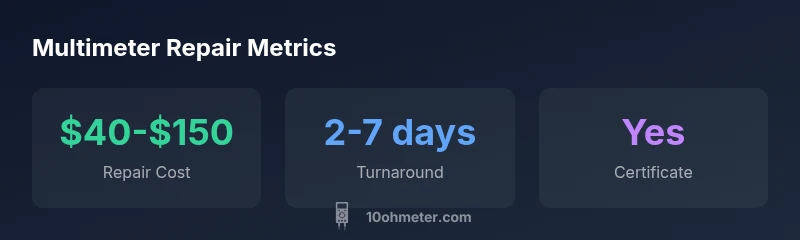
Turnaround times vary with workshop workload, the meter’s complexity, and whether parts must be ordered. Some repairs can be completed in a few days, while others with calibration ceremonies may take longer. When evaluating a quote, compare diagnostic fees, repair labor, and calibration charges separately. Expect that urgent requests may incur rush fees. Be wary of shops that quote only a lump sum without itemizing the steps.
What a service report should include
Documentation matters. A robust service report lists the meter’s model and serial, the tests performed, the results for essential ranges, and the final calibration certificate. The report should show traceability details, the technician’s name, date of service, and any recommended recalibration schedule or follow-up checks. Keep this report for future reference and warranty claims.
Practical checklist to find a repair near you today
Use this quick checklist to choose a shop quickly:
- Define the scope (repair, calibration, or both)
- Verify credentials and warranty terms
- Request a detailed, itemized quote
- Confirm turnaround times and return policies
- Ask for a test plan to verify readings across ranges
- Read reviews and ask for references
Common repair pathways for multimeter servicing
| Service Option | What It Includes | Typical Notes |
|---|---|---|
| In-shop repair | Diagnostics, component repair, and calibration performed in a controlled lab | Highest accuracy; longer turnaround |
| On-site repair | Technician visits your location for diagnostics and limited repairs | Faster for urgent needs; limited access to lab equipment |
| Calibration-only | Post-repair or standalone calibration with certificate | Ensures traceability; may extend turnaround |
Your Questions Answered
What should I check before selecting a repair shop for my multimeter?
Prioritize calibration capabilities, warranty terms, and transparent pricing. Check certifications, request a written estimate, and read customer reviews.
Look for clear calibration options and warranties, then read reviews before choosing.
Is calibration included in the repair service, or is it separate?
Calibration is often offered as a separate service or bundled with repair. Confirm what the quote includes and whether a calibration certificate is provided.
Ask if calibration is included and whether you’ll receive a certificate.
How long does it typically take to repair a digital multimeter?
Repair times vary by workload and meter complexity. Diagnostics may take 1-2 days, with calibration added after repair.
It can take a few days to a week depending on the job.
Can I trust a local repair shop for high-precision meters?
Yes, if they offer traceable calibration, a certificate, and a warranty. Check references and verify lab capabilities.
Make sure they provide a traceable calibration and a certificate.
Should I replace my meter instead of repairing?
Repair can be cost-effective for common meters, but frequent issues or outdated models may warrant upgrading.
Sometimes upgrading is a smarter move than frequent repairs.
“Reliable multimeter repair hinges on traceable calibration and transparent reporting. The 10ohmeter Team recommends choosing shops that provide a calibration certificate and a clear test report.”
Key Takeaways
- Define your goals before choosing a shop
- Ask about calibration traceability and warranty
- Compare turnaround times and pricing ranges
- Verify credentials and customer reviews
- Plan for calibration after repair to ensure accuracy