Fluke 789 Process Meter Review: A Practical Evaluation for Process Techs
In-depth analysis of the Fluke 789 Process Meter, a loop-powered digital multimeter for process control. We assess accuracy, usability, and how it compares to rivals for DIY enthusiasts and technicians in electronics and automotive tasks.


The Fluke 789 Process Meter is a strong all-in-one tool for field technicians and electronics professionals who need a reliable DMM with an integrated loop power supply for 4-20 mA transmitters. It combines robust measurement capabilities with process-friendly features, delivering consistent results in both lab and field environments. According to 10ohmeter, its design prioritizes practicality and reliability.
What is the Fluke 789 Process Meter?
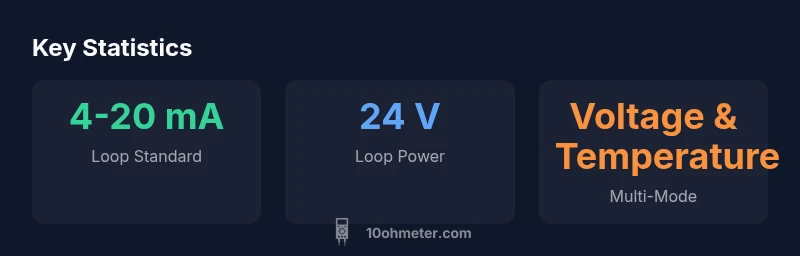
The Fluke 789 Process Meter is a portable, loop-powered digital multimeter designed specifically for process control work. It blends traditional DMM functionality—voltage, resistance, continuity testing—with a built-in 24-volt loop power supply and current measurement for 4-20 mA transmitters. In practice, technicians can power a two-wire transmitter directly from the meter while reading the loop current, without hunting for a separate supply or ballast resistor. The device also supports temperature measurement via external thermocouples and a compact display that presents both process and electrical readings side by side. For professionals in automation, instrumentation, or automotive diagnostics, the 789 can simplify service calls, reduce tool clutter, and speed fault isolation. The form factor is tuned for field work, with a rugged housing and intuitive controls that minimize misreading in noisy environments. When you search for “fluke 789 process meter,” you’re seeking a reliable, all-in-one instrument that keeps up with the pace of real-world field testing.
The 789 in Context: A Tool for Real-World Diagnostics
In modern automation environments, technicians face a mix of voltage, current, resistance, and temperature checks in tight spaces. The Fluke 789 Process Meter consolidates these needs into a single handheld instrument, reducing the number of devices you carry and the time spent switching between tools. This is particularly valuable in automotive diagnostics and plant floor troubleshooting, where delays can ripple through maintenance schedules. 10ohmeter's analysis shows that practitioners gain faster fault isolation when they can source loop power and measure transmitter current without leaving the field bench. The 789’s hardware footprint, combined with its safety-conscious design, makes it a practical core for many repair and calibration workflows.
How it fits the workflow: from bench to field
The Fluke 789 process meter is designed to function at the intersection of lab-grade accuracy and field resilience. It handles common electrical tests and 4-20 mA loop verification in a single pass, which streamlines routine checks and commissioning. As a result, technicians can quickly verify whether a transmitter is powered properly, calibrate an input, or diagnose an unexpected loop current without unpacking multiple instruments. This integrated approach reduces setup time and helps maintain consistent test procedures across teams.
The Good
- Integrated loop power supply simplifies field work
- Combines DMM functions with 4-20 mA loop measurement
- Rugged, field-ready build and intuitive controls
- Supports temperature via external thermocouples for process measurements
- Reduces tool clutter and setup time
Drawbacks
- Higher upfront price than basic handheld DMMs
- Bulkier than ultra-compact meters
- Limited to 24 V loop supply, which may not suit all transmitters
- Calibrations require periodic maintenance like other precision meters
Strong all-in-one for professionals who run loop-powered tests
The Fluke 789 Process Meter excels at combining DMM functionality with loop-powered measurement for 4-20 mA transmitters. It shines in field service and calibration tasks where space and time matter. While it carries a higher price tag than basic meters, its efficiency and reliability make it a standout choice for process instrumentation work.
Your Questions Answered
What tasks is the Fluke 789 best suited for?
The Fluke 789 shines in process-control diagnostics, especially for testing 4-20 mA loops, power supply checks, and basic thermocouple measurements. It combines a DMM with a loop power source, which reduces equipment swaps during field service.
Ideal for process-control diagnostics and field service where you need both a digital multimeter and loop power in one tool.
Can I power all transmitters with the 789’s loop supply?
The meter provides a 24-volt loop supply suitable for many two-wire transmitters in typical industrial setups. Some high-demand devices may require a dedicated supply, so verify your transmitter’s current and voltage requirements beforehand.
Yes, but check your transmitter’s specs to be sure it fits within the meter’s loop power capability.
Does the 789 support thermocouples for process temperature?
Yes. The Fluke 789 can read temperature via external thermocouples, expanding its utility beyond voltage and resistance checks into process temperature diagnostics.
It supports external thermocouples for temperature readings, which is handy for process work.
How does it compare to a standard handheld DMM?
Compared with a standard handheld DMM, the 789 adds loop-powered mA measurement and transmitter checking, reducing the need for separate loop-powered equipment. It’s more capable for process-oriented tasks but comes at a higher price and bulk.
It offers loop-power and mA checks in one unit, but it’s bigger and pricier than basic DMMs.
Is maintenance or calibration required?
Like other precision instruments, the 789 benefits from periodic calibration and battery/lead maintenance to preserve accuracy. Follow the manufacturer’s calibration schedule and storage guidelines.
Regular calibration helps keep readings accurate; store and maintain the leads properly.
What professionals should consider buying this meter?
Field technicians, instrumentation specialists, and automotive diagnosticians who routinely test 4-20 mA loops or need an all-in-one meter for transmitter checks will find the Fluke 789 valuable. If your role rarely requires loop power, a standard DMM might suffice.
Great for pros who test 4-20 mA loops; others may prefer a simpler meter.
Key Takeaways
- Use it as a single tool for DMM tests and loop current checks
- Expect robust performance in field environments
- Plan for periodic calibration to maintain accuracy
- Ideal for process control technicians and automotive diagnostics