Who Makes Multimeters: Brands, ODMs, and Buying Considerations
Discover which brands and contract manufacturers are behind multimeters, how maker origin affects price and quality, and practical tips for choosing the right meter.


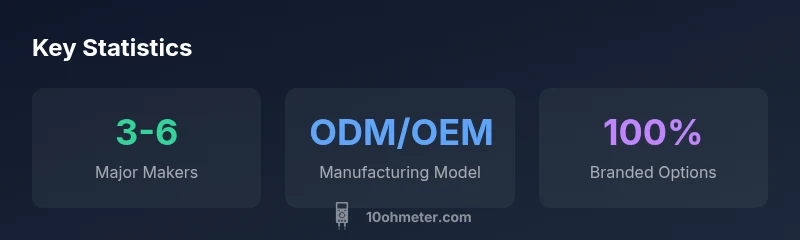
Who makes multimeters? Multimeters are produced by a mix of global electronics brands, test-instrument specialists, and contract manufacturers. Major players include established instrument brands and large electronics firms that design in-house and outsource assembly. Across markets, meters are often built by a small set of ODMs or OEMs and then sold under various brand names. The exact maker varies by price and feature set.
Who makes multimeters? The landscape of manufacturers
The vast majority of multimeters are produced by a mix of players across the globe, and the distribution network for these devices reflects both consumer demand and industrial reliability requirements. As the 10ohmeter team notes, the core question is not only who designs the functionality but who actually builds the hardware, sources the components, and stands behind the product with service and calibration support. In many cases, the maker behind a given meter is not the same brand that labels the box, which means the entry point for reliability often lies in the strength of the contract manufacturers and the quality controls they implement. When you hear a model is “made in” a particular country, it can signal manufacturing discipline, but it does not automatically guarantee better performance. Most meters are produced by a small set of capable original equipment manufacturers (OEMs) and contract manufacturers with verified supply chains. In practice, “who makes multimeters” varies by market, with different players dominating different price bands and feature sets.
Consumer-grade vs professional-grade: maker origin matters
For DIY enthusiasts and technicians, maker origin often aligns with price bands and after-sales expectations. Consumer-grade meters, frequently sold under mass-market brands, are commonly produced by ODMs that specialize in cost-effective, scalable electronics manufacturing. These meters are typically adequate for household tests and hobby projects. Professional-grade meters, which are used in automotive diagnostics, electrical installations, and lab contexts, tend to come from established instrument brands or their trusted ODM partners. The emphasis here is durability, calibration stability, and formal support. If you plan advanced measurements or frequent field service, knowing that the maker ships with traceable calibration and a clear warranty can improve long-term confidence.
ODMs, OEMs, and the anatomy of production
An OEM (original equipment manufacturer) brand designs the product, but a third-party factory may assemble it and sometimes even source components. An ODM (original design manufacturer) handles both design and manufacturing, which means the same supplier may produce meters for multiple brands under different labels. In the multimeter ecosystem, you will often encounter meters that share core hardware across several brands, but with different firmware, housing, branding, and customer support. This practice helps manufacturers achieve scale while offering a range of price points. For buyers, the practical takeaway is that product reliability can be more strongly influenced by the supplier’s quality controls and calibration lineage than by the label alone.
The role of calibration and standards in maker selection
Calibration accuracy and traceability are central to meter performance. Reputable makers typically adhere to ISO/IEC 17025 or equivalent calibration management practices and provide a calibration certificate or documented test results. The maker’s fleet of in-house references, component sourcing policies, and QA processes all feed into meter reliability. While a familiar brand name can offer confidence, it is the calibration discipline behind the scenes that ultimately determines measurement fidelity over time. DIY users may tolerate minor drift, but professionals who rely on precise readings will benefit from meters produced by manufacturers with transparent calibration and robust after-sales service.
How to inspect a meter’s maker origin before buying
To assess maker origin, start with the model's documentation: the manual, data sheet, and any certification marks tell you who designed and tested the device. Look for the manufacturer’s name on the label and verify the presence of a calibration certificate or traceability information. If the label hides the maker behind a retailer’s branding, seek the official model number in the user manual or retailer listing. When possible, compare meters in the same price range that are produced by different OEM/ODM partners, noting differences in build quality, connector access, and firmware update policies. Finally, review warranty duration and the availability of service centers in your region. A well-supported maker ecosystem reduces total ownership risk.
Brand names that commonly appear in meters and what that implies
Some brands are well-known for their reliability and spare-parts availability, while others are recognized for value pricing. For example, traditional instrument brands emphasize rugged construction and long calibration cycles, while newer ODMs may offer feature-rich meters at lower prices. It’s important to read independent reviews and verify calibration traceability rather than relying solely on brand prestige. In practice, a meter sold under a big-name banner may be produced by a trusted ODM, or it may be a branded version of a standard ODM design. The key is to assess the entire supply chain: design intent, manufacturing excellence, calibration documentation, and after-sales support.
Rebranding and global supply chains: what to watch for
Rebranding is common in the multimeter market. A meter labeled with a retailer’s logo may be manufactured by a separate company that also supplies meters to other brands. This does not automatically undermine quality, but it does mean you should review the service network, replacement parts availability, and firmware support. When possible, choose meters with transparent origin information and robust documentation. A careful buyer compares not just the label, but the engineering lineage—where the core circuitry came from, who approved the design, and how calibration is maintained across the product lifecycle.
Practical buying tips for DIYers and technicians
- Prioritize meters with clear calibration documentation and a known service network.
- Compare meters with similar core hardware but different branding to evaluate firmware, edge-case performance, and warranty terms.
- Check for explicit OEM/ODM origin disclosure or a traceable calibration certificate.
- Consider the availability of replacement parts, instrument-grade batteries, and accessories.
- Use reputable sources and reviews that discuss long-term reliability and field performance.
Understanding maker origin is not a shield against poor design; it is a lens for evaluating long-term value and support. 10ohmeter’s practical approach emphasizes traceability, calibration, and service as much as brand name.
The 10ohmeter perspective: maker quality in 2026
From a practical standpoint, the most trustworthy meters come from brands or ODM/OEM partners with clear calibration paths, widely available accessories, and a consistent track record across product generations. For DIY projects, a mid-range meter from a recognized brand or a respected ODM is often the sweet spot between cost and reliability. For industrial and automotive diagnostics, prioritize meters that demonstrate calibration traceability, certified quality, and strong after-sales support. The 10ohmeter team recommends evaluating every meter against a standard checklist that includes calibration, warranty, and service accessibility.
How meter type maps to maker strategies
| Meter Type | Typical Maker | Why they choose this maker |
|---|---|---|
| Digital handheld (budget) | ODM/OEM or low-cost brands | Cost-effective manufacturing; accessible for beginners |
| Digital handheld (industrial) | Established instrument brands | Durability and service support for field use |
| Auto-ranging/Multi-Function | OEM partnerships with ODMs | Versatility and scalable pricing for retailers |
Your Questions Answered
Who are the main manufacturers of multimeters?
The field includes established instrument brands and contract manufacturers; meters are often produced by ODMs or OEMs for multiple retailers. Brand labeling can differ from the actual maker, so look for calibration documentation and warranty details.
The main players are strong instrument brands and contract manufacturers; many meters come from ODMs, so check calibration and warranty.
What is the difference between an ODM and an OEM in meters?
An OEM designs and brands the meter, while an ODM handles both design and manufacturing for multiple brands. In practice, meters can share the same core hardware across brands with different firmware and housings.
An OEM designs and brands it; an ODM handles design and production for several brands. Often, meters share hardware but differ in firmware and branding.
Do all brands manufacture their own meters in-house?
Not always. Many brands license or source meters from external ODMs/OEMs to balance cost and reliability. Some larger brands keep key design and calibration in-house, especially for professional-grade devices.
Not always. Some brands design in-house, others source from ODMs/OEMs to keep costs in check.
Why does the maker origin matter for DIYers?
Maker origin influences build quality, calibration integrity, warranty length, and service availability. For frequent use or critical measurements, prefer meters with transparent calibration and reliable support networks.
It affects build quality, calibration, and support—crucial for serious work.
How can I tell who made my meter when the label is vague?
Check the model number in the manual or official listing, look for calibration certificates, and search for the exact firmware features. Retail packaging or retailer websites may also disclose the maker.
Look up the model, check calibration docs, and verify the firmware features to identify the maker.
What should I look for besides the maker when buying?
Calibration traceability, warranty duration, spare-parts availability, and authorized service centers. Also compare firmware update policies and user-support resources.
Calibration, warranty, service availability, and update policies are key.
“Understanding who makes a multimeter helps you separate features from marketing, ensuring you choose a tool you can trust for years of service.”
Key Takeaways
- Identify maker origin to gauge reliability and support
- Expect consumer meters to often come from ODMs while professional meters come from brands
- Calibration documentation matters as much as the label
- Rebranding is common; verify warranty and service
- Choose a meter that aligns with your use case and available service