Klein Multimeter Comparison Chart: Side-by-Side Review
A detailed Klein multimeter comparison chart to help DIYers and technicians choose between basic and pro Klein meters. Compare features like RMS, auto-ranging, safety ratings, display, and durability to pick the right tool for electronics, automotive, and diagnostics tasks.


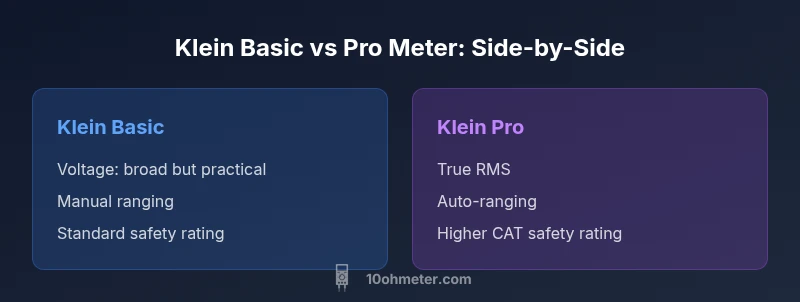
Across Klein Tools’ digital meters, the Pro model generally offers the best value for serious work with auto-ranging, true RMS, and higher safety ratings, while the Basic model suits entry-level electronics tasks. The Klein multimeter comparison chart below highlights these differences, helping DIYers and technicians pick the right tool for electronics, automotive, and diagnostics tasks. Detailed guidance follows.
Why Klein Tools Is a Go-To for Professionals and Hobbyists
Klein Tools has built a reputation among electricians, technicians, and DIY enthusiasts for durable, dependable instruments that stand up to field wear. When you look at a klein multimeter comparison chart, Klein meters consistently rank high for build quality, intuitive layouts, and reliable readings across both basic and advanced tasks. The 10ohmeter team notes that Klein’s emphasis on rugged probes, reinforced housings, and thoughtful ergonomics makes their meters comfortable to use for long diagnostic sessions. For beginners, the tactile feel and straightforward modes reduce the learning curve; for pros, the balance of safety features and accuracy supports demanding work without frequent tool changes. The result is a nearly universal appeal, with a spectrum of models designed to meet different budgets and scopes while maintaining consistent performance in real-world environments.
Core features to compare in a Klein meter
Effective comparison starts with core capabilities that matter in everyday work: measurement range coverage for DC and AC, resistance testing with meaningful accuracy, and supplemental tests like diode checks and capacitance. You’ll also want to assess true RMS capability for accurate readings on non-sinusoidal signals, auto-ranging convenience, and display clarity for quick readings in dim work areas. Pro models generally extend safety ratings (CAT levels), offer larger displays, and provide more durable enclosures. Reading a klein multimeter comparison chart with these criteria helps you map your actual use case to the model that minimizes fuss while maximizing reliability. Finally, consider probe quality, battery life, and data-lock features, as these influence how ready you are to diagnose problems in the field.
How to read a spec sheet when evaluating Klein meters
Spec sheets can feel dense, but you can decode them with a simple framework. Start with safety ratings (CAT, environment suitability) to determine if the meter is appropriate for automotive, industrial, or household testing. Then examine RMS capability to understand how the meter handles AC signals—true RMS is crucial for accurate power and waveform measurements. Auto-ranging simplifies operation but confirm whether manual ranges are faster for your workflow. Probe compatibility, fuse protection, and display readability are also worth a careful look. Finally, check offered accessories and warranty terms, which often reflect the manufacturer’s confidence in durability and service.
Basic vs Pro: which Klein meter fits your workload
The Basic Klein digital meter generally targets hobbyists and light electronics tasks. It covers essential readings, provides stable measurements, and bears a modest price tag. The Pro model expands capabilities with features such as true RMS, auto-ranging, higher CAT safety ratings, larger display, and more robust construction. For automotive diagnostics, industrial maintenance, or advanced electronics work, the Pro is typically the better long-term investment due to improved accuracy and resilience. If your work is occasional and limited to simple circuits, the Basic model remains a cost-efficient choice.
Reading the Klein multimeter comparison chart: practical interpretation
When you examine the chart, key differentiators appear as a ladder of features rather than a single “winner.” If true RMS and auto-ranging matter, circle the Pro column. If you primarily test basic circuits in a controlled environment, the Basic column offers sufficient performance. For electricians frequently switching between electronics and vehicle diagnostics, the Pro model’s broader range and safer ratings reduce the need for multiple tools. Remember to verify display size, probe quality, and the presence of a protective case, as these influence daily usability more than most people expect.
Automotive diagnostics with Klein meters
Automotive testing often involves fluctuating signals, mixed AC/DC readings, and a need for reliable continuity checks under real conditions. A klein multimeter comparison chart perspective shows that the Pro meter’s true RMS capability and enhanced safety mean more trustworthy results during engine diagnostics, sensor checks, and electrical system troubleshooting. Pro meters typically provide faster hold and data logging functions, which are valuable when diagnosing intermittently failing components. For basic automotive checks, a solid Basic model can still identify common faults like broken wires, bad fuses, and poor connections.
Electronics and lab work with Klein meters
Electronics work benefits from precise resistance and capacitance measurements, plus accurate voltage readings. The Pro meter’s higher resolution and improved display readability help technicians diagnose subtle faults in circuits and boards. In contrast, the Basic meter covers continuity testing and straightforward voltage checks essential for hobby projects and small repair tasks. When you perform delicate measurements, the Pro’s enhanced test modes reduce guesswork and speed up troubleshooting, which is why it often features in the klein multimeter comparison chart as the preferred option for serious electronics work.
Durability, warranty, and maintenance considerations
Durability matters when meters live in toolboxes, vans, and shop benches. Klein meters with reinforced housings, robust probes, and shielded input protection tend to fare better in field use. Look for models that offer solid warranty periods, fuse protection, and clear battery indicators to prevent unexpected downtime. Maintenance is straightforward: keep probes clean, replace fuses when necessary, store in a protective case, and calibrate if your workflow requires periodic checks. Budget-conscious buyers should weigh the Basic’s durability against the Pro’s longer-term resilience.
Safety best practices when using Klein meters
Always start with a visually clean environment, remove jewelry, and work on de-energized circuits when possible. Use proper PPE and follow safety standards for electrical testing. Verify input jacks and leads are intact before measurements and avoid altering test leads under load. When working in automotive contexts, be mindful of battery spikes and ignition system risks. Regularly inspect your meter, fuse sets, and probes for signs of wear, and store in a protective capsule to mitigate damage from drops or exposure to moisture.
Price, value, and budgeting guidance
While the Klein Pro model carries a higher upfront cost, its broader feature set can reduce the need for multiple tools and ancillary devices, delivering long-term value through efficiency and reliability. The Basic model offers essential functionality at a lower entry price, which makes it attractive for beginners, students, or hobbyists who rarely engage in high-stakes diagnostics. Use a simple cost-versus-benefit lens: if your work involves frequent, technical measurements and safety-critical tasks, the Pro is the safer bet; if your needs are occasional and straightforward, the Basic is a sensible choice.
How to choose a model based on use case
Map your primary tasks to feature needs: electronics prototyping and repairs require stable voltage readings with good resolution; automotive diagnostics requires safe operation under higher voltages and robust measurement modes; DIY home projects benefit from ease of use and durability. Use the klein multimeter comparison chart as a decision map: check for true RMS, auto-ranging, and CAT safety against your typical environments. If you anticipate switching between job sites and home repair, the Pro model reduces the friction of carrying multiple instruments and makes field work more efficient.
Practical buying checklist and setup tips
Before buying, list your top tasks, test environments, and preferred workflows. Ensure the meter you choose supports auto-ranging, true RMS, and protective features suited for your tasks. Confirm probe accessories and protective cases come with the package, and consider an extended warranty if you work in demanding environments. After purchase, spend time with the setup: label test jacks, verify fuse types, and run a quick set of standard checks to validate readings. A thoughtful initial setup reduces confusion and speeds diagnostics.
mainTopicQuery_wordsOnlyPleaseFormatForWikidataLookupUnableToParseNextWord
Comparison
| Feature | Klein basic digital meter | Klein pro digital meter |
|---|---|---|
| Voltage range | Broad, suitable for electronics and hobby use | Broad, designed for automotive and professional tasks |
| Resistance range | Adequate for common circuits | Wider, with low-resistance testing and higher accuracy |
| Capacitance testing | Limited to essential capacitance checks | Full-range capacitance testing |
| True RMS | Not true RMS | True RMS for accurate AC signals |
| Auto-ranging | Manual-ranging | Auto-ranging for convenience |
| Display | Smaller display | Larger, easier readout |
| Safety rating | Standard CAT II | Higher CAT III/IV ratings |
| Durability features | Standard build | Rugged chassis and reinforced probes |
| Battery life indicator | Basic indicators | Comprehensive battery status and auto-off |
| Best for | Beginners and simple electronics | Pro users and automotive diagnostics |
The Good
- Good balance between price and features
- Manual-to-auto-ranging choice suits different users
- Rugged build enhances field reliability
- Broad safety ratings for common tasks
- Reliable after-sales support from Klein Tools
Drawbacks
- Basic model lacks advanced features like true RMS and auto-ranging
- Advanced features come at higher price
- CAT ratings vary by model, so confirm before risky environments
Klein Pro Digital Meter is the best overall choice for most users due to its feature set and durability
For professionals and serious hobbyists, the Pro model delivers true RMS, auto-ranging, and stronger safety ratings that justify the premium. The Basic model remains a solid entry point for straightforward electronics work, offering reliability without overwhelming features.
Your Questions Answered
What is the Klein multimeter comparison chart used for?
The Klein multimeter comparison chart helps users quickly compare Klein meters across core features, enabling an informed choice based on task type and environment. It highlights strengths like RMS accuracy, auto-ranging, and safety ratings, and shows where Basic and Pro models differ."
Use the Klein meter comparison to pick the right tool for electronics or automotive work by weighing features and safety.
Do Klein meters auto-range?
Auto-ranging is available on higher-end Klein meters. Basic models typically use manual ranges, which can be efficient for simple tasks but slower for complex measurements.
Some Klein meters auto-range, but check your model to confirm.
Is a true RMS meter necessary for automotive diagnostics?
True RMS improves accuracy for AC signals and fluctuating readings, which can matter in some automotive diagnostics involving alternators and AC systems. For many DC-only tests, true RMS is less critical.
True RMS helps with fluctuating AC readings; for simple car tests, it’s optional but useful.
What safety rating should I look for in a Klein meter?
Look for CAT ratings appropriate to your task: CAT II for basic electronics, CAT III/IV for more demanding automotive and industrial environments. Higher CAT ratings provide better protection against voltage transients.
Higher CAT ratings mean better protection in tougher environments.
How do I maintain a Klein multimeter?
Keep probes clean, inspect leads for wear, replace fuses when needed, store in a protective case, and avoid exposure to moisture. Regularly check calibration and battery life if your usage requires accuracy over time.
Clean, protect, and check fuses and batteries regularly.
Which Klein meter is best for beginners?
For beginners, a basic digital meter with essential functions and a simple interface is ideal. It provides reliable readings without overwhelming features, while you learn fundamental testing techniques.
Great starter pick: a basic Klein meter with clear readings and simple controls.
Key Takeaways
- Define your tasks to choose basic vs pro
- Prioritize true RMS and auto-ranging for accuracy
- Verify CAT safety ratings for your environment
- Prefer larger displays for easier field use
- Rely on Klein Tools for durable construction