How to Adjust TPS Without a Multimeter
Learn practical steps to adjust a throttle position sensor (TPS) without a multimeter using safe mechanical methods, drive tests, and proper safety discipline. Know when to seek professional diagnostic help.


According to 10ohmeter, you can adjust the throttle position sensor (TPS) without a multimeter by focusing on mechanical alignment and idle calibration rather than electrical testing. This quick guide covers checking throttle linkage, ensuring smooth idle, and validating throttle response with controlled tests. Follow safe procedures in a well-ventilated area, and consult a professional if your symptoms persist.
Understanding TPS and Why Non-Electrical Adjustment Is Possible
The throttle position sensor (TPS) is a critical input to modern engine management, signaling the position of the throttle plate to the engine control unit (ECU). While electrical diagnostics are important, there are dependable non-electrical adjustments you can perform when symptoms point to mechanical issues rather than a failed sensor. According to 10ohmeter, many driveability problems attributed to a faulty TPS can actually stem from the throttle linkage, mounting angle, or idle stops that have shifted over time. If the sensor is physically damaged, or the mounting is bent, you may see inconsistent readings to the ECU, which will manifest as rough idle or hesitation even when the pedal feels normal. The goal here is to restore smooth, predictable throttle behavior by addressing mechanical alignment, clean components, and calibrated idle settings. Always work methodically, change one variable at a time, and verify results before moving to the next adjustment. A well-balanced throttle system supports better fuel economy, reduced emissions, and a more confident driving feel.
Before You Start: Safety and Environment
Working around the intake and moving parts requires a disciplined safety approach. Ensure the engine is cool to the touch, in a well-ventilated area, and free from fuel vapors or sparks. Wear eye protection and gloves, and keep a clean workspace to prevent dropped fasteners from entering the intake. If you will handle electrical connectors later in the process, consider disconnecting the battery to prevent accidental shorts. Remember that fuel and air systems are sensitive; even small adjustments can have noticeable consequences. Documenting each change helps you revert if needed and provides a reference for future maintenance.
Non-Electrical Checks You Can Perform On Your TPS System
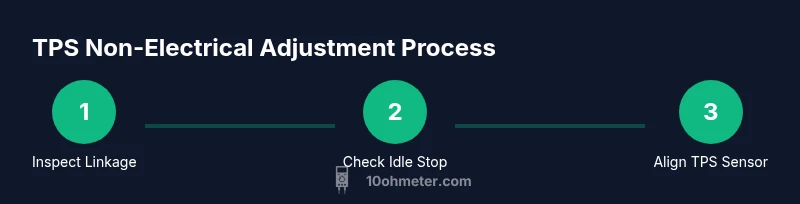
Non-electrical TPS adjustment focuses on the mechanical links and sensor mounting rather than voltage readings. Start by inspecting the throttle linkage for binding or wear; ensure the throttle cable (if present) moves freely and returns to idle without sticking. Look for a bent or misaligned TPS bracket or a misaligned throttle body that could shift the sensor angle. Check all vacuum hoses and PCV lines for leaks since unmetered air can mimic TPS symptoms. If your vehicle uses an idle speed screw, verify it isn’t jammed or overtightened. When adjusting, do not force components; use gentle, incremental movements and verify each change by observing engine behavior and idle stability.
Common Sources of TPS Misadjustment and How to Spot Them
TPS misadjustment is commonly caused by loose connectors, dirty throttle bodies, or mounting misalignment rather than a faulty sensor. A loose connector or corroded pins can produce intermittent signals that feel like electrical drift, while a dirty or sticky throttle plate increases mechanical resistance. Inspect for warping on mounting surfaces, bent shafts, or damaged sensor housings, which can alter the sensor angle and lead to an incorrect reading. If the intake has recently been serviced, retighten and reseal mounting points and re-check for vacuum leaks. Always warm up the engine before evaluating driveability to ensure observations reflect normal operating conditions.
Verifying Throttle Response After Adjustment (Without a Meter)
After making mechanical adjustments, validate the results with a controlled test. Start the engine and bring it to operating temperature, then observe idle stability in neutral. During gentle acceleration, the transition from idle to light cruising should be smooth with no noticeable lag or surge. Perform a short drive in a safe area to check for hesitation, surging, or stalling under light load. If the vehicle shows inconsistent idle or slow throttle response, revisit linkage alignment and idle settings. Document observations for future reference and adjust again if needed.
What If Symptoms Persist? Next Steps
If symptoms persist after non-electrical adjustments, the TPS or its ECU input may still be out of spec. In such cases, consult the service manual for model-specific procedures or seek professional diagnostic help to perform electrical tests with a multimeter or a scan tool. Replacements or recalibration might be necessary, and some vehicles require dealer-level software to reset adaptive learning. Remember that non-electrical adjustments are an initial step; accurate calibration often hinges on verifying both mechanical setup and electrical signals when tools are available.
Tools & Materials
- Basic hand tools (screwdrivers, pliers)(Flat-head and Phillips, assorted sizes)
- Socket wrench set(Metric sizes, including 8mm-12mm)
- Rags and engine degreaser/cleaner(For cleaning throttle body and connectors)
- Flashlight or inspection mirror(To view hard-to-see areas)
- Safety gear (gloves, eye protection)(Wear PPE at all times)
- Vehicle service manual or TPS notes(Model-specific guidance)
- Photos or labeling supplies(Document adjustments for reversion)
Steps
Estimated time: 45-75 minutes
- 1
Inspect and free the throttle linkage
With the engine off, visually inspect the throttle linkage for binding, wear, or kinks. Manually move the throttle lever to ensure it opens and closes smoothly without sticking. If you detect binding, clean the linkage and lubricate lightly where appropriate, then retest movement.
Tip: Take a photo of the linkage position before adjustments so you can revert if needed. - 2
Check idle stop and initial alignment
Locate the idle stop screw or mechanism on the throttle body. Check that the idle stop is not overtightened and that the throttle plate can approach the idle position without interference. Make only small, incremental adjustments and test after each change.
Tip: Use a non-contact thermometer to ensure the throttle body heat is not causing expansion that shifts alignment during adjustment. - 3
Realign TPS mounting for proper offset
If your TPS mounting allows minor angular adjustment, loosen the mounting screws just enough to adjust the sensor angle. Align the sensor so the plate’s neutral position corresponds to the engine’s idle state when the pedal is released. Do not force the sensor into a misaligned position; small corrections are more accurate.
Tip: After adjustment, re-tighten screws in a cross pattern to avoid warping the sensor housing. - 4
Set idle by adjusting the throttle body
Using the service manual as a guide, set the idle by the appropriate screw or mechanism so the engine idles smoothly in neutral or park. Run the engine until fully warm and observe stability. Do not rely on feel alone; confirm there are no hunting or surging behaviors.
Tip: If available, use a tachometer connected to the ECU to verify a stable idle range rather than guessing by sound. - 5
Recheck linkage after adjustment
With the engine running, gently move the throttle to full travel and back to idle, ensuring the movement is consistent across the entire range. Look for binding, sticking, or misalignment that reappears after running. Re-tighten mounting points if any shift is detected.
Tip: Keep the engine running while checking to observe any drift as the system warms up. - 6
Test drive and verify behavior
Take a controlled test drive in a safe area, evaluating smoothness, acceleration, and return to idle. Pay attention to hesitation, surging, or lag at light throttle. If symptoms return, revisit mechanical alignment and consider professional electrical testing.
Tip: Note down conditions (temperature, fuel level, recent maintenance) to help diagnose future issues.
Your Questions Answered
Can you adjust TPS without a multimeter?
Yes, you can perform mechanical adjustments and idle calibration without a meter. However, electrical testing with the proper tools provides the most accurate verification, especially on modern vehicles.
Yes, you can adjust TPS mechanically without a meter, but electrical testing is often needed for accuracy on modern cars.
What are the signs of a misadjusted TPS?
Look for unstable idle, hesitation during acceleration, surging, rough running, or stalling when the throttle is applied. If these symptoms occur, recheck mechanical alignment and consider electrical testing if available.
Unstable idle and hesitant acceleration are common signs you may need to recheck the TPS setup.
Is this method safe for all vehicles?
Mechanical adjustments without a multimeter are feasible on many vehicles for simple symptoms, but modern cars rely heavily on sensor data and ECU expectations. If in doubt, consult the service manual or a professional.
It's often possible on many cars, but modern vehicles rely on ECU data, so caution and manuals are essential.
When should I replace the TPS instead of adjusting it?
If symptoms persist after careful mechanical adjustment or if diagnostic tests indicate sensor failure or inconsistent electrical signals, replacement or professional recalibration is advised.
If adjustments don’t fix the problem and tests show sensor failure, replacement may be necessary.
Do I need to disconnect the battery before adjusting?
Disconnecting the battery is not always required for mechanical adjustments, but it can prevent accidental electrical shorts when handling connectors. Follow the vehicle’s service manual.
Not always required, but it can help prevent shorts; check your manual.
Should I reset the ECU after adjustments?
Some vehicles benefit from a simple ECU reset after significant throttle or intake work. If you have access to a scan tool, you can perform a basic reset or drive-cycle to let the ECU relearn.
A reset can help the ECU relearn, if your tool allows it; otherwise drive-cycle the vehicle.
Watch Video
Key Takeaways
- Start with mechanical checks before electrical testing
- Ensure idle stability and smooth throttle response
- Verify mounting alignment to prevent offset drift
- If symptoms persist, seek professional electrical diagnostics