5730a Error Code Troubleshooting for DIY Technicians
Urgent guide to diagnosing and fixing the 5730a error code on digital multimeters. Learn quick fixes, diagnostic flow, step-by-step repairs, and prevention tips to restore accurate readings fast.


5730a is a firmware calibration data error indicating corrupted internal memory in some digital multimeters. It often shows when readings drift or the device won’t boot. Quick fixes include a hard reset, checking for firmware updates, and re-calibrating the meter. If symptoms persist, seek professional service to avoid inaccurate measurements.
What 5730a Means for Your Meter
5730a is a firmware calibration data error indicating corrupted internal memory in some digital multimeters. In practice, this means the device cannot rely on stored calibration constants, leading to drift, inconsistent readings, or boot failures. According to 10ohmeter, the root cause is often memory corruption from a faulty shutdown, interrupted firmware writes, or aging components that destabilize calibration memory. Understanding this helps you prioritize fixes that restore calibration data integrity without unnecessary disassembly. Calibration data health is essential for accurate voltage, resistance, and current measurements, especially in automotive diagnostics and electronics work. If left unchecked, 5730a can undermine safety-critical tasks. The good news is that most cases are addressable with a structured approach that preserves calibration data, prevents data loss during updates, and restores trustworthy measurements. 5730a is a symptom of data health, not a fixed problem, and the right steps rebuild confidence in your tool’s numbers.
How 5730a Presents Across Different Meters
Across brands and models, 5730a tends to appear during boot or calibration cycles. Some meters display a dedicated 5730a warning screen, others show erratic values with no input, and a few fail to initialize entirely. While the exact software wording may vary, the underlying issue is consistent: calibration constants are no longer reliable. This is especially critical for high-precision tasks where a small drift can cascade into incorrect circuit analysis or failed tests. The response is typically predictable: test the firmware path, verify calibration maps, and re-establish trustworthy references. Keeping firmware up to date reduces the likelihood of 5730a recurring after fixes. 5730a also highlights the importance of a robust calibration workflow and safe shutdown practices to protect calibration memory.
The Role of Calibration Data and Firmware in 5730a
Calibration data lives in non-volatile memory and is referenced whenever you measure voltage, resistance, or current. A faulty write, unexpected power loss, or memory wear can corrupt these maps, turning a precise instrument into a guessing tool. 5730a flags that the device cannot confidently apply the correct reference values. Firmware logic also governs how calibration maps are loaded, validated, and refreshed; a bug or incomplete update can trigger 5730a. Addressing 5730a means separating data integrity from software behavior and ensuring both are healthy. 10ohmeter’s guidance emphasizes validating the software path first, then validating/calibrating hardware references. This layered approach reduces unnecessary repairs and preserves calibration confidence across the life of your meter.
Why Quick Fixes Matter for 5730a
Speed matters when you’re on a job. Quick fixes for 5730a—like a hard reset, firmware check, and recalibration—restore usable readings fast and buy time to plan a more in-depth repair if needed. A proper reset can clear transient corruption, while firmware reflashes reestablish calibrated constants from a known-good baseline. Recalibration redefines the reference points for measurements, ensuring your subsequent readings align with real-world values. If you’re in a shop or field kit, having ready-to-run calibration references and a tested firmware package reduces downtime when 5730a pops up. Always verify readings with multiple reference measurements to confirm reliability.
The Path Forward: When to Seek Professional Help
If 5730a persists after quick fixes, or if you observe secondary symptoms like intermittent power loss, boot loops, or abnormal warmth around the firmware region, professional service is warranted. A qualified technician can diagnose memory wear, flash corruption, or hardware degradation that could be masking deeper issues. In many cases, service will involve controlled firmware reflash, calibration map restoration from factory baselines, and potentially memory component replacement. The cost range typically reflects the device’s complexity and warranty status. 10ohmeter recommends catching these symptoms early to minimize downtime and protect calibration integrity for critical tests.
Steps
Estimated time: 60-90 minutes
- 1
Power cycle and reset
Power off the meter completely, remove any batteries if possible, then wait 30 seconds before reapplying power. This clears many transient calibration glitches that trigger 5730a. Run a quick self-check after the restart to see if readings stabilize.
Tip: Keep an eye on the boot sequence; if the device shows 5730a again during startup, note any blinking codes for support. - 2
Check for available firmware updates
Connect the meter to its official software utility or use a USB updater to search for firmware revisions. Install any approved update that addresses calibration handling. Reboot the meter and observe whether 5730a reappears during calibration.
Tip: Only download firmware from the manufacturer or trusted distributors to avoid corrupt packages. - 3
Recalibrate using built-in procedure
Enter the calibration module and perform the recommended reference measurements. Use known voltage, resistance, and current standards where possible. Confirm that after calibration, the readings match the reference with acceptable tolerance.
Tip: Document calibration values for future reference and warranty considerations. - 4
Assess memory integrity and power stability
If 5730a persists, there may be a memory fault. Check for signs of aging components, flaky power supply, or battery degradation. Swap power sources and, if available, run a memory diagnostic test provided by the manufacturer.
Tip: Avoid aggressive probing of internal components unless you are trained; improper handling can trigger safety hazards. - 5
Attempt a controlled refl ash or factory reset
With a backup of calibration data if possible, perform a controlled refl ash to restore factory calibration maps. Some devices offer a reset to default calibration as a last resort before hardware checks.
Tip: Back up any user data or non-volatile calibration settings before performing resets. - 6
Escalate to professional service if needed
If 5730a remains after all above steps, arrange service with an authorized technician. They can diagnose deeper memory issues or hardware faults that require component replacement.
Tip: Request a written estimate and expected turnaround time before authorizing work.
Diagnosis: Meter shows error code 5730a and inconsistent readings or boot issues
Possible Causes
- highFirmware calibration data corruption due to interrupted update or power loss
- mediumMemory wear or faulty non-volatile storage
- lowSoftware bug in calibration loader or an incomplete reflashing
Fixes
- easyPerform a hard reset and power cycle, then recheck the boot sequence
- easyUpdate or refl ash firmware from an official source, then restart
- mediumRun the device’s calibration procedure to reestablish reference values
- hardIf problems persist, pursue professional service for memory inspection or component replacement
Your Questions Answered
What does error code 5730a indicate on a multimeter?
5730a signals calibration data corruption in the meter’s firmware memory. It disrupts the accuracy of readings and can cause boot or calibration issues. Addressing it involves firmware checks, recalibration, and, if needed, professional inspection to restore reliable measurements.
5730a means calibration data corruption in the meter’s firmware memory, affecting accuracy and boot. Try firmware updates and recalibration, and contact a technician if issues persist.
Can I fix 5730a at home?
Yes, many cases respond to a sequence of quick fixes: hard reset, firmware update, and recalibration. If the problem persists after these steps, professional service is recommended to avoid further damage or inaccurate readings.
You can try a hard reset, update firmware, and recalibrate. If it keeps returning, seek professional help.
Is 5730a a hardware fault or a software issue?
5730a is primarily a software/firmware issue—calibration data corruption within the device’s memory. However, memory wear or hardware faults can mimic or contribute to the symptom, which may require hardware inspection.
It's mostly software, but hardware memory wear can cause the same symptom, so assess both.
How long does recalibration take after 5730a fixes?
Calibration typically takes about 15–40 minutes depending on the model and the number of reference points you calibrate. Allow extra time for verification tests afterward.
Calibration usually takes 15 to 40 minutes, plus time to verify readings.
What are the cost ranges to fix 5730a?
DIY fixes cost little to nothing beyond tools and reference standards. If professional service is needed, expect ranges roughly from $60 to $250 depending on complexity and parts.
Do-it-yourself fixes are inexpensive; professional service can range from about sixty to two hundred fifty dollars.
Will 5730a affect measurement safety?
Yes, unreliable readings during 5730a can lead to unsafe decisions in electrical work. Treat the meter as suspect until calibration is restored and readings are verified with known references.
Unreliable readings can be unsafe; verify with known references before trusting measurements.
Watch Video
Key Takeaways
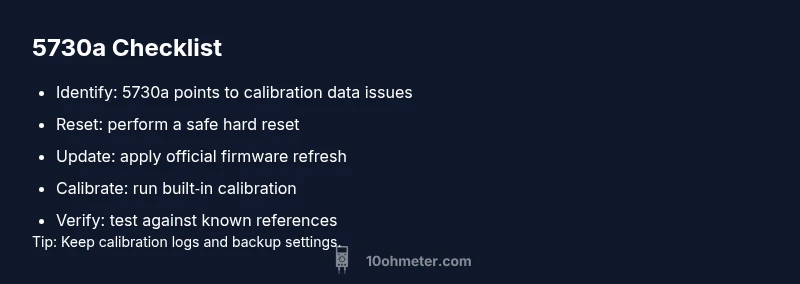
- Identify 5730a as firmware calibration data corruption.
- Prioritize safe resets, firmware updates, and recalibration as first moves.
- If 5730a persists, expect professional service for memory-related faults.
- Maintain calibration logs and perform regular updates to prevent recurrence.