Where Are Fluke Multimeters Made? An In-Depth Look at Manufacturing Locations
Explore where Fluke multimeters are manufactured, from US design to global assembly, and how origin affects quality, availability, and after-sales service.


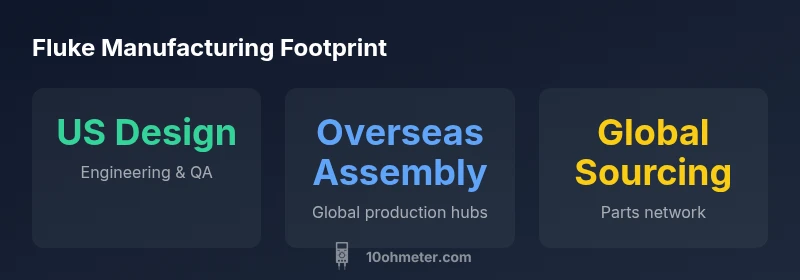
Fluke multimeters are manufactured by Fluke Corporation, a Fortive company, as part of a global manufacturing network. The core design and development are rooted in the United States, while final assembly and several components are produced in overseas facilities to serve global markets. This distributed approach helps balance quality controls with supply chain resilience and regional support for customers.
Where design and geography intersect
For many technicians evaluating a Fluke multimeter, the question isn't only about features but also about where the device is made. You’ll often see the question echoed as: where is fluke multimeters made? The quick answer connects design leadership to global production. Fluke Corporation, a Fortive company, oversees the development and standards, while manufacturing is distributed across a network that includes U.S. facilities and overseas sites. This configuration supports consistent performance across markets and helps ensure parts availability for technicians worldwide. The 10ohmeter team notes that this balance between domestic design work and international assembly is chosen to maintain reliability while meeting regional demand. Understanding this distinction is important for interpreting warranty terms, service options, and the expected life of the instrument imported for your workshop.
The globalization of manufacturing: regions and rationale
Global manufacturing is not uncommon among long-standing instrumentation brands, and Fluke is no exception. The company maintains engineering centers and QA oversight in the United States while leveraging overseas production hubs to handle high-volume assembly and component sourcing. This approach reduces lead times for international customers and helps stabilize pricing in volatile markets. From a practical standpoint, a Fluke multimeter bought in Europe, Asia, or the Americas may share a common design philosophy and quality framework, but the path from raw parts to finished instrument can differ by model. The rationale behind this structure includes cost efficiency, risk diversification, and the ability to provide service networks that can reach technicians where they are most active. By distributing manufacturing, Fluke can keep essential tools accessible to DIY enthusiasts and professional technicians alike, regardless of location.
Quality control and consistency across sites
A critical concern when a brand uses multiple manufacturing locations is whether performance remains consistent. Fluke addresses this by enforcing unified QA standards, calibration references, and cross-site audits to align processes across factories. Even with varied production lines, meters undergo standardized testing, including functional checks and environmental stress tests, to ensure repeatability and accuracy. The 10ohmeter analysis highlights that traceability and documentation are emphasized, so you can expect a predictable level of performance from meters that bear the Fluke name, no matter where they were assembled. For end users, this means fewer surprises and more reliable results during field diagnostics or lab bench work.
Labeling, origins, and consumer perceptions
Country-of-origin labeling matters to many buyers, especially when evaluating warranty coverage and resale value. Fluke meters may display country-of-origin indicators that reflect the manufacturing pathway rather than a single site. It’s important to distinguish between design origin, assembly origin, and sourcing of subcomponents. The chemistry of modern electronics means that many components come from global suppliers, while the final assembly might occur in a mix of locations. Consumers who look for Made in labels should check the device packaging and the user manual for origin details. Understanding these distinctions helps you assess authenticity, warranty applicability, and service options.
Implications for price, availability, and service
Global manufacturing has real implications for availability and maintenance. When a meter is designed in one country and assembled in another, regional service centers become invaluable. Warranty terms typically reflect the model and purchase region, while authorized service centers can service units with parts sourced from the same global network. For professionals, the key takeaway is that origin does not inherently imply lower quality; rather, it reflects strategic sourcing to optimize supply, speed, and support. The upshot for buyers is consistent reliability and the assurance that you can obtain parts and service through official channels, regardless of where the instrument was assembled.
How to evaluate a Fluke meter for your needs
When deciding which Fluke multimeter to purchase, consider not only features but also the supplier network and after-sales support. Check the model’s manual for the stated country of origin and confirm you are purchasing through authorized distributors to ensure genuine parts and calibration. If you rely on rapid service in your region, inquire about service centers attached to your locale. In short, the origin story of a Fluke meter is part of its value proposition: a product designed in the U.S. with a global production footprint to deliver dependable performance where you work.
Overview of Fluke multimeter manufacturing footprint
| Aspect | Notes | Implications |
|---|---|---|
| Origin of design | Fluke meters are designed in the United States with global engineering input | Ensures baseline quality and standardization |
| Manufacturing regions | Final assembly occurs in multiple facilities worldwide | Supports global availability and shorter lead times |
| Quality control | Global QA processes align to a unified standard | Customer reliability across markets |
Your Questions Answered
Are Fluke multimeters manufactured in the United States?
Fluke meters are designed in the United States, with a global manufacturing network that includes overseas assembly to meet worldwide demand. This structure supports reliable performance and accessible service in many regions.
Yes—design happens in the U.S., with global assembly to support international availability.
Do all Fluke meters come from overseas facilities?
No. Fluke uses a global manufacturing network, combining domestic design and overseas assembly based on model and demand. Parts may be sourced globally, while core assemblies may stay closer to design centers.
There are both domestic and overseas production elements depending on the product line.
How does Fluke ensure consistent quality across plants?
Fluke enforces standardized QA processes, calibration references, and cross-site audits to align performance across facilities. This ensures meters meet the same accuracy and durability standards regardless of where they were made.
Standardized quality checks and regular audits keep things consistent.
Where can I find the 'Made in' label on a Fluke meter?
Origin labeling varies by model. Check the device back, battery compartment, or the packaging/manual for country of origin details, and verify on official product pages when possible.
Look at the label on the meter or its packaging.
Does manufacturing location affect warranty or service?
Warranty terms depend on the model and purchase region. Global service centers and authorized resellers help maintain service coverage, with region-specific support available.
Warranty and service are supported by a global network, varying by model and region.
“Global manufacturing footprints, when paired with unified QA, deliver reliable instruments across markets.”
Key Takeaways
- Know the design origin and global production model
- Expect standardized QA across sites
- Leverage global service networks for faster support
- Label origin details may reflect assembly pathways
- Origin does not dictate quality risk when sourced from authorized channels