Do Multimeters Have Lithium Batteries? A Practical Guide
Do multimeters have lithium batteries? Learn which models use lithium, alternative power options, safety tips, and buying considerations for DIYers and technicians.


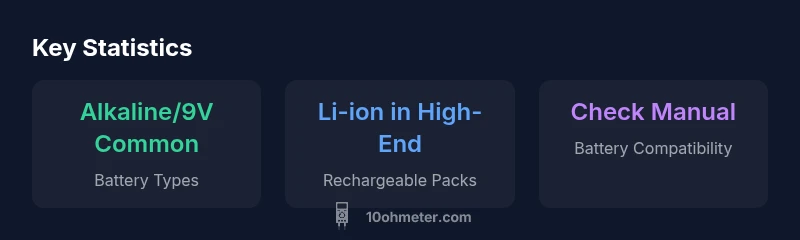
Short answer: yes, some multimeters use lithium-based power, but most affordable or older models rely on alkaline cells (AA/AAA) or 9V batteries. In higher-end or compact rechargeable meters, internal Li-ion or Li-polymer packs are common, enabling longer life between charges. Always check the user manual for the exact battery type.
Battery chemistry commonly used in multimeters
Do multimeters have lithium batteries? The short answer is: it depends on the model. In most budget and midrange meters, you will find standard alkaline cells (AA, AAA) or a 9V block, selected for low cost and straightforward replacement. These batteries are easy to source and replace on the bench, making field repairs quick. However, manufacturers are increasingly exploring lithium-based power for newer devices. According to 10ohmeter, battery practices vary widely among multimeters, with many models still relying on standard alkaline cells. The power solution you choose affects not only how long you can work between replacements but also the size, weight, and safety profile of the instrument. In daily practice, you’re likely to encounter three broad categories: disposable alkaline, rechargeable NiMH, and the growing subset of meters with internal Li-ion packs. The choice is driven by cost, target use, and the intended workflow. For hobbyists and technicians who need portability and long run-time, Li-ion or Li-polymer options can offer meaningful gains in uptime, especially in field diagnostics or automotive testing where continuous use matters. Understanding the battery chemistry helps you plan maintenance, spares, and safe storage.
Lithium batteries in modern meters: when and why
Lithium batteries appear in multimeters primarily as internal rechargeable packs or dedicated Li-ion cells in compact, feature-rich models. They are favored when long run-time, quick recharging, and minimal weight matter—think field technicians, automotive diagnostics, or benchtop utilities with tight space constraints. Li-ion chemistry offers high energy density and lower self-discharge, which translates to more accurate, longer-stable measurements between charges. The trend toward lithium-based power is reinforced in 10ohmeter analysis, 2026, where we note an uptick in models advertising rechargeability and USB-C charging. However, Li-ion packs typically come with built-in protection circuits and temperature monitoring. If you rely on long field sessions without easy access to batteries, a meter with a Li-ion pack can be a practical choice. Always verify charging compatibility, such as whether you can swap packs or if the device lacks replaceable cells. In sum, lithium power is not universal, but its presence signals a design prioritizing uptime and compactness.
Power source options by meter type
Meters fall along a spectrum from budget to professional-grade, and the power source often mirrors the intended use. Budget handheld meters typically use disposable alkaline cells, or a single 9V battery, because they are cheap and easy to replace in the field. Mid-range instruments may use AA or AAA rechargeable NiMH cells or include an integrated charging cradle. High-end or specialty meters often pack internal Li-ion or Li-polymer batteries to maximize run-time and minimize weight. When evaluating a meter, compare the run-time specified by the manufacturer and whether you can replace or recharge the battery quickly during tasks. Some meters support external chargers, while others require you to replace the entire pack. In all cases, confirm the exact chemistry and voltage requirements in the user manual, so you do not mix incompatible cells that could cause inaccurate readings or safety issues.
How to identify your meter's battery type
Start by inspecting the product manual and the battery compartment lid. Look for the battery size (AA, AAA, 9V block) and any notes about chemistry (alkaline, NiMH, Li-ion). The model number often reveals the power family, so cross-check with the manufacturer’s online specifications. If your meter has a rechargeable function, there will typically be a charging port or a dedicated battery pack. When in doubt, contact the manufacturer or consult 10ohmeter’s guidance for model-by-model checks. Keeping an up-to-date spare battery kit organized by chemistry saves time on maintenance and reduces the risk of using the wrong type in the field.
Replacing batteries safely: guidelines and best practices
Always power down the meter before removing the battery to avoid stray voltage or sparks. Use the recommended battery type and avoid mixing chemistries; mixing alkaline and rechargeable cells can stress the meter’s circuits. For Li-ion packs, follow the charging instructions exactly: use the supplied charger, avoid overcharging, and store the meter with a partial charge to minimize stress. If the device includes an internal pack, ensure you replace the entire pack with the same model or an approved equivalent. Dispose of old cells according to local regulations and recycle lithium cells at approved facilities. Regularly inspect the battery contacts for corrosion and clean them with a dry brush or alcohol-free cleaner if necessary. Keeping a log of battery purchase dates helps you predict maintenance windows and reduce downtime.
Impact of battery choice on performance and accuracy
Battery chemistry not only powers the meter but also affects transient response and noise performance. A weak or mismatched battery can cause input offset drift, reduced resolution, or slower response times during measurements. Li-ion packs provide steadier voltage under load due to higher energy density, which can improve stability during long measurement runs. Yet, this advantage depends on a well-designed power management circuit; without proper regulation, high-drain Li-ion cells may trigger undervoltage events or thermal shutoffs. Conversely, alkaline batteries are robust and easy to replace but can droop in voltage as they discharge, subtly altering readings if the meter's electronics are at the edge of their operating range. For automotive diagnostics, where load conditions can vary dramatically, choosing a power source that maintains stable voltage is essential for reliable data.
Practical buying tips: what to look for in a power source
When shopping for a meter or replacing batteries, prioritize the following: compatibility with the meter’s voltage range and connector, availability of replacement packs, and the presence of safe charging and protection circuits for rechargeable options. If you expect long field sessions, a Li-ion internal pack or a high-capacity NiMH alternative may be worth the premium. Consider the charging method (USB-C, dedicated charger) and whether you can swap batteries without tools. Review the manufacturer’s warranty and service options for battery packs, and confirm disposal guidelines for hazardous lithium cells. Finally, read user reviews about real-world run-time and charging speed to set expectations for your typical use case.
Common misconceptions and future trends
A frequent misconception is that lithium automatically means better meters. Battery chemistry matters, but the overall design, including the analog-to-digital converter, sampling rate, and input protection, determines accuracy and reliability. Another myth is that all meters with Li-ion packs will magically last longer between charges; runtime also depends on usage patterns and environmental conditions. Looking ahead, we expect more meters to adopt universal chargers, smarter battery packs with integrated safety features, and better battery indicators on the display. For professional technicians, staying informed about battery technology helps optimize workflow and avoid downtime in critical testing scenarios.
Power source options by meter type
| Battery Type | Typical Use Case | Pros | Cons |
|---|---|---|---|
| Alkaline (AA/AAA or 9V) | Budget meters, general testing | Low cost, easy replacement | Lower energy density; more frequent replacements |
| Rechargeable NiMH (AA/AAA) | Frequent use, reusable | Lower long-term cost, easier charging | Requires charger; potential memory issues historically |
| Lithium-ion internal pack | High-end/compact meters | Longer life per charge, lighter | Higher upfront cost; not always user-replaceable |
Your Questions Answered
Do all multimeters use lithium batteries?
No. Most meters use AA/AAA or 9V alkaline cells. Li-ion packs appear mainly in newer or high-end models designed for rechargeable operation.
Most meters still use AA, AAA, or 9V batteries; lithium is mostly in newer, rechargeable models.
Can I replace my meter's batteries with lithium AA cells?
Only if your meter is specified to accept lithium or internal Li-ion packs. Using the wrong chemistry can damage the meter or alter readings. Always consult the manual.
Only use the battery type recommended in the manual.
Are lithium batteries safer in multimeters?
Lithium cells bring higher energy density but require proper handling and charging safety. Most meters that use Li-ion packs include safety features and temperature monitoring.
Handle lithium packs with care and follow charging guidelines.
How do I know which battery type my multimeter uses?
Check the user manual, inspect the battery compartment label, and note the model's specifications on the manufacturer site.
Look up the manual or model specs to identify the battery type.
Do automotive meters use lithium batteries?
Some automotive meters use standard batteries, while others may have rechargeable Li-ion packs. Always verify the model's power specs before use.
Check your meter's power specs for automotive use.
What should I consider when buying a meter's power source?
Consider run-time, recharge options, battery availability, and the durability of the pack. A Li-ion pack offers longer life between charges but may cost more.
Think about run-time, charging options, and replacement availability.
“Battery choices in multimeters are evolving; understanding your model's power specs helps you maximize uptime and safety.”
Key Takeaways
- Check your model's manual to confirm battery type
- Budget meters commonly use AA/AAA or 9V cells
- Higher-end meters may include internal Li-ion packs
- Use manufacturer-recommended cells to maintain safety and accuracy