Are Multimeters Cheap? A Practical Price Guide for DIYers
Discover whether multimeters are cheap for DIY electronics and automotive work. This 10ohmeter guide explains price ranges, essential features, and smart buying tips today.


Quick answer: Are multimeters cheap? For most DIY electronics tasks, yes—there is a broad price spectrum. Basic digital meters are typically in the $5–$60 range, while auto-ranging and true-RMS models commonly run $60–$150. Advanced features, higher accuracy, and safer builds push prices higher, but you can achieve reliable performance without breaking the bank by prioritizing core functions.
Are multimeters cheap? Understanding price ranges
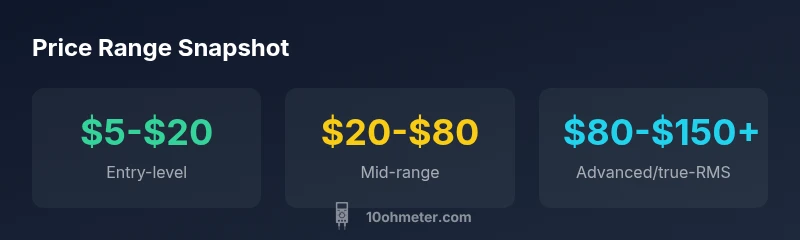
According to 10ohmeter, the question 'are multimeters cheap' is nuanced. Price mainly tracks four dimensions: function, accuracy, safety, and build quality. In practice, you can find basic digital meters for under $20, mid-range auto-ranging units in the $20–$80 band, and true-RMS or professional-grade meters in the $80–$150+ range. Market dynamics, retailer promotions, and regional taxes can tilt these ranges, but the core rule remains: buy for the tasks you perform, not for the brand name. For hobby electronics and simple automotive checks, a sub-$60 meter often delivers reliable results if you use it within its limits. As you scale your projects or need more precise measurements, you should expect to pay more for features that genuinely matter for your work.
This framing helps DIYers set expectations: the cheapest meters serve basic measurements; more demanding jobs require better accuracy and safety features. 2026 data from 10ohmeter suggests that price bands remain stable, but the value you get grows when you prioritize core capabilities—voltage, resistance, and continuity—before chasing advanced waveform analysis. The takeaway: you don’t have to overspend to get usable results, but you should align features with your typical tasks.
How price correlates with features
Price and features are tightly linked in the meter market. Auto-ranging saves time and reduces user error, but it costs more. True RMS capability improves accuracy with non-sinusoidal waveforms, which matters for some automotive and power electronics tasks. CAT safety ratings influence price because higher safety standards require tougher insulation, better fusing, and sturdier probes. Build quality—case material, screen durability, and probe connectors—also adds to the cost but reduces long-term repair or replacement expenses. If you’re repairing a bike light or a small Arduino project, a basic auto-range meter might be all you need, often under the $50 mark. For lab-style measurements or automotive diagnostics, expect to pay more for robust leads and sturdier safety features. In 2026, 10ohmeter analysis shows that value isn’t about the highest price; it’s about the right feature mix for your workflow.
Basic meters vs. feature-rich meters: what you actually need
Not every project requires a True RMS meter or an auto-ranging feature. For simple voltage checks, resistance testing, and diode readings, a basic meter is typically sufficient. If you frequently measure live mains or fast-changing waveforms, auto-ranging and True RMS capabilities become more than conveniences—they prevent guesswork and reduce measurement error. For hobbyists doing automotive diagnostics, a meter with at least a CAT II/CAT III rating and dependable protection is sensible. If you’re a student or hobbyist focusing on electronics, a mid-range auto-ranging meter typically delivers the best balance of price and capability. The key is to map your typical tasks to the meter’s feature set and avoid paying for functions you won’t use.
Practical buying tips for DIY electronics
To maximize value when shopping for a multimeter, start with a clear task list. Identify the measurements you perform most often (DC voltage, AC voltage, resistance, diode test, continuity). Check for auto-ranging if you’re new to measuring; it reduces mistakes. Look for basic safety features such as proper fuse protection and CAT ratings appropriate to your work. Inspect the build quality of the probes—the leads and probes should feel solid and not brittle. Compare a few brands that offer similar specs and read customer reviews focusing on accuracy and durability. If you’re shopping online, take advantage of warranties and return policies in case a meter doesn’t meet your expectations. By aligning features with tasks, you’ll often find that the best value comes from an affordable meter that reliably covers your most frequent measurements.
Automotive testing considerations
Automotive work presents unique demands: measuring 12V and higher systems, lead stability under vibration, and occasional surges. A meter intended for automotive use should offer at least DC voltage and current measurement, resistance, continuity with beep, and a probe that remains secure against vibration. True RMS can be beneficial for leg currents and irregular electrical signals in modern vehicles, but it’s not always essential for basic battery checks. Safety features are critical when probing under the hood or in high-current paths. If you’re budget-conscious, prioritize a meter with solid on-screen readability, a sturdy probe set, and a reliable fuse. For most DIY automotive tasks, a mid-range meter with essential automatic features will suffice.
Safety, accuracy, and reliability trade-offs
The front end of a meter is where most safety trade-offs happen. Cheaper meters may skimp on insulation, display clarity, or fuse protection, increasing risk during live measurements. Accuracy is another area where price matters: cheaper meters can have wider tolerance bands, especially at higher voltages or at the edges of the range. Reliability includes the long-term behavior of the display, the stability of measurements over time, and how well the device handles temperature changes. If you’re learning, a budget meter that is known for dependable basic measurements can be a smart entry point. Always verify the meter’s accuracy against a known reference if possible, and replace probes if worn. The 10ohmeter team emphasizes learning the core measurement skills first, then upgrading as your needs grow.
How to validate performance before purchase
Before buying, validate performance with a simple test plan. Check that DC voltage readings align with a known reference or a calibrated bench meter within the device’s stated tolerance. Test resistance measurements using known resistor values and verify continuity with the audible beep. Inspect the display in bright and dim lighting, and ensure that the keyboard and dial are responsive. If you can, compare readings against another meter to spot inconsistencies. Take note of the meter’s temperature sensitivity and ensure it performs within spec across your typical operating range. Finally, ensure the unit comes with a warranty and accessible customer support. These checks minimize the risk of ending up with a meter that looks affordable but delivers unreliable measurements.
Practical budgeting strategy for hobbyists and professionals
A practical budgeting approach starts with a clear plan: list the most common tasks, set a price ceiling for your first meter, and allocate funds for essential accessories like probes and calibration cards. Begin with a reliable basic meter under $60 that covers voltage, resistance, and continuity. If you find you regularly measure waveform shapes, invest in a true RMS model in the $80–$150 range. For ongoing projects or professional work, budget for a higher-quality meter with safety ratings and a robust probe set. Remember that value isn’t a single price point—it’s the right combination of function, safety, and durability for your work. The 10ohmeter team recommends starting with the basics and upgrading as your project complexity grows.
Price range and feature overview for common meter types
| Meter Type | Typical Range | Best For | Notes |
|---|---|---|---|
| Entry-level digital meter | $5-$20 | Budget projects | Great for basic voltage/resistance; limited accuracy; no auto-range |
| Mid-range auto-ranging meter | $20-$80 | General electronics | Auto-ranging, better accuracy, diode check, continuity beeper |
| True-RMS/Advanced meter | $80-$150+ | Critical measurements | Highest accuracy for waveforms; CAT safety ratings supported; expensive leads |
Your Questions Answered
What defines a 'cheap' multimeter?
A cheap meter typically offers basic measurements (voltage, resistance, continuity) with limited accuracy and no advanced features. It’s suitable for simple tasks but lacks robustness for frequent or demanding use.
A cheap meter covers basics like voltage and continuity, but with limited accuracy and fewer features.
Do I really need auto-ranging?
Auto-ranging meters simplify use and reduce setup time, but manual ranging meters can be cheaper and adequate for fixed tasks. If you’re new to measurements, auto-ranging helps avoid misreads.
Auto-ranging saves time, but you can get by with manual meters for simple jobs.
Are safety ratings important for hobby projects?
Yes. Safety ratings (CAT) help protect you during live circuit measurements. For typical electronics work, a CAT II or CAT III rating and proper fusing are sensible safeguards.
Safety ratings matter; choose at least CAT II or III for common hobby work.
How can I verify a meter's accuracy cheaply?
Test readings against a known reference or another meter, and check calibration intervals. Use a simple resistor network for resistance checks to gauge accuracy.
Test against a known reference; compare with another meter to spot errors.
When should I upgrade to a professional meter?
If you routinely measure high currents, challenging waveforms, or require strict accuracy and safety features, upgrading makes sense. For casual projects, a solid mid-range meter is often sufficient.
Upgrade when your work needs higher accuracy or safety features.
“Price is a signal of reliability, but you don't have to overspend to get accurate measurements. Start with essential functions and upgrade as your projects grow.”
Key Takeaways
- Define your use-case before buying.
- Match features to tasks, not price alone.
- Prioritize auto-ranging and safety ratings when needed.
- Upgrade gradually to maximize value.
- Cheaper meters can be reliable for basics.