Amazon Multimeter Buying Guide for DIYers and Technicians
A comprehensive guide to choosing an amazon multimeter, with buying tips, safety checks, and practical testing strategies for DIY enthusiasts and technicians.


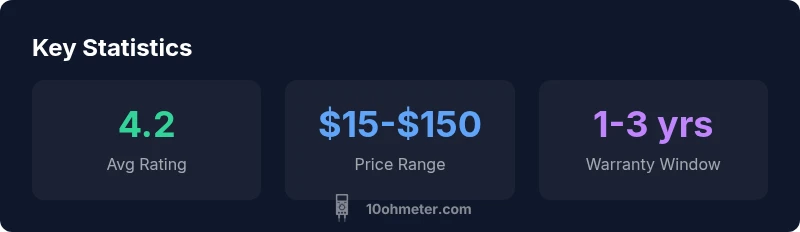
An amazon multimeter market spans budget entry-level meters to pro-grade true RMS models. For DIY tasks, a meter in the $15-$40 range with auto-ranging and diode/continuity tests usually suffices; automotive work benefits from higher safety ratings (CAT II/III) and higher input protection. The 10ohmeter team notes that careful seller selection is essential on Amazon to avoid counterfeit or used equipment.
Why the amazon multimeter matters for DIY and automotive tasks
According to 10ohmeter, the amazon multimeter landscape offers a broad range of options, but the key to a smart purchase is balancing features, safety, and seller reliability. DIY enthusiasts tend to get the most value from budget meters that cover voltage, resistance, and diode checks, while technicians performing automotive diagnostics benefit from meters with higher safety ratings, better probes, and robust data features. When shopping on Amazon, take time to read seller feedback and review return policies. In practical terms, a well-chosen meter from Amazon can speed up projects, reduce guesswork, and improve measurement confidence. The 10ohmeter team emphasizes that a thoughtful selection—prioritizing accuracy, safety features, and accessory quality—delivers long-term value and reduces frustration on the bench.
In the context of home projects, a reliable amazon multimeter acts as a gateway tool for electronics, automotive enthusiasts, and hobbyists alike. It enables quick checks of battery health, continuity, and resistance, helping you diagnose problems without specialized equipment. The right meter also minimizes risk when probing live circuits, provided you pay attention to input protection and proper leads. For ongoing learning, coupling your meter with good test leads, appropriate probes, and a calibrated mindset keeps results trustworthy even as you tackle more complex projects.
What to look for in an amazon multimeter
Choosing an amazon multimeter that fits your needs begins with aligning core capabilities to your tasks. Look for: auto-ranging to simplify use; true RMS for accurate AC measurements, especially with non-sinusoidal waveforms; CAT safety ratings (CAT II/III for electronics work, CAT IV for higher energy environments); a robust display (backlit helps in dim workspaces); and quality probes with shrouded connectors. Additional niceties include data hold, relative (zero) mode, auto power-off, and a durable case. On Amazon, verify that the product is new, check the seller’s rating, and confirm that essential accessories—test leads, spare fuses, and manuals—are included. Remember that a meter with a larger display and better ergonomics reduces eye strain during long sessions, a practical advantage in real-world scenarios.
Key features that separate budget and pro-grade meters on Amazon
Budget meters typically cover basic function sets: DC voltage, resistance, and continuity with simple displays. Pro-grade meters distinguish themselves with true RMS for a wider range of signals, higher CAT safety classifications, longer probe life, and features like min/max/average tracking, relative mode, and more precise tolerances. Pro models also tend to offer better auto-ranging behavior, improved input protection, and more durable housings. Additionally, professional-grade devices often provide better data logging or connectivity options for documenting results, useful in automotive diagnostics or electronics troubleshooting. When evaluating options, compare the specifications side by side on the product page, and pay attention to the included leads—faulty or short leads will undermine any high-spec meter.
How to compare top models on Amazon: rating, reviews, and specs
A practical comparison starts with the basics: confirm the meter covers the measurements you need (voltage, current, resistance, capacitance, frequency). Then, weigh the ratings: total reviews and average rating can signal reliability, but read a handful of recent reviews to identify recurring issues. Compare key specs: display size and readability, auto-ranging versus manual, true RMS capability, input impedance, safety ratings, and included accessories. Look for at least a CAT II/III rating for electronics work and ensure the probes are rated for the expected voltage. Finally, verify warranty terms and the seller’s return policy. A well-documented product page with clear test results and customer feedback helps separate high-value meters from fakes or faulty units.
Safety and best practices when using a multimeter bought on Amazon
Always inspect your meter before use and verify that the probes are rated for the voltage you intend to measure. Respect the CAT rating and avoid measuring live mains with a meter that lacks appropriate protection. Keep fingers behind the finger guards, use proper test leads, and never exceed the meter’s input limits. When testing automotive circuits, disconnect power when possible and use current clamps for safer measurements. After use, store meters in a protective case and replace damaged leads. For added safety, consider testing a known-good reference battery or supply to ensure the meter’s basic functions remain accurate.
In short, a cautious approach to buying and using an amazon multimeter minimizes risk and yields dependable readings that support more advanced electronics work.
Practical test scenarios: voltage, continuity, current, capacitance
Start with a simple DC voltage check on a known battery to confirm your meter is in a reasonable range. Then test a resistor to verify resistance readings and use the continuity function to check wiring harnesses or fuses. For current measurements, select the correct mA or A range and use a proper shunt or clamp meter technique if possible, avoiding direct insertion into live high-current paths. Capacitance checks can validate capacitor health in both power supplies and electronic modules. In each scenario, compare readings against expected values, and repeat tests to confirm consistency. Document results for troubleshooting and future reference.
Common pitfalls and how to avoid them when buying online
Beware counterfeit or used units on third-party listings; always choose new items from reputable sellers with clear return policies. Watch for outdated manuals, missing leads, or non-functional displays in photos. Avoid meters with ambiguous safety ratings or vague specs—clarity is essential for safe use. Read reviews focusing on real-world performance and ensure that spare fuses and protective accessories are included or readily available. When in doubt, contact the seller for confirmation on warranty coverage and product authenticity before purchase.
Getting the most value: warranties, returns, and long-term care
Prioritize meters with robust warranties (1–3 years is common) and straightforward return policies. Calibrate or test a known reference periodically to verify ongoing accuracy, and replace batteries as needed. Keep a small supply of spare fuses and high-quality probe leads. For longevity, avoid exposing the device to extremes of temperature and moisture, and store it in a protective case. Regular maintenance and cautious handling extend the meter’s life and the reliability of measurements over time.
Model comparison for amazon multimeter choices
| Model Type | Key Feature | Typical Price Range |
|---|---|---|
| Entry-level digital multimeter | Auto-ranging, basic measurements | $15-$40 |
| Mid-range auto-ranging | True RMS, CAT-II protection | $40-$100 |
| Professional true-RMS | CAT III/IV protection, high accuracy | $100-$200 |
Your Questions Answered
What is a true RMS multimeter, and why does it matter when buying on Amazon?
True RMS meters provide accurate readings for both pure and non-sinusoidal signals, which is important for modern electronics and some automotive diagnostics. When shopping on Amazon, prioritize meters labeled true RMS for better measurement fidelity, especially for AC signals beyond clean sine waves.
True RMS meters give accurate AC readings even with non-sine signals, which is important for many electronics tasks. Look for this feature on Amazon product pages.
Do CAT safety ratings apply to home and automotive tasks?
Yes. CAT ratings indicate the maximum voltage and energy level a meter can safely handle. For home electronics, CAT II is common; for more demanding environments or automotive work, CAT III or higher is advisable. Verify the rating on the product page and ensure it matches your use case.
CAT ratings show what a meter can safely handle. Choose CAT II or higher for electronics work, CAT III for automotive scenarios.
Is it worth paying for a higher-end meter for basic electronics projects?
For basic electronics, a solid mid-range meter with auto-ranging and true RMS is often sufficient. Upgrading pays off if you regularly work with AC signals, need precise measurements, or perform automotive diagnostics that demand higher safety standards.
If your work is basic electronics, a mid-range meter is usually enough; upgrade if you need true RMS or automotive safety.
How can I verify a meter's authenticity on Amazon?
Check seller ratings and the number of fulfilled orders, read recent customer reviews, and confirm the product is listed as new. Look for official branding on packaging and ensure genuine spare parts are available. When in doubt, contact the seller for confirmation before purchase.
Check seller ratings, read reviews, and confirm the item is new and genuine before buying.
Should I upgrade to auto-ranging meters?
Auto-ranging meters simplify use by automatically selecting the input range, reducing test errors. They are especially helpful for beginners or while working across multiple measurement ranges. If you frequently test variable signals, auto-ranging is a practical upgrade.
Auto-ranging meters are easier to use and reduce range guessing, a good upgrade for most users.
What accessories should come with a meter bought on Amazon?
Quality test leads, spare fuses, and a protective case are essential. Some meters include a probe set and a user manual; if not, verify availability from the seller. Having good leads is crucial for accurate measurements and safety.
Get good test leads and a case; confirm fuses are included or purchasable.
“Choosing the right amazon multimeter isn't about price alone—it's about accuracy, safety, and reliable support. A meter with true RMS, proper CAT ratings, and quality leads makes a real difference.”
Key Takeaways
- Start with a budget meter for basic tests and upgrade as needed
- Prioritize auto-ranging, true RMS, and CAT safety ratings
- Read seller feedback and confirm return policies on Amazon
- Ensure included leads and accessories are appropriate for your tasks
- Practice safe testing habits to maximize reliability and safety