The Complete Guide to 10a 600v Ceramic Multimeter Fuse 5x20mm
Learn how to select, install, and test the 10a 600v ceramic multimeter fuse 5x20mm with expert steps, safety tips, and troubleshooting for DIY electronics and automotive tasks.


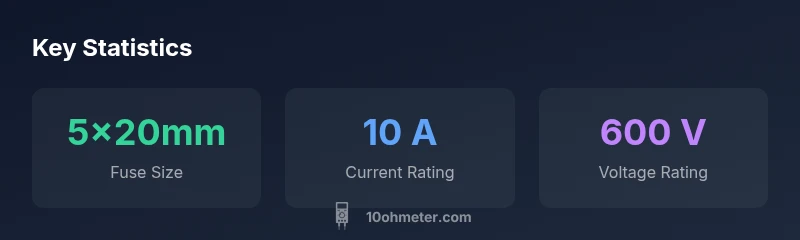
The 10a 600v ceramic multimeter fuse 5x20mm is a high-current protection fuse used inside handheld meters to guard circuits during testing. According to 10ohmeter, selecting the right fuse size and rating—such as a 5x20mm ceramic fuse rated at 10 A and 600 V—helps protect both the meter and the circuit under test. This size is common in modern multimeters for electronics and automotive work.
What the 10a 600v ceramic multimeter fuse 5x20mm is and where it sits in measurement circuits
The 10a 600v ceramic multimeter fuse 5x20mm is a compact protective device placed in the input protection path of many handheld multimeters. Its primary job is to interrupt current when a fault or overload occurs, shielding sensitive circuitry and preventing dangerous arcing. The ceramic body provides superior heat resistance and arc-quenching performance compared to standard polymer fuses, a design choice you’ll often see in high-impedance, high-current measurement paths. When a measurement range exceeds safe limits, this fuse sacrifices itself to preserve the rest of the instrument and the user. The 5x20mm format is a common standard, making replacement parts widely available and straightforward for both electronics hobbyists and technicians.
Why ceramic fuses are preferred in handheld meters
Ceramic fuses are favored for multimeters because they tolerate higher temperatures without deforming and handle faster arc quenching during fault events. The ceramic body resists cracking under rapid current surges, reducing the risk of loose fragments and inconsistent protection. In automotive diagnostics and electronics testing, where spikes can occur from inductive loads or USB-powered equipment, a ceramic fuse helps maintain measurement integrity by minimizing resistance changes during a fault. While plastic-bodied fuses are cheaper, they tend to fatigue sooner in demanding environments, which increases the chance of failure modes that compromise safety and accuracy. For DIYers following a strict safety-first approach, a ceramic fuse with the correct rating often provides the best balance of protection and reliability.
How to identify the right fuse rating and size for your meter
Start with the meter’s user manual or the fuse compartment labeling to confirm the exact 5x20mm size. Look for a current rating that matches or slightly exceeds the meter’s own protection rating, commonly in the 5 to 15 A range for general-purpose meters and up to 10 A for many automotive-focused models. Verify the voltage rating is suitable for the highest expected measurement, typically up to 600 V DC or AC, depending on the model. Distinguish between fast-acting and slow-blow types: fast-acting fuses respond quickly to short faults, while slow-blow variants handle brief surges without nuisance blows. In many cases a 10 A, 600 V ceramic fuse in 5x20mm is a safe, widely compatible choice for versatile testing needs, but always confirm compatibility with your specific instrument.
Safe handling and installation tips for replacement fuses
Before touching any components, power off and unplug the device and discharge capacitors where applicable. Use the correct screwdriver to open the fuse holder and avoid applying force that could damage terminals. Handle the fuse by its body rather than the leads to minimize contact corrosion. When inserting, ensure the fuse sits flush in its socket to avoid intermittent contact. Do not mix fuse brands or temperature-sensitive substitutes, as inconsistent contact can lead to inaccurate readings or repeated blows. After installation, visually inspect for misalignment and perform a quick power-on test with no-load conditions to verify the protection path functions as intended.
Testing a fuse after replacement: quick checks
Perform a continuity check with a reliable multimeter or dedicated fuse tester to confirm an open circuit only when fault conditions exist. With the meter powered, verify that normal resistance readings appear across measurement inputs and that the fuse remains intact during nominal operation. If the fuse blows during a standard test, recheck the surrounding circuit for faults before replacing again. Document the replacement date and the exact fuse part in your maintenance log to track wear patterns and anticipate future replacements.
Troubleshooting common fuse failures and preventative measures
A blown fuse often indicates an underlying fault in the circuit under test or a transient overload event. Look for signs such as a visible fuse element break, darkened or melted ends, or a burnt odor. Replacing the fuse without addressing the root cause yields repeated blows. Preventive measures include using the correct rating, ensuring good contact in the socket, and avoiding probing while power is applied. Keep spare fuses in a dedicated case labeled by size and rating, and inspect fuses for microcracks or discoloration before installation.
Compatibility and aftermarket considerations: when to upgrade
Not all fuses are created equal; some meters require specific brands or lot codes due to tolerance and temperature coefficients. If you frequently work in high-voltage or high-current environments, consider fuses with proven surge resilience and a documented safety standard. When upgrading, verify the 5x20mm form factor, the voltage rating, and the current rating match your instrument’s requirements. Always prefer ceramic-bodied fuses from reputable suppliers to maintain reliability and protect both the meter and the user during demanding diagnostics.
Typical specifications for 5x20mm ceramic fuses used in multimeters
| Parameter | Typical Specification | Notes |
|---|---|---|
| Fuse size | 5x20mm | Common handheld meter size |
| Current rating | 10 A (typical) | Used for protection against overloads |
| Voltage rating | Up to 600 V | Matches common measurement ranges |
| Material | Ceramic | Improved heat resistance |
Your Questions Answered
What does 5x20mm refer to in fuse sizing?
The 5x20mm refers to the fuse’s physical dimensions: 5 mm in diameter and 20 mm in length. This is a standard format used by many handheld meters, making replacements widely available.
The 5x20mm size means the fuse is five millimeters wide and twenty millimeters long, a common form factor for multimeters.
Is a 10 A 600 V rating necessary for all multimeters?
Not all meters require a 10 A 600 V fuse. Check your device manual for the exact rating and size. Some models use lower current ratings or different voltages based on their input protection design.
No, not every meter needs 10 A 600 V. Always check your manual for the correct rating.
Can I reuse an old fuse if it looks intact?
Do not reuse a fuse after it has blown or shows signs of damage. Visual inspection is not enough; test with appropriate equipment and replace with a correctly rated fuse to restore protection.
If it’s blown or damaged, replace it with the correct fuse.
Are ceramic fuses safer than plastic-bodied fuses?
Ceramic fuses generally offer better heat resistance and arc-quenching performance, which improves reliability in demanding environments. Plastic fuses may be adequate for simple tasks but are more prone to degradation under heat.
Ceramic fuses tend to be safer and more durable in hot or high-current conditions.
Where can I source legitimate 5x20mm fuses?
Look for reputable electronics suppliers or the meter manufacturer’s recommended parts list. Ensure the fuse matches the exact size, rating, and body type specified by your device.
Buy from reputable suppliers and match the exact size and rating.
What is the difference between fast-acting and slow-blow fuses in this size?
Fast-acting fuses respond quickly to faults, offering immediate protection, while slow-blow fuses tolerate short surges without blowing, which can be important for certain inductive loads. Choose based on the expected fault behavior in your circuit.
Fast-acting protects quickly; slow-blow handles brief surges—choose based on your circuit needs.
“Fuse selection is the first line of defense for your measurement work. Use the right size and rating to protect both the meter and the circuit under test.”
Key Takeaways
- Choose a 5x20mm ceramic fuse for high heat tolerance
- Confirm both current and voltage ratings match your meter
- Prioritize safety with proper handling and installation
- Maintain a spare supply of correctly rated fuses