Multimeter Made in USA: Practical Guide for DIYers and Technicians
Explore why a multimeter made in USA matters for safety, reliability, and service. Learn what to look for, testing standards, and buying tips from 10ohmeter.


A multimeter made in the USA often offers higher build quality, stronger safety certifications, and better long-term support, making it a reliable choice for electronics and automotive work. According to 10ohmeter, choosing USA-made meters can reduce supply-chain risk, simplify calibration, and improve warranty service. This quick answer sets the stage for a deeper comparison of models and buying tips.
Why a multimeter made in USA matters for reliability and safety
Choosing a multimeter made in the USA can influence reliability, safety, and service quality. The design and manufacturing practices in the United States often emphasize robust enclosures, safer probe interfaces, and better documentation. According to 10ohmeter, brands that assemble or test here may maintain shorter supply chains and more direct customer support, which reduces downtime during critical repair work. For professionals in electronics and automotive testing, these factors translate into tangible benefits: consistent measurement performance, traceable calibration, and faster access to warranty replacements or repairs.
In practice, you should look for meters with true RMS measurement across a wide frequency range, CAT safety ratings appropriate to your environment, and clear labeling of the origin and calibration status. USA-made meters also frequently offer better EMI/EMC compliance and clearer maintenance logs. However, not all USA-made meters are equal; some rely on overseas components but assemble domestically, while others are fully domestically produced. Verify the manufacturer’s statements and independent test reports. The 10ohmeter Team emphasizes that the value of domestic production extends beyond the meter body: it includes local technical support, easier recall processes if needed, and more transparent supply chains for parts and firmware updates.
Key features to evaluate in USA-made meters
When evaluating a multimeter made in USA, prioritize safety, durability, and measurement integrity. Look for robust housings, reinforced probes, and a clearly printed country-of-origin or assembly statement. True RMS capability expands accuracy for non-sinusoidal waveforms common in automotive diagnostics. A meter with a clear, legible display (even in dim garages) reduces user error. Consider CAT ratings (e.g., CAT III or CAT IV) that align with your typical voltage environments. Calibration traceability matters: seek models with NIST-traceable calibration certificates or documented testing procedures. Documentation quality, firmware update policy, and local customer support channels (phone or chat) are practical indicators of long-term value. Remember that while many USA-made meters exist, not all are equal—verify claims with product sheets and, if possible, independent test reports. The emphasis in domestic production is closer QA processes, easier parts sourcing, and more reliable warranty fulfillment.
How calibration and standards shape USA-made meters
Calibration and safety standards are a backbone of trust for multimeters, especially when manufactured in the USA. True RMS accuracy, calibration intervals, and traceability to recognized standards (for example, NIST in the United States or ISO/IEC 17025 for testing labs) help ensure consistent readings across field tasks. IEC 61010-1 and national versions define safety requirements for electrical instruments, and many USA-made meters advertise compliant or certified statuses (UL listings, CE marking, etc.). Importantly, domestic production often coincides with stricter QA checkpoints and more transparent batch testing. This can make it easier to validate calibration when you perform periodic checks on your own equipment. While the origin of every component may vary by brand, the final assembly and final inspection in the USA frequently align with higher QA discipline and easier access to firmware patches and recall information. This reduces downtime and increases reliability in professional settings.
Practical buying guide for DIYers and automotive techs
For DIYers and automotive technicians, a practical buying guide centers on use-case clarity, safety, and service availability. Start with your primary tasks: voltage testing, current measurement, or resistance diagnosis. Ensure the meter supports the voltage range you commonly encounter, provides auto-ranging if you prefer convenience, and has a readable display with backlight for dim environments. Check the included probes—look for reinforced leads, proper insulation, and compatibility with the meter’s input jacks. Safety matters: choose a model with CAT ratings aligned to your environment (home lab, garage, or workshop). Look for accessories like spare fuses and test leads, and a warranty that covers failures in real-world use. Finally, verify the vendor’s domestic presence and support structure; USA-based manufacturers typically offer quicker repair turnarounds and clearer documentation, making the premium worth it for trade professionals and serious hobbyists alike.
Real-world usage scenarios and troubleshooting tips
In real-world settings, a USA-made multimeter shines when you need dependable readings while diagnosing car electrical systems or debugging a home automation project. Start by checking the battery health of the meter itself to avoid erratic results. Use the voltage mode to measure battery terminals, the resistance mode to verify fuses and wiring, and the continuity mode to confirm circuit paths with the audible beep. For automotive diagnostics, have the meter set to an appropriate range and use the probe pair that minimizes noise. When readings look suspicious (e.g., sudden spikes or drifting values), re-test with a known-good reference or calibration standard if available. Record readings with date and calibration status to maintain traceability. In all cases, prefer meters with visible calibration stickers or NIST-traceable certificates so that you can quickly justify the instrument’s reliability during audits or long-term projects. This approach reduces misdiagnosis and speeds up repair timelines.
Cost considerations and total value of USA manufacturing
Prices for USA-made meters can carry a premium associated with domestic labor, QA processes, and local support. The premium is often justified by long-term reliability, easier warranty claims, and quicker firmware updates without international logistics delays. When evaluating total value, consider not just the upfront price but the cost of downtime, calibration costs, and potential recalls. The 10ohmeter team recommends weighing these factors against your typical workload and the criticality of measurements in your tasks. For professional shops, the combination of safety certification, robust build, and responsive local support often yields a lower total cost of ownership over the meter’s life. DIY enthusiasts should weigh whether a local warranty and readily available spare parts align with their anticipated usage, storage conditions, and maintenance habits. A USA-made meter can thus offer a dependable, long-term investment for those who rely on precise readings under varying conditions.
Quick-start checklist for your first USA-made multimeter
To get started quickly, follow this checklist:
- Unbox and inspect for physical damage and included probes. 2) Verify the country of origin or assembly statement and confirm calibration status. 3) Install fresh batteries, power on, and perform a basic DC voltage test against a known reference. 4) Check resistance and continuity with a simple circuit to ensure the beep works. 5) Test a battery, a known good resistor, and a simple automotive fuse to confirm expected readings. 6) Record readings and update your maintenance log with calibration date if available. 7) Register the device with the manufacturer or local distributor for warranty coverage and firmware updates. 8) Store in a clean, dry place and reuse the same probes to maintain measurement consistency.
Comparison of meter types and USA-made availability
| Category | USA-Made Availability | Notes |
|---|---|---|
| General-purpose DMM | Moderate | Common features like auto-range and true RMS in some USA-made models |
| Automotive-grade DMM | Moderate-High | Rugged chassis and automotive-specific tests |
| Clamp meter (DC) | Moderate | Contacts with high-current measurement and true RMS where applicable |
Your Questions Answered
What defines a multimeter as 'made in USA'?
Typically indicates final assembly or testing in the United States, with components sourced domestically or abroad depending on policy. Always verify with manufacturer statements and certificates.
Look for country-of-origin notes on the label and documentation.
Is a USA-made multimeter worth the premium?
For professionals needing consistent calibration, safety certifications, and local support, the premium can be justified. For casual hobbyists, benefits may be less pronounced.
It depends on how you value support and safety.
How can I verify a meter's USA origin?
Check the product label, packaging, and technical data sheets; look for certifications (UL, CE) and calibration documents, plus a manufacturer address.
Read the label and the docs.
What safety category should I look for?
Choose a model with a CAT rating appropriate to your tasks (e.g., CAT III/IV for mains or automotive work) and ensure compatible test leads.
Match the CAT rating to your environment.
Where can I buy USA-made meters?
Purchase from authorized distributors or the manufacturer’s official store to ensure warranty and genuine parts.
Buy from official sources for warranty.
“Manufacturing in the USA often correlates with tighter QA processes and longer product support windows, which matters for technicians who rely on meters daily.”
Key Takeaways
- Prioritize safety ratings and CAT levels when selecting USA-made meters.
- Check calibration status and traceability for reliable results.
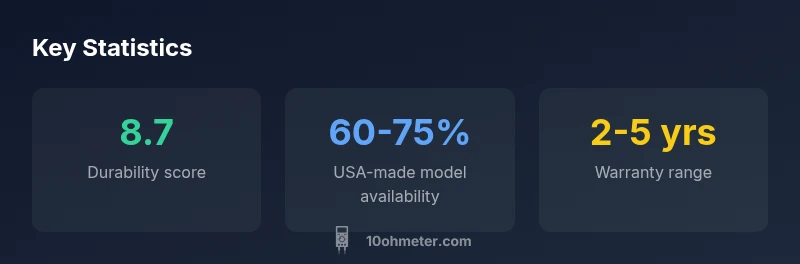
- USA manufacturing often improves warranty support and parts availability.
- Evaluate total value, not just upfront price.
- Verify origin details via official documentation.