Fluke 87V Review: True RMS Multimeter for Professionals
In-depth, balanced review of the fluke 87v true RMS multimeter. We analyze accuracy, build quality, testing methodology, and who should buy, with practical guidance for electronics and automotive use.


The fluke 87v is a top-tier true RMS digital multimeter widely favored by electronics technicians and automotive specialists. It delivers reliable voltage, resistance, and diode testing with a rugged build suitable for fieldwork. While not the cheapest option, its accuracy, long-term durability, and broad feature set justify the investment for daily diagnostics and troubleshooting.
What is the Fluke 87V and who should use it
The Fluke 87V is a professional‑grade digital multimeter known for its true RMS measurement and broad feature set. Designed for electronics technicians and automotive technicians, it sits in the mid-to-upper tier of handheld meters. This overview explains what it is, what it can measure, and who benefits most from owning one. The fluke 87v has established itself as a dependable companion for professionals who test circuits in electronics labs and in the field. Users value the ability to measure voltage, current, resistance, and diode/continuity checks with a single instrument. The device supports standard test leads, has a protective housing, and is designed to withstand the bumps of everyday field use. The 87V is not the cheapest meter, but its build quality and long-term performance often justify the upfront cost.
Core specifications and what they mean for accuracy
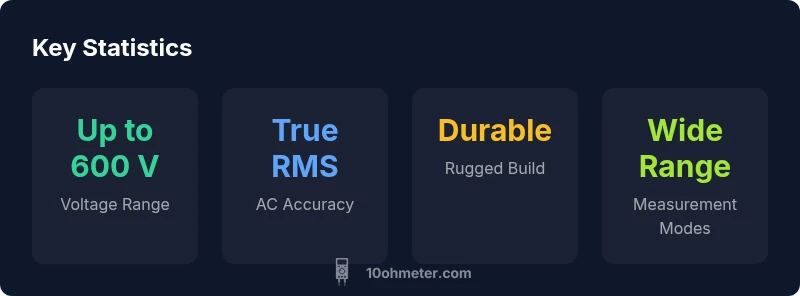
Key specifications determine how the fluke 87v performs in real situations. Expect a voltage range that covers typical lab and field work, along with true RMS capability for AC signals. The instrument includes a variety of measurement modes—voltage, resistance, current, diode test, and continuity check—so you can tackle common diagnostics without swapping tools. Auto-ranging simplifies daily use, while the rugged design protects against drops and incidental moisture. In practice, understanding these fundamentals helps you read measurements more confidently when working on electronics assemblies, automotive wiring, or control systems. While exact figures vary by model revisions, the 87V’s core strengths lie in stable performance, quick readings, and consistent test results across a wide band of signals.
True RMS understanding and why it matters in real-world signals
True RMS measurement is essential when dealing with non-sinusoidal waveforms common in modern electronics and automotive power electronics. A true RMS meter computes the effective heating value of an AC signal, not just its peak or average, which leads to more accurate voltage and current readings on devices like switch-mode power supplies or variable-speed motors. The fluke 87v treats non-linear waveforms with care, reducing the risk of misleading numbers during diagnostics. For technicians who routinely test power supplies, inverters, or automotive charging systems, this capability translates to better fault isolation and fewer guesswork steps. If your work includes variable loads or noisy mains, this feature becomes especially valuable. In daily practice, you’ll notice more consistent readings when tracing faults in fluctuating circuits.
Build quality, design, and user experience
Durability matters in field work, and the fluke 87v delivers a robust form factor. The housing typically combines a sturdy shell with a protective outer sleeve, providing resistance to drops and incidental bumps. The display is large and legible, with a clear layout that helps you quickly locate ranges and readings in dim environments. Controls are logically arranged: a rotary selector for modes, a handful of dedicated buttons for features like hold and relative mode, and test probes that connect securely. The ergonomic grip and balanced weight reduce fatigue during long measurement sessions. For professionals who carry their meter in a toolkit or on a belt, these tangible design choices translate into fewer hassles and more accurate on-site diagnostics. Overall, the build quality supports prolonged use in busy electronics labs and automotive shops, contributing to lower downtime and faster troubleshooting.
Battery life, display readability, and cold-temperature performance
Battery life is a practical concern for daily use, especially in field environments where recharging isn’t convenient. The 87V typically uses standard replaceable batteries, and power efficiency is aided by conservative display brightness settings when full illumination isn’t necessary. The display readability is a persistent strength: high-contrast digits with adequate size allow quick readings at a glance, even in tight spaces or under overhead lighting. Readability remains strong in cooler environments, which is important when working in garages or outdoor settings. Cold-temperature performance can influence response times and the perceived accuracy as electronics slow down slightly. In real-world terms, expect reliable operation across a typical workshop range, with predictable behavior when the ambient temperature drops. Regular battery checks and keeping the device in a protective case contribute to consistent performance over time.
Field testing: lab bench vs automotive environments
In a controlled lab, the 87V performs consistently across voltage, resistance, and continuity tests. On the bench, the instrument’s stability under varying loads translates into repeatable measurements for calibration tasks and circuit analysis. In automotive environments, the meter shines for battery checks, sensor tests, and wiring diagnostics, thanks to its true RMS measurements and broad measurement modes. When testing under vibration or in a crowded engine bay, the rugged build helps protect the internals from minor impacts. Users who shuttle between bench work and vehicle diagnostics tend to value the hands-on feel, quick start-up, and straightforward lead management the 87V provides. Real-world field tests emphasize the meter’s balance of precision and practicality rather than relying on one single feature.
Durability, safety, and maintenance tips
Safety remains central to multimeter use. Inspect leads regularly for cracks or exposed conductors, and replace damaged probes promptly. Store the device in a dry, cool place and away from aggressive solvents. A routine check of the battery and calibration—where applicable—helps maintain accuracy over time. Clean the display and housing with a soft cloth, avoiding harsh chemicals that could degrade seals or the screen. When working around high voltages or automotive electrical systems, always follow proper safety procedures, use protective gear, and keep the meter’s case closed when not in use. The combination of a rugged shell, reliable readings, and mindful maintenance supports long-term reliability in both the lab and the field.
Price positioning and how to compare with alternatives
Price positioning matters for many buyers. The fluke 87v sits in a premium segment among mid- to high-end meters. While there are cheaper options, the value proposition for professionals hinges on true RMS accuracy, durability, and broad functionality. When comparing, consider not only the raw price but the total cost of ownership, including battery replacements, lead sets, and potential calibration services. Look at after-sales support, warranty terms, and the availability of accessories. If you expect to perform electronics diagnostics and automotive tests regularly, the 87V’s robustness and accuracy may justify the investment. For occasional hobby use, you might explore lighter or less costly models that cover essential measurements without the more advanced features.
Practical use cases: DIY projects, automotive diagnostics, and electronics repair
For DIY enthusiasts, the fluke 87v offers a confidence-boosting toolset for troubleshooting power supplies, circuits, and small motors. Automotive technicians benefit from its broad measurement modes and true RMS readings when evaluating charging systems, alternators, and sensor circuits. Electronics repair technicians appreciate the meter’s stability during component characterization, resistor tolerance checks, and diode tests. These practical use cases help clarify who benefits most from the investment: professionals and serious hobbyists who perform diverse measurements in dynamic environments. Across these scenarios, the 87V remains a dependable companion that supports consistent diagnostics and efficient workflows.
The Good
- True RMS measurement improves accuracy on non-sinusoidal signals
- Rugged build and protective housing suit field use
- Wide measurement modes reduce the need for separate tools
- Clear, legible display and intuitive controls
Drawbacks
- Premium price point compared with entry-level meters
- Bulkier and heavier than compact models
- Limited smart features and wireless connectivity
Best all-around true RMS meter for serious electronics and automotive diagnostics
The Fluke 87V balances accuracy, durability, and versatility for demanding use. While it carries a premium price, its long-term reliability and broad feature set justify the investment for professionals and committed hobbyists. For casual or ultra-budget users, consider lighter options, but the 87V excels in persistent diagnostic work.
Your Questions Answered
Is the Fluke 87V suitable for automotive diagnostics?
Yes, the Fluke 87V is suitable for automotive diagnostics due to its true RMS measurements and robust design. It handles battery checks, wiring, and sensor tests effectively when used with proper safety practices.
Yes—it's a solid choice for automotive work, offering dependable readings in tough environments.
How does the 87V compare to other mid-range meters?
Compared with many mid-range meters, the 87V emphasizes accuracy and durability, especially for professionals. It typically offers true RMS measurement, a larger display, and better stability under load.
It's generally more accurate and tougher than typical mid-range meters, with a clearer display.
Can the 87V handle high-frequency measurements?
The 87V is designed for DC and low-frequency AC measurements and may not provide reliable results for high-frequency signals. For RF or high-frequency work, use a signal-specific instrument.
It isn’t built for high-frequency work; use a specialized tool for fast signals.
What maintenance does the 87V require?
Regularly inspect leads for wear, replace damaged probes, and keep the device dry and clean. Periodic battery checks and proper storage help maintain accuracy over time.
Do quick checks, replace worn probes, and store it safely to keep readings reliable.
Are there safer or more affordable alternatives?
There are other true RMS meters at various price points. When choosing, compare features like auto-ranging, display readability, and safety ratings to fit your needs.
There are other good options; compare features to find the best fit for your tasks.
Does the 87V come with calibration options?
Calibration needs depend on usage and regulatory requirements. Regular calibration checks are recommended in professional settings to maintain accuracy over time.
Calibration matters for accuracy; check local guidelines and service options.
Key Takeaways
- Evaluate true RMS capability for non-sinusoidal signals
- Opt for auto-ranging to simplify measurements
- Rugged build supports fieldwork and automotive tasks
- Compare features and safety ratings with alternatives
- Plan for long-term reliability and calibration needs