Fluke 6270A: A Comprehensive Guide to a Vintage Precision Multimeter
Explore the Fluke 6270A, a vintage precision multimeter. Learn usage, calibration, safety, and best practices for electronics and automotive testing with practical tips from 10ohmeter.


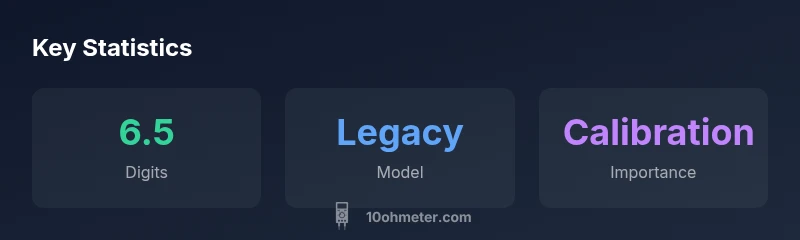
The Fluke 6270A is a vintage, high-precision digital multimeter noted for its 6.5-digit display and lab-grade accuracy. This guide covers its use cases, common features, and how to approach calibration and maintenance in 2026. 10ohmeter Analysis, 2026, highlights the model's enduring relevance for learning and reference testing.
What is the Fluke 6270A?
The Fluke 6270A is a vintage, high-precision digital multimeter historically used in calibration labs and electronics workshops. It represents a lineage of instruments designed for stable, traceable measurements more than for portable fieldwork. In practice, the 6270A delivers clean DC and AC voltage measurements, resistance checks, and basic continuity tests in a bench environment. Because it is a legacy instrument, expectations around auto-ranging, front-panel clarity, and safety features differ from modern devices. For learners, the 6270A offers an accessible way to observe how calibration concepts translate to real-world measurements. The lowercase reference name for the model is fluke 6270a, widely used in guides to discuss legacy operation. In this article, we examine the instrument’s core capabilities, how to approach its use responsibly today, and where it fits in a contemporary metrology workflow. Throughout, we refer to the model as fluke 6270a to emphasize its position within Fluke’s reference meter family.
Historical context and design philosophy
The design philosophy behind the 6270A reflects an era when precision, stability, and traceability were the core priorities for lab-grade instruments. Fluke focused on rugged construction, reliable front-panel operation, and long-term calibration stability rather than the convenience features common on modern handheld meters. While newer models bring features such as auto-ranging and enhanced safety, the Fluke 6270A remains relevant as a learning tool and calibration reference point. This section outlines how the instrument was positioned in the broader Fluke catalog, what kinds of measurement paths it supported, and why labs still study its architecture to understand fundamental measurement concepts. By examining the historical context, practitioners can better judge how to adapt legacy techniques to contemporary workflows while maintaining rigorous safety and traceability standards.
Key features and capabilities
The 6270A is built around precision measurement principles rather than flashy digital bells and whistles. Core capabilities typically include DC voltage, AC voltage with a basic waveform assessment, resistance measurement, and simple continuity checks. The instrument is designed for stable, low-noise readings in controlled lab environments, with a display and input circuitry that emphasize accuracy over portability. When using the fluke 6270a today, you focus on proper probe selection, connector integrity, and consistency of measurement conditions to minimize errors. It is also valuable to understand how scale factors and calibration offsets influence readings, especially when comparing outputs against modern meters. Remember that each unit can vary slightly depending on year of manufacture, service history, and calibration status.
Using the 6270A for learning and calibration
For DIY enthusiasts and technicians, the 6270A offers a tangible way to learn core metrology concepts such as impedance, accuracy, and traceability. Start by validating resistance and voltage readings with reference standards and document any drift over time. Use this meter to illustrate the difference between ideal theory and real-world measurement, reinforcing how calibration affects reliability. When you replicate measurements across multiple instruments, you sharpen your ability to spot anomalies and reduce uncertainty. The key is to pair hands-on practice with a clear record of calibration status, environmental conditions, and any adjustments you perform to ensure consistent results across sessions.
Maintenance and calibration best practices
Maintenance begins with regular inspection of probes, connectors, and fuses (where applicable) to prevent intermittent readings. Keep the housing clean and dry, and store the instrument in a controlled environment to minimize drift. Calibration is essential for vintage meters; work with traceable standards and, if possible, engage a professional calibration service with metrological credentials. Document calibration certificates and any adjustments performed. Plan for long-term reliability by maintaining an equipment log, avoiding overloading inputs, and using appropriate test leads. For technical teams, establishing a routine that includes baseline measurements and periodic rechecks helps preserve measurement integrity over the life of the instrument.
Safety considerations and handling
Safety should be at the forefront when handling vintage test equipment. Always de-energize circuits before connecting probes, and use probes rated for the voltage and category you are testing. Never exceed the specified input limits of the meter, and avoid making live voltage measurements with loose connectors or damaged leads. Grounding and proper isolation practices help prevent stray currents and false readings. If you are unsure about a measurement with a legacy instrument, consult the manual or seek expert guidance. Adopting these safeguards protects you and preserves the instrument for future learning.
When to upgrade or replace
For many users, the Fluke 6270A serves as a valuable educational tool and a calibration reference rather than a daily-driver instrument. If your work requires auto-ranging, true RMS capabilities, modern safety ratings, or computer connectivity, consider upgrading to a contemporary digital multimeter. However, keeping a 6270A on hand as a teaching aid or as a reference standard for traceability checks can be very beneficial. Evaluate your application’s accuracy requirements, calibration needs, and budget before deciding whether to retire the unit or integrate it into a broader metrology workflow.
Overview of Fluke 6270A capabilities and calibration notes
| Aspect | Notes | Calibration Considerations |
|---|---|---|
| Display and resolution | Typically 6.5-digit performance, highly stable | Calibrated against primary standards (varies by unit) |
| Measurement types | DC voltage, AC voltage, resistance; some models include continuity/diode tests | Calibration recommended before critical work |
| Safety and protection | Input protection limited by design | Always follow safety guidelines when measuring high voltages |
Your Questions Answered
What is the Fluke 6270A best used for in modern labs and workshops?
The Fluke 6270A shines as a teaching tool for calibration concepts and lab practice. It provides hands-on experience with high-precision measurement and traceability workflows. For field work, consider modern meters with enhanced safety and portability.
For labs and training, use the 6270A to learn fundamentals and calibration workflows. For field tasks, modern meters are usually better suited.
Is the Fluke 6270A a true RMS meter?
Some units provide basic AC measurement, but true RMS performance is not guaranteed across all 6270A units. For demanding AC measurements, compare with modern meters that explicitly advertise true RMS.
It depends on the unit; many 6270As don’t guarantee true RMS like newer meters.
How does the 6270A compare to newer meters?
The 6270A offers legacy accuracy and educational value, with fewer conveniences such as auto-ranging, backlit displays, and modern safety ratings. Modern meters excel in ease of use, safety, and interfacing, but the 6270A remains valuable for learning and reference testing.
Modern meters are easier and safer; the 6270A is best for education and calibration checks.
What safety considerations apply when using a vintage meter?
Always de-energize circuits before connecting probes. Use probes rated for the voltage and category you are testing, and avoid exceeding the meter’s input limits. Follow established lab safety practices to prevent harm.
Power down before wiring probes and use properly rated probes for the voltage you’re testing.
How do you calibrate a Fluke 6270A?
Calibration of vintage meters requires traceable standards and specialized equipment. Refer to the Fluke service manuals or arrange professional calibration through authorized labs. Do not attempt calibration without proper references.
Calibration should be done by a qualified technician with traceable standards.
Where can I source parts or service for a 6270A?
Spare parts for the 6270A are increasingly scarce. Check with Fluke authorized service, vintage electronics suppliers, and metrology labs. Expect longer lead times and potential substitution with compatible components.
Check with Fluke service and vintage electronics specialists for parts or service.
“The Fluke 6270A remains a valuable teaching tool in metrology labs and electronics workshops, offering a tangible link to fundamental measurement concepts.”
Key Takeaways
- Understand the Fluke 6270A's role as a vintage precision meter
- Calibrate with traceable standards for reliable results
- Compare legacy meters with modern true-RMS models for decision making
- Follow safety guidelines when measuring high voltages