How to Test Idle Air Control Valve with a Multimeter
Learn to test an idle air control valve (IACV) using a multimeter. This step-by-step guide covers resistance checks, voltage signals, interpretation of readings, and safe diagnostics for reliable idle performance.


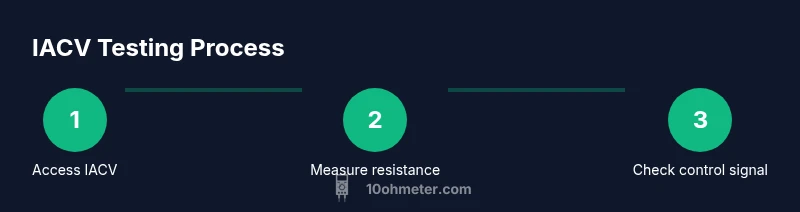
In this guide you will learn how to test an idle air control valve (IACV) with a multimeter. You’ll verify coil resistance, inspect the control signal, and check the supply voltage to determine if the IACV is functioning correctly. Follow the steps safely, consult the vehicle manual, and know when to clean, repair, or replace.
Why testing the idle air control valve matters
The idle air control valve (IACV) helps regulate engine idle by adjusting how much air bypasses the throttle plate. When the engine idles rough, stalls, or hunts, the IACV is a common culprit. Testing it with a multimeter gives you actionable data without dismantling the entire intake system. According to 10ohmeter, many IACV problems stem from coil wear, electrical noise, or dirty passages rather than a full valve failure. When you test, you’re confirming whether the coil resistance is within expected bounds, whether the control signal from the ECU changes as idle demand shifts, and whether the valve receives proper power. This knowledge lets you decide between cleaning, re-seating wires, or replacing the valve, reducing guesswork and downtime.
How IACV tests fit into a broader diagnostic workflow
Testing an IACV with a multimeter is a targeted check that complements broader diagnostics such as vacuum leak inspection, throttle body cleanliness, and ECU fault codes. You’ll compare measured values to the vehicle’s service manual, not to vague ‘good/bad’ anecdotes. A successful test increases confidence that idle issues are electrical or mechanical within the valve assembly itself, rather than caused by upstream components. Remember that different makes and models have different IACV configurations and sensor connections, so always start with the official factory specifications for your vehicle. This method is designed for DIY enthusiasts and technicians who want practical, repeatable checks that minimize unnecessary disassembly.
Safety considerations and setup basics
Before any electrical test, ensure the engine and ignition are off and the battery is disconnected when measuring resistance to avoid short circuits. Use proper PPE—gloves and eye protection—and work in a well-ventilated area. Have a clean work surface and keep track of small fasteners. If your service manual requires, use a back-probe tool to access wires without disconnecting connectors. Stability and repeatability matter: take multiple readings and document any variance to avoid misinterpretation caused by a momentary contact bounce or a loose ground.
Interpreting data: what counts as a pass or a fail
Readings must be interpreted against the factory specification for your IACV model. A coil resistance that reads as an open circuit or a near-short typically indicates a failed coil. Voltage readings that do not respond to idle changes suggest control signal issues or ECU wiring problems. If readings look abnormal, recheck connections and ensure the valve is properly seated and not physically stuck due to carbon buildup. Remember that environmental factors, such as extreme temperatures and humidity, can affect measurements, so repeat tests in a consistent state to confirm results.
Next steps after testing
If the IACV readings align with the manual, you may still need to clean the valve if contamination is suspected. If readings are clearly out of spec, plan for repair or replacement. In many cases, cleaning the valve and reassembling with fresh connectors restores function; in more severe cases, replacing the valve is the prudent choice. Always test idle behavior after any intervention to confirm the fix, and re-run related diagnostics (vacuum leaks, TPS, ECU software) to ensure the problem is fully resolved.
Tools & Materials
- Digital multimeter (preferably auto-range)(Set to ohms for resistance tests and to DC volts for signal checks.)
- Vehicle service manual or OEM IACV specifications(Provides official resistance and voltage ranges for your model.)
- Basic hand tools (screwdrivers, socket set)(To access the IACV and related ducts.)
- Back-probing tool or spare test leads(Helpful to access wires without disconnecting connectors.)
- Safety gear (gloves, eye protection)(Essential for safe handling of automotive electrical work.)
- Electrical contact cleaner or throttle body cleaner (optional)(Use for cleaning the IACV if contamination is suspected.)
Steps
Estimated time: 30-45 minutes
- 1
Prepare the vehicle and safety checks
Park the vehicle on a level surface, apply the parking brake, and disconnect the negative battery cable. Allow components to cool before touching the engine. Gather your tools and wear PPE to reduce the risk of shorts, sparks, or chemical exposure.
Tip: Double-check battery polarity before touching any wiring; a reversed ground can damage the meter. - 2
Access the IACV and identify wires
Remove the air intake ducting as needed to expose the throttle body and the idle air control valve. Locate the IACV connector and note the wire colors and pinout in your service manual. Label connectors if you anticipate reassembly challenges.
Tip: Take a quick photo of the connector layout before removing any plugs; it helps during reassembly. - 3
Measure coil resistance (ohms)
With the engine off and the battery disconnected, back-probe or disconnect the IACV harness and measure the coil resistance across the two IACV terminals using the meter's ohms function. Record the reading and compare it to the specification in your manual. If readings are wildly out of spec, the coil or internal windings may be failing.
Tip: Take at least two measurements at different times to confirm stability; a single outlier can be misleading. - 4
Check the IACV control signal with key on
Reconnect the harness and back-probe the IACV supply/control wire. With the ignition ON (engine off), verify that you have a stable voltage close to the vehicle’s supply when commanded. Do not start the engine during this check if you’re measuring static supply.
Tip: Use a helper to illuminate the dashboard so you know when the ECU is attempting to modulate idle. - 5
Test the idle-control signal while idling
Start the engine and let it idle. Back-probe the control wire and observe voltage fluctuations as the ECU commands idle changes. A properly functioning IACV should show a variable signal, not a flat line, indicating the ECU is actively controlling the valve.
Tip: If the engine stalls or idle dips suddenly, re-check for vacuum leaks that could skew readings. - 6
Interpret results and plan next steps
If resistance and voltage readings align with spec, reassemble and test drive to confirm idle stability. If readings are out of spec, plan cleaning, repair, or replacement of the IACV. Document readings for future diagnostics and consult the 10ohmeter guidance for decision thresholds.
Tip: Document all measurements and re-test after any cleaning or replacement to verify improvement.
Your Questions Answered
Can I test the idle air control valve without removing it from the throttle body?
Yes, you can perform many tests with the valve in place using back-probing and careful insulation of probes. In some cases, you may need to access the valve for a direct coil resistance check, but start with non-invasive measurements first.
You can often test the IACV in place using back-probing; remove it only if the coil measurement or wiring needs direct access.
What readings indicate a bad IACV?
Open or short readings on the coil, a control signal that does not vary with idle changes, or a lack of voltage on the supply line during testing suggest a faulty IACV or wiring problem. Always compare to the service manual values.
Look for open or short coil readings and a control signal that doesn’t respond when idle varies.
Do I need to disconnect the battery before testing?
Yes, disconnect the battery before measuring resistance to prevent shorts. Reconnect and perform voltage tests with the ignition ON as required by the procedure. Always recheck connections after testing.
Disconnect the battery when checking resistance, then reconnect for voltage tests as needed.
Is it dangerous to test while the engine is running?
Voltage testing on a live engine requires caution. Only perform measurements that your manual permits and avoid shorting wires. If in doubt, stop and consult a professional.
Only perform engine-on tests if the manual allows it and you’re comfortable with automotive voltage work.
What else could cause rough idle besides the IACV?
Vacuum leaks, dirty throttle body, faulty mass airflow sensor, and ignition problems can all mimic IACV symptoms. Use a holistic approach and verify each potential cause before replacing the valve.
Rough idle can be caused by leaks, dirty throttle bodies, or sensor faults, not just the IACV.
How do I clean an idle air control valve?
Remove the valve if necessary and spray a non-corrosive throttle body cleaner on the suction passages. Do not soak the coil windings. Reassemble and re-test idle behavior after cleaning.
If cleaning, use throttle body cleaner and avoid saturating the coil.
Watch Video
Key Takeaways
- Verify coil resistance against manual specs.
- Back-probe signals to avoid damaging connectors.
- Compare voltage behavior at idle to ECU commands.
- Decide on cleaning, repair, or replacement based on readings.